PHILOSOPHY OF SCIENCE
Philosophy of science is a special field of philosophy concerned with the foundations, methods, and implications of science. The core questions of philosophy of science are:
> what science is;
> the reliability of scientific theories;
> the ultimate purpose of science.
Philosophy of science overlaps with ontology, epistemology, logic, ethics, history of philosophy, etc.
The aim of philosophy of science program as well as all philosophical programs is to develop open minded, well educated people capable of critical thinking, people who recognize their common humanity and help to create a better and more peaceful world.
The course “Philosophy of Science” provides a basic introduction to the main philosophical questions concerning scientific knowledge and methodology. It surveys a variety of positions on standard philosophy of science topics, centered around basic themes. Students will explore:
> to what extent science resembles or differs from other ways of knowing;
> the specificity of the scientific method;
> characteristics of scientific explanation;
> philosophical accounts of scientific theory-change;
> what philosophical reflection on the history of science tells us about the reliability of scientific methodology;
> the ethical responsibilities of scientists.
The goal of this course is to understand the basic concepts and principles that define philosophy of science as a field.
Learning objectives are:
> to become familiar with major scientific problems and methods of dealing them;
> to gain knowledge and understanding of philosophy of science through consideration of some important issues and approaches to problems;
> to construct, develop and maintain clear and coherent argument;
> to encourage the systematic and critical study of human experience and behavior; physical, economic and social environments; the history and development of science as well as social and cultural institutions;
> to develop students' capacity to identify, analyze critically and evaluate scientific theories, concepts and arguments about the nature, human, and society;
> to develop an intellectually independent and creative way of thinking;
> to examine critically own experience and ideological and cultural perspectives.
At the end of this course, students will gain the following knowledge:
> students will have a basic understanding of what science is, how it can be distinguished from other ways of knowledge, and how scientific explanation works;
> students will be aware why scientific theories change over time;
> students will realize that science is not an isolated endeavor, but that it is situated within a broader social, political, economic, and cultural context;
> students will define/describe the main scientific concepts, the main problems raised by the scientists.
Based on the aims of the course, students should be able to:
> know the major authors in philosophy of science and their contributions to the field (e.g., Bacon, Popper, Kuhn). They should be able to situate them within the history of philosophy;
> identify some questions and tasks that are appropriate to philosophy of science;
> explain and illustrate some key processes of scientific reasoning;
> think critically about various questions in philosophy of science;
> critically reflect on the reading materials and give evidence of this in class (e.g., classroom exercises, in-group discussion);
> interpret contemporary scientific research using philosophical concepts and accounts of science.
These skills are applicable in the study of other academic subjects and in reflection on other important aspects of human experience.
This course is arranged around seven interconnected themes with the education being based on reading excerpts from primary sources, writings of contemporary researchers, Stanford Encyclopaedia of Philosophy and discussing them in class.
Theme 1. Science as an object of philosophical analysis
Rosenberg, Alex. (2005). Philosophy of Science: a contemporary introduction. New-York and London: Routledge.
“Philosophy of science is a difficult subject to define in large part because philosophy is difficult to define. But on at least one controversial definition of philosophy, the relation between the sciences - physical, biological, social and behavioral - and philosophy are so close that philosophy of science must be a central concern of both philosophers and scientists.
On this definition, philosophy deals initially with the questions which the sciences cannot yet or perhaps can never answer, and with the further questions of why the sciences cannot answer these questions.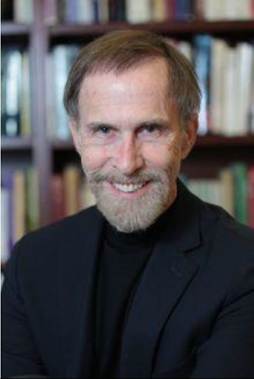
Whether there are any such initial questions is itself a matter that can only be settled by philosophical argument. Moreover, if there are none, how science should proceed in its attempts to answer its as-yet unanswered questions is also a matter for philosophical debate. This makes philosophy unavoidable for scientists. A cursory study of the history of science from the Greeks through Newton and Darwin to the present century reveals these (as yet) scientifically unanswered questions.
Reflection on the way contemporary scientific findings and theoriesb influence philosophy shows each is indispensable for understanding the other. Indeed, this chapter claims, and subsequent chapters argue, that philosophy is a fundamental prerequisite for understanding the history, sociology and other studies of science, its methods, achievements and prospects. Classical philosophical problems like those of free will versus determinism, or whether the mind is a part of the body, or whether there is room for purpose, intelligence and meaning in a purely material universe, are made urgent by and shaped by scientific discoveries and theories.
Science as a distinctive enterprise is arguably the unique contribution of western thought to all the world's other cultures which it has touched. Assuch, understanding science is crucial to our understanding of our civilization as a whole.
1.1 The relationship between science and philosophy
Science as we recognize it seems to have begun with the ancient Greeks. The history of science from the ancient Greeks to the present is the history of one compartment of philosophy after another breaking away from philosophy and emerging as a separate discipline.
Thus, by the third century BC, Euclid's work had made geometry a “science of space” separate from but still taught by philosophers in Plato's Academy. Galileo, Kepler and finally Newton's revolution in the seventeenth century made physics a subject separate from metaphysics. To this day, the name of some departments in which physics is studied is “natural philosophy”. In 1859 The Origin of Species set biology apart from philosophy (and theology) and at the turn of the twentieth century, psychology broke free from philosophy as a separate discipline. In the past fifty years, philosophy's millennium-long concern with logic has given rise to computer science.But each of these disciplines, which have spun off from philosophy, have left to philosophy a set of distinctive problems: issues they cannot resolve, but must leave either permanently or at least temporarily for philosophy to deal with. For example, mathematics deals with numbers, but it cannot answer the question what a number is. Note that this is not the question what “2” or “dos” or “II” or “10 (base 2)” is. Each of these is a numeral, an inscription, a bit of writing, and they all name the same thing: the number 2. When we ask what a number is, our question is not about the symbol (written or spoken), but apparently about the thing. Philosophers have been offering different answers
to this question at least since Plato held that numbers were things - albeit, abstract things. By contrast with Plato, other philosophers have held that mathematical truths are not about abstract entities and relations between them, but are made true by facts about concrete things in the universe, and reflect the uses to which we put mathematical expressions. But 2,500 years after Plato lived, there is as yet no general agreement on the right answer to the question of what numbers are.
Take another example, Newton's second law tells us that F = ma, force equals the product of mass and acceleration. Acceleration in turn is dv/dt, the first derivative of velocity with respect to time.
But what is time? Here is a concept we all think we understand, and one which physics requires. Yet both ordinary people and physicists, for whom the concept is indispensable, would be hard pressed to tell us what exactly time is, or give a definition of it. Notice that to define time in terms of hours, minutes and seconds, is to mistake the units of time for what they measure. It would be like defining space in terms of meters or yards. Space is measured with equal accuracy in meters or yards. But suppose we ask which is the correct way of measuring space? The answer of course is that there is no uniquely correct set of units for measuring space; yards and meters do equally good jobs. By the same token, neither can be said to “define” or constitute space. The same goes for time. Seconds, centuries, millennia are just different amounts of the same “thing”: time. And it's that thing, time, which comes in different amounts we want a definition of. We could say that time is duration, but then duration is just the passage of time. Our definition would presuppose the very notion we set out to define.Explaining exactly what “time” means is a problem which science has left to philosophy for a period of at least 300 years. With the advent of the special and general theory of relativity physicists began to take a share in trying to answer this question again. Albert Einstein's own reflections on time, which led to the conclusion that time intervals - durations - differ among different reference frames - points from which they are measured, owe much to the philosopher Leibniz's critique of Newton's conception of space and time as independent containers in which things can be absolutely located and dated.
Similarly, many biologists and not a few philosophers have held that after Darwin, evolutionary biology took back from philosophy the problem of identifying the nature of man or the purpose or meaning of life. And some biologists and philosophers hold what Darwinism shows is that man's nature is only different by degrees from that of other animals.
Moreover, these thinkers argue that the theory of natural selection shows that there is no such thing as a distinctive human nature nor any purpose and meaning to life. They argue that Darwin's great achievement was to show that there is no such thing as purpose, goals, ends, meaning or intelligibility in the universe, that its appearance is just an “overlay” we confer on the adaptations we discern in nature, adaptations that are really just the result of the environment's persistent filtration of blind variations creating the appearance of design. It is for this reason that evolutionary theory is so widely resisted; some think it purports to answer questions which should be left to philosophy, or perhaps even religion. Whether one agrees with Darwin's theory of natural selection or not, it is an impressive example of how scientific achievements influence philosophy, that is, provoke thought about questions that science itself does not yet have the evidence to answer.All of the sciences, and especially the quantitative ones, rely heavily on the reliability of logical reasoning and deductively valid arguments; the sciences also rely on inductive arguments - ones which move from finite bodies of data to general theories. But none of the sciences address directly the question of why arguments of the first kinds are always reliable, and why we should employ arguments of the second kind in spite of the fact that they are not always reliable. These are matters with which the subdiscipline of philosophy called logic broadly concerns itself.
What the history of science and the legacy of problems it leaves to philosophy shows is that the two intellectual inquiries have always been inextricably linked. And the legacy may help us define philosophy. One of the oddities about philosophy is that it seems to be a heterogeneous subject without the unity that characterizes, say, economics, or chemistry. Among its subdisciplines, there is logic - the study of valid forms of reasoning, aesthetics - the study of the nature of beauty, ethics and political philosophy which concern themselves with the basis of moral value and justice, epistemology - the study of the nature, extent and justification of knowledge, and metaphysics which seeks to identify the fundamental kinds of things that really exist. What brings all these diverse 444
questions together in one discipline? Here is a working definition of philosophy that identifies something these subdisciplines all have in common:
Philosophy deals with two sets of questions:
First, the questions that science - physical, biological, social, behavioral - cannot answer now and perhaps may never be able to answer.
Second, the questions about why the sciences cannot answer the first lot of questions.
Some things to note about this working definition.
One type of question that only philosophy deals with is the normative questions, issues of value - questions about what ought to be the case, what we should do, about what is good and bad, right and wrong, just and unjust - in ethics, aesthetics, political philosophy. The sciences are presumably descriptive, or as is sometimes said, positive, not normative. Many of these normative questions have close cousins in the sciences. Thus, psychology will interest itself in why individuals hold some actions to be right and others wrong, anthropology will consider the sources of differences among cultures about what is good and bad, political scientists may study the consequences of various policies established in the name of justice, economics will consider how to maximize welfare, subject to the normative assumption that welfare is what we ought to maximize. But the sciences - social or natural - do not challenge or defend the normative views we may hold. This is a task for philosophy.
In considering our working definition of philosophy, suppose one holds that in fact there are no questions that the sciences cannot now or cannot ever answer. One might claim that any question which is forever unanswerable is really a pseudo-question, a bit of meaningless noise masquerading as a legitimate question, like the question “Do green ideas sleep furiously?” or “When it's noon GMT, what time is it on the Sun?” Scientists and others impatient with the apparently endless pursuit of philosophical questions that seems to eventuate in no settled answers, may hold this view. They may grant that there are questions the sciences cannot yet answer, such as “What was happening before the big bang that began the universe?” or “How did inorganic molecules give rise to life?” or “Is consciousness merely a brain-process?” But, they hold, given enough time and money, enough theoretical genius and experimentation, all these questions can be answered, and the only ones left unanswered, at the end of scientific inquiry will be pseudo-questions intellectually responsible persons need not concern themselves with. Of course, sapient creatures like us may not be around long enough in the history of the universe to complete science, but that is no reason to conclude that science and its methods cannot in principle answer all meaningful questions.
The claim that it can do so, however, needs an argument, or evidence. The fact that there are questions like “What is a number?” or “What is time?” which have been with us, unanswered for centuries, is surely some evidence that serious questions may remain permanently unanswered by science. Could these really be pseudo-questions? We should only accept such a conclusion on the basis of an argument or a good reason. Suppose one wanted to argue that any question still left over at the “end of inquiry”, when all the facts that science should attend to are in, must be pseudoquestions. As a philosopher I can think of some arguments in favor of this conclusion. But these arguments that I can think of all have two related features: first, they draw substantially on an understanding of the nature of science itself which science does not provide; second, these arguments are not ones science can construct by itself; they are philosophical arguments. And this is because they invoke normative premises, and not just the factual ones that science could provide.
For example, the argument that questions science can never answer are really pseudo-questions it has no obligation to address, trades on the assumption that there are some considerations science should answer, and does have an obligation to attend to. But, how do we decide what science should address? Presumably it should address those matters about which knowledge is at least possible. But then the responsibilities of science will turn on the nature, extent and grounds of knowledge. And this is a matter for epistemology - the study of the nature, extent and justification of knowledge. And this means that philosophy is unavoidable, even in the argument that there are no questions science cannot answer, either now or eventually or perhaps just “in principle”.
Notice that this is not the conclusion that philosophers have some sort of special standing or perspective from which to ask and answer a range of questions that scientists cannot consider. These questions about science, its scope and limits are as much questions that scientists can contribute to answering as they are questions for philosophers. Indeed, in many cases, as we shall see, either 445
scientists are better placed to answer these questions, or the theories and findings they have uncovered have an essential role in answering the questions. But the conclusion here is that philosophy is inescapable, even by those who hold that in the end all real questions, all questions worth answering, can only be answered by science. Only a philosophical argument can underwrite this claim. Furthermore, it is by no means clear that there is a real distinction between the most general scientific questions and philosophical ones, especially those raised at the moving frontiers of the sciences. In Chapter 6 of this book, we shall in fact explore some compelling arguments for this very conclusion. This means that on the definition I have advanced, we can expect important scientific contributions to perennially philosophical questions.
1.2 Scientific questions and questions about science
Besides the questions science cannot answer yet, there are questions about why the sciences cannot yet or perhaps will not ever be able to answer these questions. Call the questions, about what a number is, or what time is, or what justice and beauty are, first-order questions. The second-order questions, about why science cannot as yet cope with the first-order questions, are themselves questions about what the limits of science are, how it does work, how it is supposed to work, what its methods are, where they are applicable and where not. Answering these questions will either enable us to begin to make progress on the hitherto unanswered first-order questions, or enable us to recognize that some of these first-order questions are not ones science can or needs to answer. Answering questions about what the nature of science and what its method are can also help us assess the adequacy of proposed answers to scientific questions.
But there are other concerns - not directly scientific ones - in which the philosophy of science may be able to help us. Here are some important examples.
Philosophers, scientists and other defenders of the integrity of science and of its uniqueness as an instrument for the acquisition of objective knowledge have long opposed granting equivalent standing to non-scientific ways of belief-formation. They have sought to stigmatize astrology, “creation science” or its latter variant, “intelligent design theory”, or for that matter any New Age fashion, eastern mysticism, holistic metaphysics, as pseudo-science, distractions, diversions and unworthy substitutes for real scientific explanation and its application in practical amelioration of human life.
The issue is not purely academic. In the United States some years ago, an alliance was formed among groups of people impatient with the slow progress of orthodox empirical, controlled, doubleblinded, experimental, laboratory-based science to understand and deal with illness, together with those convinced that there was important therapeutically useful knowledge about illness, its causes and cures, embedded in one or another non- experimental approach. This alliance prevailed upon the US Congress to direct the experimentally oriented National Institute of Health to establish an Office of Alternative Medicine mandated to spend significant sums of money (allegedly diverted from the funding of mainstream orthodox scientific research) in the search for such knowledge. These people often argued that there are some therapeutic substances which only work when employed under the condition that the patient and/or the physician know whether the patient is treated with these drugs and furthermore believe in their effectiveness. On their view, a controlled experiment in which neither patients nor physicians know whether the patient receives the drug or a placebo, cannot therefore be employed to test the efficacy of the treatment. If such a controlled double-blinded experiment is the only way we can scientifically assess effectiveness, it follows that these claims about “alternative medicines” are beyond the reach of any scientific assessment. Whence, their advocates argue, the search of knowledge about such medicines cannot be scientific. It is obviously difficult for opponents of this diversion of scarce resources from science in support of what they consider wishful thinking and charla- tanism, to argue that alternative medicine cannot provide knowledge, unless they have an account of what makes scientific findings into real knowledge.
On the other hand, advocates of such novel approaches have an equal interest in showing that it is in the nature of the orthodox scientific method to be blind to such non-experimental knowledge. Such advocates can make common cause with others - humanists for example, who oppose what they call “scientism”, the unwarranted overconfidence in the established methods of science to deal with all questions, and the tendency to displace other “ways of knowing” even in domains where 446
conventional scientific approaches are inappropriate, unavailing, or destructive of other goals, values and insights.
Both parties to this dispute have an equal interest in understanding the nature of science, both its substantive content and the methods by which it proceeds in the collection of evidence, the provision of explanations, and the appraisal of theories. In other words, both sides of the debate need the philosophy of science.
Those who appreciate the power and the successes of the natural sciences, and who wish to apply methods successful in these disciplines to the social and behavioral sciences, have a special incentive to analyze the methods that have enabled natural science to attain its successes. Since the emergence of the social and behavioral sciences as self-consciously “scientific” enterprises, social and behavioral scientists, and some philosophers of science, have held that the relative lack of success of these disciplines, by contrast to the natural sciences, is due to a failure correctly to identify or implement methods which have succeeded in natural science. For these students of social science, the philosophy of science has an obviously prescriptive role.
Once it reveals the features of evidence gathering, the explanatory strategies, and the ways in which both are applied in the natural sciences, the key to similar advance in the social and behavioral science becomes available. All the social and behavioral sciences need to do is employ the right method. Or so these students of scientific methodology argue.
However, there are opponents of the scientific treatment of social and behavior issues. They wish to argue that the methods of natural science are inapplicable to their subjects, that “scientistic imperialism” is both intellec- tually unwarranted and likely to do harm by dehumanizing personal relationships and fragile social institutions. They go on to hold that such an approach is likely to be misapplied to underwrite morally dangerous policies and programs (for example, various eugenic policies pursued by many countries during the twentieth century), or even to motivate inquiry into areas best left unexamined (such as the genetic basis of violence, criminality, mental illness, intelligence, etc.). It is clear that these defenders of the insu- lation of human affairs from scientific inquiry need both to understand what that inquiry consists in, and to identify those features of human conduct (for example, “free will”) which exempts it from scientific inquiry.
1.3 Modern science as philosophy
Besides the traditional questions which each of the sciences left as an intel- lectual legacy to philosophy, the development of the sciences over two mil- lennia and more has persistently raised new questions with which philosophers have struggled. Moreover, these two millennia of scientific development have shaped and changed the agenda of philosophical inquiry as well. Science has surely been the most powerful source of philosophical inspiration since its revolutionary successes of the seventeenth century.
Newton showed that motion - whether of planets and comets, or cannon balls and tides - was governed by a small number of simple, mathematically expressible and perfectly exceptionless laws. These laws were deterministic: given the position of the planets at any one time at all, the physicist could calculate their position at any past time and any future time. If Newton is right, a body's position and momentum at any one time fix position and momentum for all future times. What is more, the same inexorable laws bind all matter, anything with mass. The determinism of Newtonian mechanics raised the specter of determinism in human behavior as well. For if humans are nothing but complex collections of molecules, i.e. of matter, and if these collections behave in accordance with the selfsame laws, then there is no real freedom of choice, there is only the illusion of it. Suppose we trace the causes of our apparently free actions, for which we are responsible, back through their previous causes to our choices, our desires, and the physical states of our brains in which these desires are represented. If the brain is nothing but a complex physical object whose states are as much governed by physical laws as any other physical object, then what goes on in our heads is as fixed and determined by prior events as what goes on when one domino topples another in a long row of them. If the causes which fixed the events in our brain include events over which we have no control - say, our upbring- ing, our present sensory stimulation and physiological states, our environment, our heredity - then it may be claimed that there is no scope in this vast causal network for real free choice, for action (as opposed to mere behav- ior), and so no room for moral responsibility. What is 447
determined by the prior state of things and therefore beyond our control is not something for which we can be blamed, or praised for that matter.
With the success of Newton's theory, determinism became a live philosophical option. But it remained open to some philosophers and of course to many theologians to hold that physics does not bind human action, or for that matter the behavior of any living thing. They held that the realm of the biological was beyond the reach of Newtonian determinism. And the proof of this was the fact that physical science could not explain biological processes at all, let alone with the power and precision that it explained the behavior of mere matter in motion.
Until the middle of the nineteenth century, opponents of determinism might have comforted themselves with the thought that human action, and the behavior of living things generally, were exempt from the writ of New- tonian laws of motion. Human action and biological processes are evidently goal-directed, they happen for a purpose and reflect the existence of pedestrian ends which we strive to achieve and the vast scheme of things which God effortlessly attains. The biological realm shows too much complexity, diversity and adaptation to be the product of mere matter in motion; its appearance of design shows the hand of God. Indeed, before Darwin, the diversity, complexity and adaptation of the biological realm were the best theological argument for God's existence and for the existence of a “plan” that gives the universe meaning. This plan (of God's) was also at the same time the best scientific explanation for these three features of the biological realm. It was Darwin's achievement, as the theologians who opposed him so quickly realized and so strenuously denounced, to destroy the grounds of this theologically inspired metaphysical worldview. As Darwin wrote in his unpublished notebooks twenty years before he dared to publish On the Origin of Species, “Origins of Man now proved. Metaphysics must flourish. He who understands baboon would do more towards metaphysics than Locke.” I cannot summarize Darwin's alternative to revealed religion here... But, as noted above, if Darwin's evolutionary account of diversity, complexity and adaptation as the result of heritable genetic variation and natural environmental selection is right, there is no scope for a universe with meaning, purpose or intelligibility beyond the sort of clock-work determinism which Newton achieves. And this is a profoundly philosophical conclusion, which goes even beyond mere determinism by showing all purpose in nature to be illusory. Between them, Newton and Darwin are the great sources of philosophical materialism or physicalism, which undermines so much traditional philosophical theory in metaphysics, the philosophy of mind, and for that matter may threaten moral philosophy.
But, twentieth-century developments in physics and the foundations of mathematics have shaken the confidence of philosophical materialism far more than any merely philosophical arguments. First, the attempt to extend deterministic physical theory from observable phenomena to unobservable processes came up against the appearance of sub-atomic indeterminism in nature. It has turned out that at the level of quantum processes - the behavior of electrons, protons, neutrons, the photons of which light is composed, alpha, beta and gamma radiation - there are no exceptionless laws, the laws seem to be ineliminably indeterministic. It is not just that we cannot know what is going on with certainty and have to satisfy ourselves with mere probability. Rather, almost all physicists believe it has been physically established that the probabilities of quantum mechanics couldn't explain the behavior of the fundamental constituents of matter (and so of everything), with the fantastic precision that they reflect, if there were a deeper deterministic theory that somehow explains these probabilities.
Of course by the time electrons, protons and other particles get lumped together into molecules, their behavior begins asymptotically to approach that of the determinism Newtonian mechanics demands. But Newton turns out to have been wrong, and in case one might hold out the hope that the world of observable objects Newton's theory deals with is exempt from quantum mechanical indeterminism, just recall that Geiger counters are observable detection devices whose clicking noises when held over radioactive materials enable quantum undetermined emissions of alpha particles to make an observably detectable difference in the macro-world.
Now, does all this mean that if determinism is false, free will and moral responsibility are after all vindicated as acceptable components of our philosophical world-view? Things are not that simple. For if the fundamental sub-atomic interactions that constitute our brain processes are not determined by anything at all, as quantum physics tells us, then there is even less room for moral responsibility 448
in our actions. For actions will then stem from events that have no causes themselves, no reason at all for their occurrence.
In short, quantum indeterminacy deepens the mystery of how human agency, deliberation, real choice, free will and ultimately moral responsibility are possible. Suppose that we can trace your actions, both the morally permissible and impermissible ones back to an event, say, in your brain, which itself had no cause, but was completely random, undetermined and inexplicable, an event over which neither you nor anyone else nor for that matter anything else had any control whatsoever. Well, in that case, no one can be morally responsible for the effects of that event, including its effects in and on your desires, your choices, your actions.
If the direction in which science carries philosophy is a one-way street towards physicalism, determinism, atheism, and perhaps even nihilism, then the intellectual obligation of those who wrestle with philosophical questions would be unavoidable. We must understand the substantive claims of physical science, we must be well enough informed to interpret the significance of these claims for philosophical questions, and we must understand the strengths and limitations of science as a source of answers to these questions.
But in fact, the direction in which science seems to carry philosophy is by no means a one-way street towards physicalism, determinism, atheism and nihilism. Since the sixteenth century many philosophers and scientists have endorsed the arguments of the mathematician, physicist and philosopher Rene Descartes that the mind is distinct from the body or any part of the body, in particular the brain. Descartes’ followers have never argued that the mind can exist without the brain, any more than human life can exist without oxygen. But they held that (just as life is not just the presence of oxygen) the mind is not identical to the brain. The mind is a separate and distinct substance, a non-physical one, and therefore not subject to the laws which physical science can uncover. If the mind is indeed not a physical thing, this may exempt humans and human action from obeying the natural laws science uncovers or even from scientific study itself. It may turn out that humans and human actions must be understood by methods completely different than those which characterize natural science. Or it may be that human affairs cannot be understood at all.
This view, that the mind is non-physical and beyond the reach of natural science, may be greeted with dismay and stigmatized as obscurantist, and an obstacle to intellectual progress. But calling it names will not refute the arguments Descartes and others advanced in its behalf. And the general weakness of those social sciences inspired by methods and theories of natural sciences should give some further pause to those who reject Descartes’ arguments. Can it really be that the only obstacle in social science to the sort of predictive precision and explanatory power we have in natural science is the greater complexity of human behavior and its causes?
Among those who answer this question in the affirmative have been psychologists and others who have sought to understand the mind as a physical device along the lines of the computer. After all, the neural architecture of the brain is in important respects like that of a computer: it operates through electrical signals that switch nodes of a network to states of “on” or “off’. Psychologists interested in understanding human cognition have sought to model it on computers of varying types, recognizing that the human brain is vastly more powerful than the most powerful supercomputer and uses computational programs quite different from those with which we program current computers. But, if the brain is a powerful computer, and the mind is the brain, then at least modeling cognition by developing simple programs that simulate aspects of it on computers less powerful than the brain, will show us something about the mind by means of observing the output of a computer for a given input.
It is at this point that some argue the development of science raises obstacles to this “scientistically” inspired research program. What we know for sure about computers is that they operate by realizing software programs with certain mathematical features. In particular, the software makes a computer operate in accordance with a system of mathematical axioms that enable it to derive an indefinite number of differing theorems. As a simple example, consider the arithmetical calculations a computer is expected to make. It can multiply any two numbers whatever. The only way it can do so in a finite amount of time is to be programmed not with the correct answer to every multiplication problem - there are infinitely many of them, but to be programmed with the rules of multiplication in the form of an axiom of arithmetic. Of course, there are limitations on the 449
calculations a computer can actually carry out. Anyone who has played with a calculator knows what some of them are. If it runs out of power, or if the numbers to be multiplied have too many places for the read-out screen, or if an illegal operation, like dividing by zero is attempted, or if the machine is ordered to calculate pi, then it will not give a unique complete right answer. In this respect computers are like human calculators.
But in the 1930s an Austrian mathematician, Kurt Godel, proved mathematically that in a critically important way computers are not like human calculators. And subsequently some philosophers and scientists have argued that this result is an obstacle to a scientific understanding of cognition and of the mind. What Godel proved was this: Any axiomatic system powerful enough to contain all the rules of arithmetic is not strong enough to provide its own completeness: that is, it is not strong enough to provide that every truth of arithmetic we can establish follows from its axioms. To provide such a system's completeness requires that we employ a stronger system, one with more or different axioms. And similarly for this stronger system.
Proving its completeness is beyond its reach as well. What is more, proofs of consistency will always be relative to some one or more stronger systems in which the completeness of the weaker system can be provided. But, it is argued, the human mind embodies an understanding of arithmetic which is not similarly limited, perhaps because unlike a computer, its “representation” of arithmetic is not axiomatic. Whether the human mind grasps arithmetic axiomatically or not, there is a further aspect of Godel's proof to consider. If an axiomatic system is provably consistent, i.e. contains no contradictions, no necessary falsehoods (as by use of another more powerful axiomatic system), then Godel showed, there will always be at least one expression formulable in the language of the consistent system that is improvable in that system, that is, the consistent system is incomplete.
Godel's strategy was roughly to show that for any consistent system at least as powerful as arithmetic, there is always a true sentence of the form “this sentence is not provable in the system” which is indeed unprovable in the system.
No axiomatic system of the sort programmed on any computer capable of arithmetic can be both provably complete and consistent. Since the last thing we want is a computer or a calculator that is inconsistent - generates false answers to calculations - we must reconcile ourselves to computers whose programs are not provably complete. But, apparently, this is not a limitation on us. To begin with, we humans, or at least one of us, Dr. Godel, proved this result. He was able to do so because, unlike computers, minds like ours can identify the inconsistent statement in one axiom systemprogram that is complete, and the one true statement which is unprovable in the closest alternative axiom system-program that is consistent. So, evidently we, or our minds, or at least the rules of thought we employ, are not merely the software implemented on the hardware (or wetware) of our brains. Since this mathematical result reflects a limitation on any physical system, no matter what material it is made from - silicon chips, vacuum tubes, cogs and wheels, or neurons and synapses - it is argued, by some distinguished physicists among others, the human mind cannot be material at all. And therefore, it is not subject to study by means appropriate to the study of material objects, whether those means are to be found in physics, chemistry or biology. Here then is a result of modern science (and mathematics) which tends to undercut the confidence of the purely scientific world-view as a philosophy.
Readers should be warned that the conclusion drawn above from Godel's “incompleteness” proof, as it has come to be known, are highly controversial and by no means widely shared. Indeed, I do not accept the proof as showing anything like the conclusion drawn above. But the point is that results in science like this one are of overwhelming importance to the traditional agenda of philosophy, even when as in this case they suggest limitations on the scientific world-view as a philosophy.
1.4 Science and western civilization
Whether we like it or not, science seems to be the only universally welcome contribution of European civilization to all the rest of the world. It is arguably the only thing developed in Europe which every other society, culture, region, nation, population and ethnicity that has learned about it has adopted from Europe. The art, music, literature, architecture, economic order, legal codes, ethical and political value systems of the west have by no means secured widespread acceptance. Indeed, 450
once decolonialization set in, these “blessings” of European culture have more often than not been repudiated by non-Europeans. But not so science. And we need not say “western” science. For there is no other kind, nor did science really spring up independently elsewhere before, simultaneously, or after its emergence among the Greeks 2,500 years ago. It is true that some technologies that facilitated western political, military and economic dominance over much of the rest of the world, like gunpowder, moveable type and pasta, originated elsewhere, principally, in China. And several nonwestern civilizations kept substantial and detailed records of celestial phenomena. But technological progress and astronomical almanacs are not science; the predictive powers that accompanied these achievements were not harnessed to an institutional drive to explain and improve discursive rational understanding that is characteristic of western science from the ancient Greeks through medieval Islam and Renaissance Italy to the Protestant Reformation and twentieth-century secularism.
The emergence of science solely in the west and the universality of its embrace across all the non-western civilizations raise two distinct questions. The first is, why only or first in the west? The second is, what is it about science that led to its adoption by cultures not otherwise interested in distinctively western ideas, values or institutions?
To the first question some answers can be immediately ruled out. Neither the ancient Greeks among whom theoretical science emerged, nor the Muslim cultures by whom it was preserved, nor for that matter the Renaissance Europeans who so rapidly accelerated its development are, as peoples, intellectually more able or naturally more curious than any other people around the world. Nor is it reasonable to credit the emergence of science, its preservation or its flourishing to anyone or a small number of individuals, say Euclid, Archimedes, Galileo or Newton. The achievements of one or a small number of individuals are all too likely to be swamped by the indifference of the many. Besides, it is more than likely that societies from pre-Christian Meso-America to latter-day New Guinea have produced individuals equal in their special gifts to these path-breaking scientists.
The answer I am inclined to advance for the origination of science in the West owes a good deal to a book by Jared Diamond, Guns, Germs and Steel. Diamond sets out to explain why Europe came to dominate the planet in spite of the relative equality in individual Homo sapiens when the hunter-gatherer mode of existence ceased to be an adaptive response to the local environment throughout much of the world at roughly the same time. Diamond marshals a great deal of evidence to show how western Europe's becoming the dominant force, colonizing, subjugating and exploiting much of the rest of the world, depended on a small number of very “natural” geographic and environmental factors. First, of the dozen or so species of easily and profitably domesticable plants, half grow in one region: the Near East.
Accordingly, agriculture could be expected to begin there. With agriculture come storable goods and the need for record keeping, so writing began earliest there as well (and began later independently in Meso-America approximately a 1,000 years earlier for the same reason; the domestication of storable corn and the consequent need for record keeping). Agricultural productivity is enhanced by the domestication of traction (pulling) animals.
However, of the eighteen or so potentially domesticable traction animals, again the plurality are to be found in the Near East. In some regions where domesticable plants occur (e.g. Meso-America), there are no indigenous animals available for domestication to traction. Higher agricultural production increases population, and in dense populations domesticated animals communicate epidemic diseases to people, whose local populations are large enough so that natural variation in resistance to these diseases is selected. So after many generations, almost the entire remaining population is immune to these originally animal-borne diseases. Thus, Near Eastern populations, equipped with tradable foodstuffs, and effective (traction) transportation, were able to respond to population pressures by expansion into occupied and unoccupied territories (initially of Europe) far from their places of origin.
Diamond makes another crucial observation: there are no geographic or climatic barriers to the lines of communication along which technological innovations (beginning with domestication, of course) can move, all the way from Europe to the Far East along the band between 30 and 45 degrees North latitude. By contrast, the lines of communication between any two points in North and South America must find a way across the very narrow, very mountainous and very mosquito-infested isthmus of Panama. Similarly the path of transmission of technological innovation in Africa is broken by the Sahara and the malarial regions immediately south of it. Accordingly, the access of peoples 451
anywhere along the Eurasian axis to novel technologies is far greater than those of the western hemisphere, Oceania or Africa. Finally, the European content is itself characterized by a large number of mountain barriers and a coastline crenulated by potential harbors and with rich fish- eries just beyond the sight of land. These environmental factors selected for relatively early expertise in beyond-sight-of-land sailing.
Altogether, the natural agricultural and traction-animal advantages of Near Eastern and European peoples, their early acquisition of immunities to animal-borne diseases, together with longterm access to technological innovation from as far away as China and Japan, and the relatively greater environmental incentives to ocean navigation, make it pretty much inevitable that Western European populations would arrive on distant shores carrying diseases likely to kill substantial proportions of local inhabitants, along with weapons and transport that enable them to dominate the survivors. This outcome is, from the perspective of the twenty-first century, by no means a good thing. Indeed, it was a very bad thing in terms of the human and cultural loss to their victims and the moral harm that European occupiers brought upon themselves.
That pure science should have emerged earliest among the more technologically sophisticated societies is a fairly obvious inference to draw from Diamond's analysis. After all, the difference between inquiries in engineering and in pure science is clearly a matter of degree, and the serendipitous course of inquiry is bound to lead from the former to the latter. It is inevitable that the search for practical improvements in technology should at least sometimes lead to explorations in pure as opposed to applied science. Thus, the earlier the onslaught in a society of “guns, germs and steel”, the earlier what we recognize as science comes to flourish in that society. That is why it emerged earliest in the west.
Let's turn to the second of our two questions: why is science the sole dis- tinctively western achievement to have been adopted by every other culture on the planet capable of doing so? It would at first blush appear that the explanation sketched above for why science emerged initially in the west would also provide an answer to our second question: Once science is available, individuals and societies everywhere will seek the sort of persistent technological improvement that pure science has provided in the west. So, individuals and groups everywhere will adopt the methods of science. The mistakes this simple extension of our explanation makes are several and some of them are also subtle. First, the explanation why science should emerge first in the west identifies a necessary condition for its emergence that obtained only or earliest in the west, not sufficient conditions that obtain and would explain its adoption anywhere else. Second, for all we know, besides the necessary conditions that obtained first in the west, there may be other necessary conditions, cultural values, social practices, political institutions, economic conditions, required for the adoption of scientific methods and absent in non-western cultures. If there are such further conditions, then science has established itself in these non-western societies by overcoming, changing or otherwise trumping the indigenous values, practices, institutions and conditions of these peoples. Third, the explanation presumes that other cultures share the west's interests in technological improvement. Fourth, and perhaps most surprisingly to those unacquainted with the controversies surrounding science, the assumption that western science has been characterized by persistent improvements in prediction and control with technological pay-offs, and the assumption that science requires such improvements have been widely challenged by historians and sociologists of science and other post-modern thinkers.
Our second question, about why science is universally adopted, thus remains open. It will be especially acute if we identify standards of objective knowledge associated with science not shared by or even rejected by other cultures. The practice of scientific inquiry is widely supposed to require dis- interestedness and the rejection of authority, it is held to institutionalize skepticism and to prohibit the ownership of ideas, requiring that data and methods be public and equally shared. These requirements are at variance with the mores of many non-western cultures (and more than a few western governments in the last century). If science embodies such standards, values, methods and practices, whether they would impede its universal adoption turns out to be an important matter. And if they clash with the values of non-western cultures, then explaining how and why they have won out in competition with them will require further inquiry. Finally, if the methods of science were not originally adopted in the west owing to the technological mastery of nature they now provide, as not a few influential scholars have sought to show, then not only will our second question remain open, but the answer to our first one, why science emerged first in the west, may have to be rejected.
Quite independent of their intrinsic interest, these issues make understanding what science is, how it works, what its methods, foundations, values and presuppositions are a pressing matter. These are tasks which the philosophy of science long ago set itself. In the past 50 years or so, philosophy has been joined in its absorption in these issues by other disciplines such as the sociology, the psychology, the economics of science and other social and behavioral studies of science. These disciplines have burgeoned in the past three decades, and there are now large numbers of psychologists, sociologists and other students of science eager to enhance our understanding of science. How do the interests of the philosophy of science differ from the agenda of these late twentieth-century disciplines? Can it claim to have some priority over these disciplines in the quest for an understanding of science? I conclude this chapter with answers to these two questions.
To begin with, these other enterprises - the sociology, the psychology, the economics and the politics of science - are themselves presumably scientific ones: to the extent possible, they hope to share the methods of science in their own inquiries into the social, psychological, economic, political characteristics of science. But until we are clear about what the methods of science are, these enterprises are at risk of frustration and failure in attempting to attain their scientific objectives. For they will be unclear about the means to reach their scientific goals. This does not mean that we cannot do science of any kind until we have established what exactly the methods of science are, and ascertained their justification. But it means we should scrutinize those sciences already widely recognized as successful in the pursuit of their objectives, in order to identify the methods likely to succeed in less well-developed sciences, such as the sociology or psychology of science.
But this scrutiny cannot be sociological, psychological, economic or political, at least not at the outset. For science as a product or result - the concepts, laws, theories, methods of experiment and observation - and science as an enterprise of scientists does not reflect or even allow for the operation of factors studied in these disciplines like sociology or psychology, economics, politics or history - social status, personality types, obvious financial incentives, political power or cognizance of historical precedent. The considerations that appear to drive scientists’ discussions, debates, their acceptance and rejection of findings and theories, call up notions of logical reasoning, evidence, testing, justification, explanation, with which philosophy has grappled since Plato. If, in the end, analysis of and reflection on these notions and how they operate in science cannot answer our questions about its character nor sanction its claims to provide objective knowledge that other enterprises seek to secure, then, we may usefully turn to the social and behavioral studies of the nature of science for real elucidation of the value of this distinctive contribution of the west to world civilization. But first we have to wrestle with the philosophy of science.
Summary
Philosophy is a hard discipline to define precisely, but the heterogeneous issues with which it deals all have in common a relationship to science. This chapter defines philosophy as the discipline that deals with the questions which science cannot answer, and with questions about why the sciences cannot answer the first set of questions.
The special place of science as a source of objective knowledge raises questions about how it secures such knowledge and whether there are alternative sources or means of securing it. Because it has always provided an influential description of reality, science has historically been the most influential force on the shape of pressing philosophical problems. Indeed, some philosophical problems track changes in natural science. How philosophers think about the mind and its place in nature, free will versus determinism, the meaning of life, all are deeply affected by scientific developments, as science’s descriptions of reality have changed over the centuries. Thus, the nature of the philosophical problems has changed as well.
Since science is arguably the only distinctive feature of western civilization that all the rest of the world has taken up, understanding science is an important part of coming to grips with the influence - whether good and bad - which it has had on other cultures. Philosophy has a better claim than other disciplines to be allowed to give an initial answer to the question of what science consists of”.
Alexander Rosenberg (born 1946) is an American philosopher, and the R. Taylor Cole Professor of Philosophy at Duke University.
Control questions
1. What is the difference between scientific and pseudo-scientific knowledge?
2. What is demarcation problem?
3. What types of sciences do you know?
4. What is Darwin's main treatise?
5. Defend or criticize: “The claim that science is a uniquely western contribution to the world is ethnocentric, uninformed, and irrelevant to understanding science's character”.
6. Who are most people likely to trust more: scientists, journalists, lawyers or politicians?
Theme 2. A brief historical overview of the problems and concepts of philosophy of science (19th - 21st centuries)
Machamer, Peter. (2002). A Brief Historical Introduction to the Philosophy of Science. In The Blackwell Guide to the Philosophy of Science. Blackwell Publishers Ltd. 1-18.
“Philosophy of science is an old and practiced discipline. Both Plato and Aristotle wrote on the subject, and, arguably, some of the pre-Socratics did also. The Middle Ages, both in its Arabic and high Latin periods, made many commentaries and disputations touching on topics in philosophy of science. Of course, the new science of the seventeenth century brought along widespread ruminations and manifold treatises on the nature of science, scientific knowledge and method. The Enlightenment pushed this project further trying to make science and its hallmark method definitive of the rational life. With the industrial revolution, “science” became a synonym for progress. In many places in the Western world, science was venerated as being the peculiarly modern way of thinking. The nineteenth century saw another resurgence of interest when ideas of evolution melded with those of industrial progress and physics achieved a maturity that led some to believe that science was complete. By the end of the century, mathematics had found alternatives to Euclidean geometry and logic had become a newly re-admired discipline.
But just before the turn to the twentieth century, and in those decades that followed, it was physics that led the intellectual way. Freud was there too, he and Breuer having published Studies in Hysteria in 1895, but it was physics that garnered the attention of the philosophers. Mechanics became more and more unified in form with the work of Maxwell, Hertz and discussions by Poincare. Plank derived the black body law in 1899, in 1902 Lorenz proved Maxwell's equations were invariant under transformation, and in 1905 Einstein published his paper on special relativity and the basis of the quantum. Concomitantly, Hilbert in 1899 published his foundations of geometry, and Bertrand Russell in 1903 gave forth his principles of mathematics. The development of unified classical mechanics and alternative geometries, now augmented and challenged by the new relativity and quantum theories made for period of unprecedented excitement in science.
What follows provides a brief historical overview of the problems and concepts that have characterized philosophy of science from the turn of the twentieth century until the present day. This is presented in the form of conceptual and problem-oriented history because I believe that the real interest in philosophy of science and the lessons to be learned from its history are found in the topics it addressed and the methods it used to address them. Further, the cast of characters, and the specific articles and books can be easily researched by anyone who is interested. There is, appended a selective chronological bibliography of “classical” sources.
A few caveats need to be stated from the start. First, I deal almost exclusively with certain aspects of one Austro-Germanic-Anglo-American tradition. This is not because there was not 454
interesting and important work in philosophy of science going on in France and elsewhere. I do this, first, because this tradition is the one that is formative for and dominant in contemporary American philosophy (for good or ill), and, second, because it is the tradition in which I was raised and about which I know the most. Another caveat is that space limitations and ignorance often require the omission of many interesting nuances, qualifications and even outright important facets of the history of philosophy of science. What I try to do is run a semi-coherent thread through the twentieth century, in such ways that a developmental narrative can be followed by those who have not lived within the confines of the discipline. Many scholars would have done things differently.
C'est la vie!
To provide some structure for the exposition, I shall break this text into three important periods:
> 1918—50s: Logical Positivism to Logical Empiricism
> 1950s through 1970s: New Paradigms and Scientific Change
> Contemporary Foci: What's “hot” today
Logical Positivism to Logical Empiricism: 1918-55
As was noted above, the forming spirit of twentieth century philosophy of science were the grand syntheses and breakthroughs (or revolutions) in physics. Relativity and, later, quantum theory caused scientists and philosophers alike to reflect on the nature of the physical world, and especially on the nature of human knowledge of the physical world. In many ways, the project of this new philosophy of science was an epistemological one. If one took physics as the paradigmatic science, and if science was the paradigmatic method by which one came to obtain reliable knowledge of the world, then the project for philosophy of science was to describe the structure of science such that its epistemological underpinnings were clear. The two antecedents, that physics was the paradigmatic science and that science was the best method for knowing the world, were taken to be obvious. Once the structure of science was made precise, one could then see how far these lessons from scientific epistemology could be applied to others areas of human endeavor.
Another important background tradition needs to be described. Propositional and predicate logic became the model for clear reasoning and explicit statement. First in the work of Frege (in the 1880s-90s), and later with Russell and Whitehead (in the 19-teens), logic came to be regarded as the way to understand and clarify the foundations of mathematics. It became the ideal language for modeling any cognitive enterprise. Simultaneously, Hilbert re-introduced to the world the ideal of axiomatization. Again this was a clarifying move to ensure that there were no hidden assumptions, and everything in a system was made explicit. This logico-mathematical language became the preferred form, because of its precision, into which philosophy of science had to be cast.
The epistemological project of the positivists was to explicate how science was grounded in our observations and experiments. Simultaneously, the goal was to provide an alternative to the neoKantianism that was the contemporaneously concurrent form of philosophy. Taking from the tradition of British empiricism, empirical grounding, or being based on the facts, was seen as the major difference between science and the other theoretical and philosophical pretenders to knowledge. This insight led the positivists to attempt to formulate and solve the problem of the nature of meaning, or more specifically, empirical meaning. What was it, they asked, that made statements about the world meaningful? This attempt to explicate the theory of meaning had two important parts: First, claims about the world would have to be made clear, avoiding ambiguity and the other confusions inherent in natural language. To this end, the positivists tried to restrict themselves to talking about the language of science as expressed in the sentences of scientific theories, and attempted to reformulate these sentences into the clear and unequivocal language of first-order predicate logic. Second, they tried to develop a criterion that would show how these sentences in a scientific theory related to the world, i.e. in their linguistic mode this became the problem of how theoretical sentences related to observation sentences. For this one needed to develop a procedure for determining which sentences were true. This method came to be codified in the verification principle, which held that the meaning of an empirical sentence was given by the procedures that one would use to show whether the sentence was true or false. If there were no such procedures then the sentence was said to be empirically meaningless.
The class of empirically meaningless sentences were said to be non-cognitive, and they included the sentences comprising systems of metaphysics, ethical claims and, most importantly, those sentences that made up theories of the pseudo- sciences. This latter problem, distinguishing scientific sentences from those only purporting to be scientific, came to known (following Karl Popper's work) as the demarcation problem.
The verification principle was thought to be a way of making precise the empirical observational, or experimental component of science. Obviously, the positivists, following in the empiricist tradition, thought, the basis of science lay in observation and in experiment. These were the tests that made science reliable, the foundation that differentiated science from other types of knowledge claims.
So, formally, what was needed was a set of sentences that bridged the gap from scientific theory to scientific experiment and observation. These sentences that tied theory to the world were called bridge sentences or reduction sentences. The set of sentences that described the world to which theoretical sentences were reduced or related was called the observation language. Sentences in the observation language were taken to be easily verifiable or decidable as to their truth or falsity.
So that these bridge sentences might be made very explicit, theories were themselves idealized as sets of sentences that could be put into an axiomatic structure, in which all their logical relations and deductions from them could be made explicit. The most important sentences in a scientific theory were the laws of science. Laws came in two types: universal and statistical. Universal Laws were sentences of the theory that had unrestricted application in space and time (sometimes they were explicitly said to be causal, and, later, they were held to be able to support counterfactual claims)...
Scientific explanation was conceived as deducing a particular sentence (usually an observation or basic sentence) from a universal law (given some particular initial conditions about the state of the world at a time). The particular fact, expressed by the sentence, was said to be explained if it could be so deduced. This was called the deductive-nomological model of explanation. “Nomos” is the Greek word for law. If, a particular sentence was deduced before the fact was observed, it was a prediction, and then later if it was verified, the theory from which it was deduced was said to be confirmed. This was the hypothetico-deductive model because the law was considered an hypothesis to be tested by its deductive consequences.
The names of some of the major players in this period of philosophy of science were Moritz Schlick, Rudolf Carnap, Otto Neurath, Hans Reichenbach, and Carl Hempel. There were two main groups, one centered in Vienna (Schlick, Carnap and Neurath), called the Vienna Circle that was established late in the 1920s, and the other, coming a bit later, in Berlin (Reichenbach and Hempel). There was a important third group in Warsaw, doing mostly logic and consisting of Alfred Tarski, Stanislau Lesnewski and Tadeusz Kotarbinski.
This view of science, as an idealized logically precise language which could have all its major facets codified, never worked. Throughout the history of logical positivism there were debates and re-formulations among its practitioners about the idealized language of science, the relations of explanation and confirmation, the adequate formulation of the verification principle, the independent nature of observations, and the adequacy of the semantic truth predicate. The static, universalist nature of science that was idealized by positivism proved to be wrong. The attempt to fix procedures and claims in a logically simplified language proved to be impossible. The neat, clear attempts at explicating explanation, confirmation, theory and testability, all proved to have both internal difficulties with their logical structures and external problems in that they did not seem to fit science as it was actually practiced.
The positivists themselves were the first to see the problems with their program, and, as they attempted to work out the philosophical difficulties, the positions changed shifted into what became called logical empiricism. This happened in the mid-to late 1930s, the same time that many of the group left Germany and Austria because of World War II and the rise of Adolph Hitler. Reichenbach left Germany immediately after Hitler took power in 1933 and went first to Istanbul, Turkey, Richard von Mises went also. Reichenbach then in 1938 went to UCLA in the USA. Neurath and Popper both ended up in England. Carnap, from Prague, and Hempel, from Berlin, came to the USA.
Here is bit more sociology of the how philosophy of science developed. The first modern program in history and philosophy of science (HPS) was set up at University College, London. A. Wolf first offered a history of science course in collaboration with Sir William Bragg and others in 1919-20. Then a “Board of Studies in Principles, Methods and History of Science” was established in 1922, and an M.Sc. was first offered in 1924. Wolf was the first holder of the chair in “History and Method of Science.” In 1946, the Chair became full time with the appointment of Herbert Dingle. The London School of Economics’ Department evolved after the appointment of Karl Popper to the Readership in Logic and Scientific Method in 1945. The same Wolf who was associated with U.C., London also held the Chair in Logic and taught courses at LSE, prior to Popper. The University of Melbourne in 1946 began teaching courses in HPS.
Erkenntnis, the journal of the Vienna Circle, or rather the Max Plank Society, was first published in 1930. This followed on the first congress on the Epistemology of the Exact Sciences held in Prague in September of 1929. In 1934 the journal, Philosophy of Science, published its first issue. William M. Malisoff, a Russian biochemist, was its first editor. Malisoff died unexpectedly in 1947, and C. West Churchman became editor. The Philosophy of Science Association was in existence in 1934. In 1948 the PSA had 153 members, and Philipp Frank was its President. In the discipline of history of science, the American History of Science Society was founded in 1924. The HSS journal Isis, had been started earlier in 1912 by George Sarton when he was still in Belgium.
Logical empiricism never had the coherence as a school that logical positivism had. Various influences began to make themselves felt after the late 1930s. One most important conceptual addition came from American born pragmatism. Its specific influences can be seen clearly in the post-1940 work of Hempel, and even Carnap; also in the work of American born, Ernest Nagel and W. V. O Quine.
But, until the late 1950s, philosophers of science, despite significant changes in the programs and allowable methods, philosophers of science were still trying to work out and change things to fit into the goals and aspirations left by the positivists. Moreover, it ought to be noted clearly that virtually all the major moves
that were to come later and so change the character of philosophy of science were first initiated by the original positivists themselves. This continuity was not noted by those who became famous during the next decades; they saw themselves as revolutionary and stridently anti-positivistic. By the late 1950s, philosophy of science included ever-increasing complex models, much looser claims, many new philosophical methods and increasingly vague philosophical goals.
New Paradigms and Scientific Change: Late 1950s through the 1970s
While the logical positivists, and later the logical empiricists, were attempting to explicate and clarify the structure of science, another group of scholars had begun to transform an old activity into the modern academic discipline of history of science. The goal of much history of science was to examine historically significant intellectual episodes in science and to articulate these analytically in a way that exhibited the character of science at that particular historical moment and also showed that moment fit into the development and progress of science. Questions for which answers were sought were, e.g. about the nature of Galileo’s physics, and what made it both continuous with and yet different from his medieval predecessors. Was Galileo the last of the Medievals or the first of the moderns? What was the nature of Galileo’s methodology, and how did he frame explanations? Was Galileo’s use of mathematics in physics really revolutionary? Did Galileo really use experiments in some modern sense? Of course, it was not just Galileo who was of interest, historians of science studied all the heroes of modern science, and reached backwards into the Greek, Roman and Medieval periods. The attempt was to describe the actual practice of science of these thinkers and to discern what was peculiar to these historical periods. While history of science courses had been taught in a number of places, by the mid-1960s history of science was an established enterprise with programs and departments in Universities that trained graduate students in the discipline. Actually, the University of Wisconsin started its department in 1942, but World War II kept it from being staffed
until 1947. Harvard offered degrees in History of Science, but their department was started only in 1966.
In the late 1950s, philosophers too began to pay more attention to actual episodes in science, and began to use actual historical and contemporary case studies as data for their philosophizing. Often, they used these cases to point to flaws in the idealized positivistic models. These models, they said, did not capture the real nature of science, in its ever-changing complexity. The observation language, they argued, could not be meaningfully independent of the theoretical language since the terms of the observation language were taken from the scientific theory they were used to test. All observation was theory-laden. Yet, again, trying to model all scientific theories as axiomatic systems was not a worthwhile goal. Obviously, scientific theories, even in physics, did their job of explaining long before these axiomatizations existed. In fact, classical mechanics was not axiomatized until 1949, but surely it was a viable theory for centuries before that. Further, it was not clear that explanation relied on deduction, or even on statistical inductive inferences. The various attempts to formulate the deductive-nomological model in terms of necessary and sufficient conditions failed not only because counter-examples were found, but also because explanation seemed to be more complex phenomena when one looked at examples from actual sciences. Even the principle of verification itself failed to find a precise, or even minimally adequate, formulation.
All the major theses of positivism came under critical attack. But the story wasalways the same - science was much more complex than the sketches drawn by the positivists, and so the concepts of science - explanation, confirmation, discovery - were equally complex and needed to be rethought in ways that did justice to real science, both historical and contemporary. Philosophers of science began to borrow much from, or to practice themselves, the history of science in order to gain an understanding of science and to try to show the different forms of explanation that occurred in different time periods and in different disciplines.
Debates began to spring up about the theory ladeness of observation, about the continuity of scientific change, about shifts in meaning of key scientific concepts, and about the changing nature of scientific method. These were both fed by and fed into philosophically new areas of interest, areas that had existed before but which had been little attended to by philosophers. The social sciences, especially sociology, became of considerable interest, as did evolutionary biology. These fields provided not only new sciences to study and to be contrasted with physics, but also new models and methods which were then borrowed to study science itself.
By the early 1960s, as the result of the work of Thomas Kuhn - and concurrently Norwood Russell Hanson and Paul Feyerabend - the big philosophical question had become: Were there revolutions in science? The problem of scientific change, as it was called, dealt with issues of continuity and change.
Kuhn had argued that science in one period is characterized by a set of ideas and practices that constitute a paradigm, and when problems or anomalies begin to accumulate in a given paradigm, there often was introduced a new paradigm which, in fact and in logic, repudiated the old and supplanted it. (This model was not unlike Gaston Bachelard's view about crises in science leading to rupture.) This concept of a revolutionary paradigm shift implied that scientific change was discontinuous, and that the very meaning of the same terms, e.g. “mass”, changed from their use in one paradigm (Newtonian) to their use in the new paradigm (Einsteinian). This was called meaning variance. One methodological implication for philosophers of science, clearly, was that to study science, one had to confine oneself to a historically dominant paradigm and one could not look for more general, trans-paradigmatic models that covered all science, except maybe for the process of paradigm change itself.
Many philosophers made a job of criticizing Kuhn's paradigms and his program. They began to search for alternative, general models of scientific change that were more accurate in describing episodes in science, more sensitive in analyzing the parts of science that actually underwent change, and that avoided the ambiguities and unclarities of Kuhn. So, talk of paradigms gave way to research programmes (Lakatos) and then to research traditions (Laudan). Another group of philosophers began to look at explanations in different periods and disciplines to find out if there could be general principles that could be said to apply to all explanations, and thus undercut the meaning variance thesis. Yet, other thinkers, including some philosophers, began to take Kuhn's claims about practices 458
seriously, argued, as had some historians of science earlier, that science could not be explained solely in terms of its concepts and internal structure. One needed, it was held, to understand the social and political settings in which such concepts were developed to understand how they became acceptable and why they were thought to be explanatory.
It should be noted also that many of the more purely philosophical moves (including those of Hanson, Kuhn and Feyerabend) had been influenced by the new dominance of the more central philosophical practices of ordinary language philosophy, inspired to a large extent by the work of the later Wittgenstein. This was still philosophy which dealt with analyzing language, but the language was no longer just the formal a language of logic, but the various language games the comprised the various disciplines of human endeavor. New directions in linguistics, spurred on by Chomsky and his followers, had also changed the way people, including philosophers, looked the problem of syntax, semantics, and meaning. Even basic epistemology itself began to be questioned. W. V. O. Quine (1969) announced to world that philosophy of science was philosophy enough, and epistemology had to be naturalized and was part of natural science.
By the mid 1960s, logical positivism and logical empiricism was quite out of fashion in Anglo- American philosophy. At this time, philosophical analysis was the key mode of operation, and the logicism that had provided the guiding model for the earlier philosophical work, was superseded by the study of real scientific language and by the complexities uncovered in studying the history of science. During this period Indiana University founded its Department of History and Philosophy of Science (1960), which was followed a decade later by the institution of HPS at the University of Pittsburgh (1971). Adolph Grunbaum was president of the Philosophy of Science Association in 1968. (The preceding President was Ernest Nagel.) The PSA seems to have waned somewhat during the post war years, but Grunbaum began the tradition of biennial meetings that continues to this day.
The result for philosophy of science was invigorating, exciting, and devastating. General characterizations of scientific change proved to be just as intractable as earlier general models of scientific explanation. The laudable tendency to explore the nature of sciences other than physics and to examine in detail cases from the history of many sciences left philosophers without a “paradigm.” There was little consensus about the nature of explanation, confirmation, theory testing or, even, scientific change. Yet science itself, more than ever, was recognized by the populace at large, as a (if not the) major force in human life, and philosophy of science had become a discipline to stand along side of ethics, epistemology and metaphysics. But there was intellectual disarray over its nature in the philosophical community at large. In fact, some philosophers, following Paul Feyerabend took the intellectual confusion as evidence that science had no identifiable structure, and proffered the view that in science, as in art, “anything goes.” All evidence and proof is just rhetorical, and those with the best rhetoric, or the most power (Foucault), become the winners, i.e. their theories became the ones accepted. Luckily, this epistemological relativism was not followed by many philosophers, though, as we shall see below in some contemporary communities this idea still flourishes.
A consensus did emerge among philosophers of science. It was not a consensus that dealt with the concepts of science, but rather a consensus about the “new” way in which philosophy of science must be done. Philosophers of science could no longer get along without knowing science and/or its history in considerable depth. They, hereafter, would have to work within science as actually practiced, and be able to discourse with practicing scientists about what was going on. This was a major shift in the nature of philosophy. It is true that most of the early positivists were trained in science, usually physics. But this scientific training had led them to try to make philosophy scientific after the image of their own philosophical-logical model of science. In contrast, from the 1950s on, more and more philosophers had been trained by the Oxbridge inspired analytic philosophers, who adhered to Wittgenstein’s dictum that philosophy was a sui generis enterprise and so had nothing to do with, and nothing to learn from, science. It is no wonder that students of philosophy so trained found it hard to figure out what philosophers of science should be doing, and as a result turned either to science itself or to various forms of sociology of science, which was taken to be legitimate because it was a sub-discipline of an actual science (sociology). Ironically, despite this confusion about goals, there were more philosophers of science than ever before.
Contemporary Foci and Future Directions
The turn to science itself meant that philosophers not only had to learn science at a fairly high level, but actually had to be capable of thinking about (at least some) science in all its intricate detail. In some cases philosophers actually practiced science, usually theoretical or mathematical. This emphasis on the details of science led various practitioners into doing the philosophy of the special sciences. Currently, there are philosophers of space-time, who variously specialize in special or general relativity theory, and philosophers of quantum theory and quantum electro-dynamics. There do not seem to be any philosophers of plasma physics. Fairly recently, philosophy of chemistry has become somewhat of a “hot” research area. Philosophers of biology continue to work on problems in evolutionary theory, and finally some study molecular biology, which is the area in which almost all biologists work. Work on genetics has been around for some time, but usually connected to evolutionary biology. Work on biological development is just starting and is seen to be increasingly important.
With the explosion of health care, philosophy of medicine also became a newly emergent and important field of research. Philosophy of the social sciences still continues to be worked upon, but sociology as the paradigmatic social science has been replaced by anthropology, except for those people who work in science studies which still treats sociology with some respect. Philosophy of economics, especially game theoretic modeling, is a somewhat popular field today. This is interesting since the game theory model had been started in the 1940s (von Neumann and Morgenstern), and then mostly dropped in 1960s, only to be revived by biologists using game theory to model evolution and by experimental economists trying to find an empirical model for studying economic behavior; these then influenced philosophers of economics who revived game theory as tool for economic analysis.
One of the most innovative and biggest changes has come in the area that used to be known as philosophy of psychology. Philosophy of psychology used to be tied to philosophical psychology, to philosophy of mind, and to behaviorism and cognitive psychology, especially to questions about the nature of the mental. In a way it still is, but the “cognitive revolution” hit philosophy quite hard. Cognitive studies now includes many of those working in experimental psychology, neuroscience, linguistics, artificial intelligence, and philosophers. There are many aspects to this re-defined field, including work on problems of representation, explanatory reduction (usually to neuroscience), and even confirmation. Confirmation theory has used techniques from artificial intelligence to re-establish a modern form of older confirmation functions as developed originally by Carl Hempel. Cognitive problem solving has even been used by some to model the nature of science itself. A new direction to be explored are the relations of neuroscience to traditional philosophical problems, such a representation and knowledge.
Historically, it is of note that cognitive science began to emerge in the mid-1950s, close to the time that the shift away from logical positivism began. Many of the intellectual forces that caused the philosophical change were also the causes of the emerging new cognitive paradigm, but, even more importantly, one needs to note the impact of the computer and its related ways of acting and thinking. The computer was not only a tool for calculation, reasoning and processing, but also became also a model for thinking about human beings, and, even, for thinking about science.
One interesting implication of this work in the specialized sciences is that many philosophers have clearly rejected any form of a science/philosophy dichotomy, and find it quite congenial to conceive of themselves as, at least in part of their work, “theoretical” scientists. Their goal is to actually make clarifying and, sometimes, substantive changes in the theories and practices of the sciences they study.
A very different current trend is exhibited by those philosophers of science who have become part of the science studies movement, which is dominated by historians and sociologists. This movement focuses on the social dimensions of science (as opposed to the “outmoded” intellectual aspects.) In one sense the social study of science grew out of the dispute between internalist and externalist historians of science, which was resolved in favor of the externalists when the discipline of history itself shifted to quantitative social history and away from intellectual history. From another direction the work of the epistemological relativists, whom I referred to earlier, fits nicely with the 460
relativism thought to characterize historical periods and with cultural (and ethical) relativism that is rampant in much of cultural anthropology. Essentially the view here is that science is a human social activity not unlike any other and so is subject to historical and cultural contingencies. In order to study such activities we must look at the socio-cultural milieu in which scientists are raised, trained, and in which their work occurs. So, for example, we should study the laboratories in which scientists work and describe how these function to self-validate knowledge claims issued from the laboratory.
Moreover, we should study the conventions of discourse that comprise the “rules” by which scientists’ influence and exert power over one another. For example, in the seventeenth century there were codes of conduct that English gentleman “had” to adhere to, and these provided (somehow) the structure of the debates and experimental practices for the members of the Royal Society. A concomitant belief held by most of the science studies group, though it is not necessarily implied by their position, is the relativism of different or competing claims. That is, it is a historical, cultural and/or epistemic peculiarity that a given group of scientists holds the views that they do. From this, it is presumed to follow that no one view is any better than any other. You are what your time and culture have made you, and that’s an end to it.
Such claims for relativism often lead people to worry about values and their status, for cultural relativism is closely tied with ethical relativism. But questions about the relations between values and science also arose from even more pressing sources. Perhaps the most important and influential questions about values arose from medicine. The practical problems of medical ethics began to make themselves felt due to changes in the practice of medicine and in medical technology. All of a sudden, there were urgent questions concerning life and death, physician-patient relations, and informed consent that had to be answered in pragmatically expeditious ways. This coincided with, and was in part responsible for, a shift in philosophical ethics away from the theoretical, from meta-ethics, towards the practical. Philosophers, of ethics and of science, became involved in consulting about the day to day decisions in hospitals and about the re-writing of health care policies. Philosophers of science are especially useful here because they actually know some of the science that is involved in making informed decisions, and they have often studied various aspects of decision making and the use of evidence.
This practical side of ethics in the sciences has other dimensions too. Codes of ethics for the various professions, e.g. engineers, have become “hot” topics for philosophical research. One of the more interesting and important new fields that philosophers of science dealing with values are involved in have to do with issues concerning how science is used to base regulatory decisions, e.g. concerning lead or dioxins or global warming. Also, there is work being done of the values that are implicitly or explicitly involved in the actual doing of scientific research. For example, what values are assumed in choosing a certain type of experimental paradigm, or, more generally, what values are assumed in giving more money to AIDS research rather than malaria (which is back with us in a big way.) The feminist movement of the late 1960s, also brought many value questions to the fore, and some excellent work has been done on how gender assumptions have influenced scientific practice.
This practical side of the “new” philosophy of science, I believe, derives from the same need for relevance that pushed other thinkers into dealing with the special sciences. There is an, often unacknowledged, awareness that philosophy must become important in ways that go beyond the hallowed halls of academe. The logical positivists, though some of them had studied physics, had little influence on the practice of physics, though their criteria for an ideal science and their models for explanations did have substantial influence on the social sciences as they tried to model themselves on physics, i.e. on “hard” science. The analytic philosophers of the mid-1950s onwards had little influence outside of the Universities in which they taught. They were content to defend their professional turf as being a thing unto itself and in some ways were quite proud to be “irrelevant” to the concerns of ordinary life, despite the ironic emphasis on ordinary language. By the 1980s, this intellectual isolationism had begun to break down, philosophers, and especially philosophers of science, had to get involved in the real world, the world of science.
I end this little essay by noting that the old questions and topics that had been raised by the logical positivists, and even in previous 2000 years, have not disappeared. Philosophers of science still puzzle over what makes a good explanation, what kind of evidence provides what kind of confirmation for theory, and what is the difference between science and pseudo-science. These are 461
the perennial questions of philosophy of science. Today, we still try to answer them in specific ways that will have effects on science and the larger world. Philosophers of science have been instrumental in showing the non-scientific status of creationism and some versions of sociobiology and, now, evolutionary psychology. They have discussed fruitfully the role of scientific evidence in making decisions about nuclear energy plants or about levels of toxicity in our environment. They have asked hard questions about how to discover mechanisms such that finding them allows us to understand how systems of molecular biology or neuroscience work. And they have continued to elucidate and elaborate the unclarities and confusions in the special sciences.
Of course, there is much left to do. There are always more puzzles than people, more problems than solutions. The twentieth century saw many changes in what are taken to be the important puzzles and problems, but even more importantly, these same years have seen changes in how people need to be trained to approach problems and in what solutions to problems must look like. Maybe this past century has only taught us that there are no simple answers to truly complex questions. Yet, with this realization comes the awareness that there must be pragmatic answers provided in a timely and efficacious manner. Decisions must be made, and, hopefully, philosophy of science can help us to see how they may be made in better ways”.
Peter K. Machamer (born October 20, 1942) is an American philosopher and historian of science.
Control questions
1. What problems and concepts of philosophy of science do you know?
2. What tradition is dominant in contemporary American philosophy?
3. What was the epistemological project of the positivists aimed at?
4. Why should we avoid ambiguity and the other confusions inherent in natural language?
5. What is verification principle?
6. What are empirically meaningless sentences?
7. What reperesentatives of Vienna Circle can youmention?
8. Main principles of Positivism
Theme 3. Philosophical approaches to scientific changes
Popper, Karl. (2005). The Logic of Scientific Discovery. Taylor & Francis e-Library.
A SURVEY OF SOME FUNDAMENTAL PROBLEMS
“A scientist, whether theorist or experimenter, puts forward statements, or systems of statements, and tests them step by step. In the field of the empirical sciences, more particularly, he constructs hypotheses, or systems of theories, and tests them against experience by observation and experiment. I suggest that it is the task of the logic of scientific discovery, or the logic of knowledge, to give a logical analysis of this procedure; that is, to analyse the method of the empirical sciences. But what are these ‘methods of the empirical sciences'? And what do we call ‘empirical science'?
THE PROBLEM OF INDUCTION
According to a widely accepted view - to be opposed in this book - the empirical sciences can be characterized by the fact that they use ‘inductive methods', as they are called. According to this view, the logic of scientific discovery would be identical with inductive logic, i.e. with the logical analysis of these inductive methods.
It is usual to call an inference ‘inductive' if it passes from singular statements (sometimes also called ‘particular' statements), such as accounts of the results of observations or experiments, to universal statements, such as hypotheses or theories.
Now it is far from obvious, from a logical point of view, that we are justified in inferring universal statements from singular ones, no matter how numerous; for any conclusion drawn in this way may always turn out to be false: no matter how many instances of white swans we may have observed, this does not justify the conclusion that all swans are white.
The question whether inductive inferences are justified, or under what conditions, is known as the problem of induction.
The problem of induction may also be formulated as the question of the validity or the truth of universal statements which are based on experience, such as the hypotheses and theoretical systems of the empirical sciences. For many people believe that the truth of these universal statements is ‘known by experience’; yet it is clear that an account of an experience - of an observation or the result of an experiment - can in the first place be only a singular statement and not a universal one. Accordingly, people who say of a universal statement that we know its truth from experience usually mean that the truth of this universal statement can somehow be reduced to the truth of singular ones, and that these singular ones are known by experience to be true; which amounts to saying that the universal statement is based on inductive inference. Thus to ask whether there are natural laws known to be true appears to be only another way of asking whether inductive inferences are logically justified.
Yet if we want to find a way of justifying inductive inferences, we must first of all try to establish a principle of induction. A principle of induction would be a statement with the help of which we could put inductive inferences into a logically acceptable form. In the eyes of the upholders of inductive logic, a principle of induction is of supreme importance for scientific method: ‘...this principle’, says Reichenbach, ‘determines the truth of scientific theories. To eliminate it from science would mean nothing less than to deprive science of the power to decide the truth or falsity of its theories. Without it, clearly, science would no longer have the right to distinguish its theories from the fanciful and arbitrary creations of the poet’s mind.’
Now this principle of induction cannot be a purely logical truth like a tautology or an analytic statement. Indeed, if there were such a thing as a purely logical principle of induction, there would be no problem of induction; for in this case, all inductive inferences would have to be regarded as purely logical or tautological transformations, just like inferences in deductive logic. Thus the principle of induction must be a synthetic statement; that is, a statement whose negation is not selfcontradictory but logically possible. So the question arises why such a principle should be accepted at all, and how we can justify its acceptance on rational grounds.
Some who believe in inductive logic are anxious to point out, with Reichenbach, that ‘the principle of induction is unreservedly accepted by the whole of science and that no man can seriously doubt this principle in everyday life either’. Yet even supposing this were the case—for after all, ‘the whole of science’ might err - I should still contend that a principle of induction is superfluous, and that it must lead to logical inconsistencies.
That inconsistencies may easily arise in connection with the principle of induction should have been clear from the work of Hume; also, that they can be avoided, if at all, only with difficulty. For the principle of induction must be a universal statement in its turn. Thus if we try to regard its truth as known from experience, then the very same problems which occasioned its introduction will arise all over again. To justify it, we should have to employ inductive inferences; and to justify these we should have to assume an inductive principle of a higher order; and so on. Thus the attempt to base the principle of induction on experience breaks down, since it must lead to an infinite regress.
Kant tried to force his way out of this difficulty by taking the principle of induction (which he formulated as the ‘principle of universal causation’) to be ‘a priori valid’. But I do not think that his ingenious attempt to provide an a priori justification for synthetic statements was successful.
My own view is that the various difficulties of inductive logic here sketched are insurmountable. So also, I fear, are those inherent in the doctrine, so widely current today, that inductive inference, although not ‘strictly valid’, can attain some degree of ‘reliability’ or of ‘probability’. According to this doctrine, inductive inferences are ‘probable inferences’. ‘We have described’, says Reichenbach, ‘the principle of induction as the means whereby science decides upon truth. To be more exact, we should say that it serves to decide upon probability. For it is not given to science to reach either truth or falsity... but scientific statements can only attain continuous degrees of probability whose unattainable upper and lower limits are truth and falsity'.
At this stage I can disregard the fact that the believers in inductive logic entertain an idea of probability that I shall later reject as highly unsuitable for their own purposes.. I can do so because the difficulties mentioned are not even touched by an appeal to probability. For if a certain degree of probability is to be assigned to statements based on inductive inference, then this will have to be justified by invoking a new principle of induction, appropriately modified. And this new principle in its turn will have to be justified, and so on. Nothing is gained, moreover, if the principle of induction, in its turn, is taken not as ‘true' but only as ‘probable'. In short, like every other form of inductive logic, the logic of probable inference, or ‘probability logic', leads either to an infinite regress, or to the doctrine of apriorism.
The theory to be developed in the following pages stands directly opposed to all attempts to operate with the ideas of inductive logic. It might be described as the theory of the deductive method of testing, or as the view that a hypothesis can only be empirically tested - and only after it has been advanced.
Before I can elaborate this view (which might be called ‘deductivism', in contrast to ‘inductivism') I must first make clear the distinction between the psychology of knowledge which deals with empirical facts, and the logic of knowledge which is concerned only with logical relations. For the belief in inductive logic is largely due to a confusion of psychological problems with epistemological ones. It may be worth noticing, by the way, that this confusion spells trouble not only for the logic of knowledge but for its psychology as well.
ELIMINATION OF PSYCHOLOGISM
I said above that the work of the scientist consists in putting forward and testing theories.
The initial stage, the act of conceiving or inventing a theory, seems to me neither to call for logical analysis nor to be susceptible of it. The question how it happens that a new idea occurs to a man - whether it is a musical theme, a dramatic conflict, or a scientific theory - may be of great interest to empirical psychology; but it is irrelevant to the logical analysis of scientific knowledge. This latter is concerned not with questions of fact (Kant's quid facti?), but only with questions of justification or validity (Kant's quid juris?). Its questions are of the following kind. Can a statement be justified? And if so, how? Is it testable? Is it logically dependent on certain other statements? Or does it perhaps contradict them? In order that a statement may be logically examined in this way, it must already have been presented to us. Someone must have formulated it, and submitted it to logical examination.
Accordingly I shall distinguish sharply between the process of conceiving a new idea, and the methods and results of examining it logically. As to the task of the logic of knowledge - in contradistinction to the psychology of knowledge - I shall proceed on the assumption that it consists solely in investigating the methods employed in those systematic tests to which every new idea must be subjected if it is to be seriously entertained.
Some might object that it would be more to the purpose to regard it as the business of epistemology to produce what has been called a ‘rational reconstruction' of the steps that have led the scientist to a discovery - to the finding of some new truth. But the question is: what, precisely, do we want to reconstruct? If it is the processes involved in the stimulation and release of an inspiration which are to be reconstructed, then I should refuse to take it as the task of the logic of knowledge. Such processes are the concern of empirical psychology but hardly of logic. It is another matter if we want to reconstruct rationally the subsequent tests whereby the inspiration may be discovered to be a discovery, or become known to be knowledge. In so far as the scientist critically judges, alters, or rejects his own inspiration we may, if we like, regard the methodological analysis undertaken here as a kind of ‘rational reconstruction' of the corresponding thoughtprocesses. But this reconstruction would not describe these processes as they actually happen: it can give only a logical skeleton of the procedure of testing. Still, this is perhaps all that is meant by those who speak of a ‘rational reconstruction' of the ways in which we gain knowledge.
It so happens that my arguments in this book are quite independent of this problem. However, my view of the matter, for what it is worth, is that there is no such thing as a logical method of having new ideas, or a logical reconstruction of this process. My view may be expressed by saying that every discovery contains ‘an irrational element', or ‘a creative intuition', in Bergson's sense. In a similar way Einstein speaks of the ‘search for those highly universal laws... from which a picture of the world can be obtained by pure deduction. There is no logical path', he says, ‘leading to these... laws. They can only be reached by intuition, based upon something like an intellectual love (‘Einfuhlung') of the objects of experience.'
DEDUCTIVE TESTING OF THEORIES
According to the view that will be put forward here, the method of critically testing theories, and selecting them according to the results of tests, always proceeds on the following lines. From a new idea, put up tentatively, and not yet justified in any way - an anticipation, a hypothesis, a theoretical system, or what you will - onclusions are drawn by means of logical deduction. These conclusions are then compared with one another and with other relevant statements, so as to find what logical relations (such as equivalence, derivability, compatiblity, or incompatibility) exist between them.
We may if we like distinguish four different lines along which the testing of a theory could be carried out. First there is the logical comparison of the conclusions among themselves, by which the internal consistency of the system is tested. Secondly, there is the investigation of the logical form of the theory, with the object of determining whether it has the character of an empirical or scientific theory, or whether it is, for example, tautological. Thirdly, there is the comparison with other theories, chiefly with the aim of determining whether the theory would constitute a scientific advance should it survive our various tests. And finally, there is the testing of the theory by way of empirical applications of the conclusions which can be derived from it.
The purpose of this last kind of test is to find out how far the new consequences of the theory - whatever may be new in what it asserts -stand up to the demands of practice, whether raised by purely scientific experiments, or by practical technological applications. Here too the procedure of testing turns out to be deductive. With the help of other statements, previously accepted, certain singular statements - which we may call ‘predictions' - are deduced from the theory; especially predictions that are easily testable or applicable. From among these statements, those are selected which are not derivable from the current theory, and more especially those which the current theory contradicts. Next we seek a decision as regards these (and other) derived statements by comparing them with the results of practical applications and experiments. If this decision is positive, that is, if the singular conclusions turn out to be acceptable, or verified, then the theory has, for the time being, passed its test: we have found no reason to discard it. But if the decision is negative, or in other words, if the conclusions have been falsified, then their falsification also falsifies the theory from which they were logically deduced.
It should be noticed that a positive decision can only temporarily support the theory, for subsequent negative decisions may always overthrow it. So long as theory withstands detailed and severe tests and is not superseded by another theory in the course of scientific progress, we may say that it has ‘proved its mettle' or that it is ‘corroborated' by past experience.
Nothing resembling inductive logic appears in the procedure here outlined. I never assume that we can argue from the truth of singular statements to the truth of theories. I never assume that by force of ‘verified' conclusions, theories can be established as ‘true', or even as merely ‘probable'.
In this book I intend to give a more detailed analysis of the methods of deductive testing. And I shall attempt to show that, within the framework of this analysis, all the problems can be dealt with that are usually called ‘epistemological'. Those problems, more especially, to which inductive logic gives rise, can be eliminated without creating new ones in their place.
THE PROBLEM OF DEMARCATION
Of the many objections which are likely to be raised against the view here advanced, the most serious is perhaps the following. In rejecting the method of induction, it may be said, I deprive empirical science of what appears to be its most important characteristic; and this means that I remove the barriers which separate science from metaphysical speculation. My reply to this objection is that my main reason for rejecting inductive logic is precisely that it does not provide a suitable distinguishing mark of the empirical, non-metaphysical, character of a theoretical system; or in other words, that it does not provide a suitable ‘criterion of demarcation'.
The problem of finding a criterion which would enable us to distinguish between the empirical sciences on the one hand, and mathematics and logic as well as ‘metaphysical' systems on the other, I call the problem of demarcation.
This problem was known to Hume who attempted to solve it. With Kant it became the central problem of the theory of knowledge. If, following Kant, we call the problem of induction ‘Hume's problem', we might call the problem of demarcation ‘Kant's problem'.
Of these two problems - the source of nearly all the other problems of the theory of knowledge - the problem of demarcation is, I think, the more fundamental. Indeed, the main reason why epistemologists with empiricist leanings tend to pin their faith to the ‘method of induction' seems to be their belief that this method alone can provide a suitable criterion of demarcation. This applies especially to those empiricists who follow the flag of ‘positivism'.
The older positivists wished to admit, as scientific or legitimate, only those concepts (or notions or ideas) which were, as they put it, ‘derived from experience'; those concepts, that is, which they believed to be logically reducible to elements of sense-experience, such as sensations (or sense-data), impressions, perceptions, visual or auditory memories, and so forth. Modern positivists are apt to see more clearly that science is not a system of concepts but rather a system of statements. Accordingly, they wish to admit, as scientific or legitimate, only those statements which are reducible to elementary (or ‘atomic') statements of experience - to ‘judgments of perception' or ‘atomic propositions' or ‘protocol-sentences' or what not. It is clear that the implied criterion of demarcation is identical with the demand for an inductive logic.
Since I reject inductive logic I must also reject all these attempts to solve the problem of demarcation. With this rejection, the problem of demarcation gains in importance for the present inquiry. Finding an acceptable criterion of demarcation must be a crucial task for any epistemology which does not accept inductive logic.
Positivists usually interpret the problem of demarcation in a naturalistic way; they interpret it as if it were a problem of natural science. Instead of taking it as their task to propose a suitable convention, they believe they have to discover a difference, existing in the nature of things, as it were, between empirical science on the one hand and metaphysics on the other. They are constantly trying to prove that metaphysics by its very nature is nothing but nonsensical twaddle - ‘sophistry and illusion', as Hume says, which we should ‘commit to the flames'.
If by the words ‘nonsensical' or ‘meaningless' we wish to express no more, by definition, than ‘not belonging to empirical science', then the characterization of metaphysics as meaningless nonsense would be trivial; for metaphysics has usually been defined as non-empirical. But of course, the positivists believe they can say much more about metaphysics than that some of its statements are non-empirical. The words ‘meaningless' or ‘nonsensical' convey, and are meant to convey, a derogatory evaluation; and there is no doubt that what the positivists really want to achieve is not so much a successful demarcation as the final overthrow and the annihilation of metaphysics. However this may be, we find that each time the positivists tried to say more clearly what ‘meaningful' meant, the attempt led to the same result - to a definition of ‘meaningful sentence' (in contradistinction to ‘meaningless pseudo-sentence') which simply reiterated the criterion of demarcation of their inductive logic.
This ‘shows itself’ very clearly in the case of Wittgenstein, according to whom every meaningful proposition must be logically reducible to elementary (or atomic) propositions, which he characterizes as descriptions or ‘pictures of reality' (a characterization, by the way, which is to cover all meaningful propositions). We may see from this that Wittgenstein's criterion of meaningfulness 466
coincides with the inductivists’ criterion of demarcation, provided we replace their words ‘scientific’ or ‘legitimate’ by ‘meaningful’. And it is precisely over the problem of induction that this attempt to solve the problem of demarcation comes to grief: positivists, in their anxiety to annihilate metaphysics, annihilate natural science along with it. For scientific laws, too, cannot be logically reduced to elementary statements of experience. If consistently applied, Wittgenstein’s criterion of meaningfulness rejects as meaningless those natural laws the search for which, as Einstein says, is ‘the supreme task of the physicist’: they can never be accepted as genuine or legitimate statements. Wittgenstein’s attempt to unmask the problem of induction as an empty pseudo-problem was formulated by Schlick in the following words: ‘The problem of induction consists in asking for a logical justification of universal statements about reality... We recognize, with Hume, that there is no such logical justification: there can be none, simply because they are not genuine statements.’
This shows how the inductivist criterion of demarcation fails to draw a dividing line between scientific and metaphysical systems, and why it must accord them equal status; for the verdict of the positivist dogma of meaning is that both are systems of meaningless pseudostatements. Thus instead of eradicating metaphysics from the empirical sciences, positivism leads to the invasion of metaphysics into the scientific realm.
In contrast to these anti-metaphysical stratagems - anti-metaphysical in intention, that is - my business, as I see it, is not to bring about the overthrow of metaphysics. It is, rather, to formulate a suitable characterization of empirical science, or to define the concepts ‘empirical science’ and ‘metaphysics’ in such a way that we shall be able to say of a given system of statements whether or not its closer study is the concern of empirical science.
My criterion of demarcation will accordingly have to be regarded as a proposal for an agreement or convention. As to the suitability of any such convention opinions may differ; and a reasonable discussion of these questions is only possible between parties having some purpose in common. The choice of that purpose must, of course, be ultimately a matter of decision, going beyond rational argument.
Thus anyone who envisages a system of absolutely certain, irrevocably true statements as the end and purpose of science will certainly reject the proposals I shall make here. And so will those who see ‘the essence of science... in its dignity’, which they think resides in its ‘wholeness’ and its ‘real truth and essentiality’. They will hardly be ready to grant this dignity to modern theoretical physics in which I and others see the most complete realization to date of what I call ‘empirical science’.
The aims of science which I have in mind are different. I do not try to justify them, however, by representing them as the true or the essential aims of science. This would only distort the issue, and it would mean a relapse into positivist dogmatism. There is only one way, as far as I can see, of arguing rationally in support of my proposals. This is to analyse their logical consequences: to point out their fertility - their power to elucidate the problems of the theory of knowledge.
Thus I freely admit that in arriving at my proposals I have been guided, in the last analysis, by value judgments and predilections. But I hope that my proposals may be acceptable to those who value not only logical rigour but also freedom from dogmatism; who seek practical applicability, but are even more attracted by the adventure of science, and by discoveries which again and again confront us with new and unexpected questions, challenging us to try out new and hitherto undreamed-of answers.
The fact that value judgments influence my proposals does not mean that I am making the mistake of which I have accused the positivists - that of trying to kill metaphysics by calling it names. I do not even go so far as to assert that metaphysics has no value for empirical science. For it cannot be denied that along with metaphysical ideas which have obstructed the advance of science there have been others - such as speculative atomism - which have aided it. And looking at the matter from the psychological angle, I am inclined to think that scientific discovery is impossible without faith in ideas which are of a purely speculative kind, and sometimes even quite hazy; a faith which is completely unwarranted from the point of view of science, and which, to that extent, is ‘metaphysical’.
Yet having issued all these warnings, I still take it to be the first task of the logic of knowledge to put forward a concept of empirical science, in order to make linguistic usage, now somewhat 467
uncertain, as definite as possible, and in order to draw a clear line of demarcation between science and metaphysical ideas - even though these ideas may have furthered the advance of science throughout its history.
EXPERIENCE AS A METHOD
The task of formulating an acceptable definition of the idea of an ‘empirical science' is not without its difficulties. Some of these arise from the fact that there must be many theoretical systems with a logical structure very similar to the one which at any particular time is the accepted system of empirical science. This situation is sometimes described by saying that there is a great number - presumably an infinite number - of ‘logically possible worlds'. Yet the system called ‘empirical science' is intended to represent only one world: the ‘real world' or the ‘world of our experience'.
In order to make this idea a little more precise, we may distinguish three requirements which our empirical theoretical system will have to satisfy. First, it must be synthetic, so that it may represent a non-contradictory, a possible world. Secondly, it must satisfy the criterion of demarcation, i.e. it must not be metaphysical, but must represent a world of possible experience. Thirdly, it must be a system distinguished in some way from other such systems as the one which represents our world of experience.
But how is the system that represents our world of experience to be distinguished? The answer is: by the fact that it has been submitted to tests, and has stood up to tests. This means that it is to be distinguished by applying to it that deductive method which it is my aim to analyse, and to describe.
‘Experience', on this view, appears as a distinctive method whereby one theoretical system may be distinguished from others; so that empirical science seems to be characterized not only by its logical form but, in addition, by its distinctive method. (This, of course, is also the view of the inductivists, who try to characterize empirical science by its use of the inductive method.)
The theory of knowledge, whose task is the analysis of the method or procedure peculiar to empirical science, may accordingly be described as a theory of the empirical method - a theory of what is usually called ‘experience'.
FALSIFIABILITY AS A CRITERION OF DEMARCATION
The criterion of demarcation inherent in inductive logic - that is, the positivistic dogma of meaning - is equivalent to the requirement that all the statements of empirical science (or all ‘meaningful' statements) must be capable of being finally decided, with respect to their truth and falsity; we shall say that they must be ‘conclusively decidable'. This means that their form must be such that to verify them and to falsify them must both be logically possible. Thus Schlick says: ‘... a genuine statement must be capable of conclusive verification'; and Waismann says still more clearly: ‘If there is no possible way to determine whether a statement is true then that statement has no meaning whatsoever. For the meaning of a statement is the method of its verification.'
Now in my view there is no such thing as induction. Thus inference to theories, from singular statements which are ‘verified by experience' (whatever that may mean), is logically inadmissible. Theories are, therefore, never empirically verifiable. If we wish to avoid the positivist's mistake of eliminating, by our criterion of demarcation, the theoretical systems of natural science, then we must choose a criterion which allows us to admit to the domain of empirical science even statements which cannot be verified.
But I shall certainly admit a system as empirical or scientific only if it is capable of being tested by experience. These considerations suggest that not the verifiability but the falsifiability of a system is to be taken as a criterion of demarcation. In other words: I shall not require of a scientific system that it shall be capable of being singled out, once and for all, in a positive sense; but I shall require that its logical form shall be such that it can be singled out, by means of empirical tests, in a negative sense: it must be possible for an empirical scientific system to be refuted by experience.
(Thus the statement, ‘It will rain or not rain here tomorrow' will not be regarded as empirical, simply because it cannot be refuted; whereas the statement, ‘It will rain here tomorrow' will be regarded as empirical.)
Various objections might be raised against the criterion of demarcation here proposed. In the first place, it may well seem somewhat wrong-headed to suggest that science, which is supposed to give us positive information, should be characterized as satisfying a negative requirement such as refutability. However, I shall show, in sections 31 to 46, that this objection has little weight, since the amount of positive information about the world which is conveyed by a scientific statement is the greater the more likely it is to clash, because of its logical character, with possible singular statements. (Not for nothing do we call the laws of nature ‘laws': the more they prohibit the more they say.)
Again, the attempt might be made to turn against me my own criticism of the inductivist criterion of demarcation; for it might seem that objections can be raised against falsifiability as a criterion of demarcation similar to those which I myself raised against verifiability.
This attack would not disturb me. My proposal is based upon an asymmetry between verifiability and falsifiability; an asymmetry which results from the logical form of universal statements. For these are never derivable from singular statements, but can be contradicted by singular statements. Consequently it is possible by means of purely deductive inferences (with the help of the modus tollens of classical logic) to argue from the truth of singular statements to the falsity of universal statements. Such an argument to the falsity of universal statements is the only strictly deductive kind of inference that proceeds, as it were, in the ‘inductive direction'; that is, from singular to universal statements.
A third objection may seem more serious. It might be said that even if the asymmetry is admitted, it is still impossible, for various reasons, that any theoretical system should ever be conclusively falsified. For it is always possible to find some way of evading falsification, for example by introducing ad hoc an auxiliary hypothesis, or by changing ad hoc a definition. It is even possible without logical inconsistency to adopt the position of simply refusing to acknowledge any falsifying experience whatsoever. Admittedly, scientists do not usually proceed in this way, but logically such procedure is possible; and this fact, it might be claimed, makes the logical value of my proposed criterion of demarcation dubious, to say the least.
I must admit the justice of this criticism; but I need not therefore withdraw my proposal to adopt falsifiability as a criterion of demarcation. For I am going to propose (in sections 20 f.) that the empirical method shall be characterized as a method that excludes precisely those ways of evading falsification which, as my imaginary critic rightly insists, are logically possible. According to my proposal, what characterizes the empirical method is its manner of exposing to falsification, in every conceivable way, the system to be tested. Its aim is not to save the lives of untenable systems but, on the contrary, to select the one which is by comparison the fittest, by exposing them all to the fiercest struggle for survival.
The proposed criterion of demarcation also leads us to a solution of Hume's problem of induction - of the problem of the validity of natural laws. The root of this problem is the apparent contradiction between what may be called ‘the fundamental thesis of empiricism' - the thesis that experience alone can decide upon the truth or falsity of scientific statements - and Hume's realization of the inadmissibility of inductive arguments. This contradiction arises only if it is assumed that all empirical scientific statements must be ‘conclusively decidable', i.e. that their verification and their falsification must both in principle be possible. If we renounce this requirement and admit as empirical also statements which are decidable in one sense only - unilaterally decidable and, more especially, falsifiable - and which may be tested by systematic attempts to falsify them, the contradiction disappears: the method of falsification presupposes no inductive inference, but only the tautological transformations of deductive logic whose validity is not in dispute.
THE PROBLEM OF THE ‘EMPIRICAL BASIS’
If falsifiability is to be at all applicable as a criterion of demarcation, then singular statements must be available which can serve as premisses in falsifying inferences. Our criterion therefore appears only to shift the problem - to lead us back from the question of the empirical character of theories to the question of the empirical character of singular statements.
Yet even so, something has been gained. For in the practice of scientific research, demarcation is sometimes of immediate urgency in connection with theoretical systems, whereas in connection 469
with singular statements, doubt as to their empirical character rarely arises. It is true that errors of observation occur and that they give rise to false singular statements, but the scientist scarcely ever has occasion to describe a singular statement as non-empirical or metaphysical.
Problems of the empirical basis - that is, problems concerning the empirical character of singular statements, and how they are tested - thus play a part within the logic of science that differs somewhat from that played by most of the other problems which will concern us. For most of these stand in close relation to the practice of research, whilst the problem of the empirical basis belongs almost exclusively to the theory of knowledge. I shall have to deal with them, however, since they have given rise to many obscurities. This is especially true of the relation between perceptual experiences and basic statements. (What I call a ‘basic statement' or a ‘basic proposition' is a statement which can serve as a premise in an empirical falsification; in brief, a statement of a singular fact.)
Perceptual experiences have often been regarded as providing a kind of justification for basic statements. It was held that these statements are ‘based upon' these experiences; that their truth becomes ‘manifest by inspection' through these experiences; or that it is made ‘evident' by these experiences, etc. All these expressions exhibit the perfectly sound tendency to emphasize the close connection between basic statements and our perceptual experiences. Yet it was also rightly felt that statements can be logically justified only by statements. Thus the connection between the perceptions and the statements remained obscure, and was described by correspondingly obscure expressions which elucidated nothing, but slurred over the difficulties or, at best, adumbrated them through metaphors.
Here too a solution can be found, I believe, if we clearly separate the psychological from the logical and methodological aspects of the problem. We must distinguish between, on the one hand, our subjective experiences or our feelings of conviction, which can never justify any statement (though they can be made the subject of psychological investigation) and, on the other hand, the objective logical relations subsisting among the various systems of scientific statements, and within each of them.
The problems of the empirical basis will be discussed in some detail in sections 25 to 30. For the present I had better turn to the problem of scientific objectivity, since the terms ‘objective' and ‘subjective' which I have just used are in need of elucidation.
SCIENTIFIC OBJECTIVITY AND SUBJECTIVE CONVICTION
The words ‘objective' and ‘subjective' are philosophical terms heavily burdened with a heritage of contradictory usages and of inconclusive and interminable discussions.
My use of the terms ‘objective' and ‘subjective' is not unlike Kant's. He uses the word ‘objective' to indicate that scientific knowledge should be justifiable, independently of anybody's whim: a justification is ‘objective' if in principle it can be tested and understood by anybody. ‘If something is valid', he writes, ‘for anybody in possession of his reason, then its grounds are objective and sufficient.'
Now I hold that scientific theories are never fully justifiable or verifiable, but that they are nevertheless testable. I shall therefore say that the objectivity of scientific statements lies in the fact that they can be inter-subjectively tested.
The word ‘subjective' is applied by Kant to our feelings of conviction (of varying degrees). To examine how these come about is the business of psychology. They may arise, for example, ‘in accordance with the laws of association'. Objective reasons too may serve as ‘subjective causes of judging', in so far as we may reflect upon these reasons, and become convinced of their cogency.
Kant was perhaps the first to realize that the objectivity of scientific statements is closely connected with the construction of theories - with the use of hypotheses and universal statements. Only when certain events recur in accordance with rules or regularities, as is the case with repeatable experiments, can our observations be tested - in principle - by anyone. We do not take even our own observations quite seriously, or accept them as scientific observations, until we have repeated and tested them. Only by such repetitions can we convince ourselves that we are not dealing with a mere
isolated ‘coincidence’, but with events which, on account of their regularity and reproducibility, are in principle inter-subjectively testable.
Every experimental physicist knows those surprising and inexplicable apparent ‘effects’ which in his laboratory can perhaps even be reproduced for some time, but which finally disappear without trace. Of course, no physicist would say in such a case that he had made a scientific discovery (though he might try to rearrange his experiments so as to make the effect reproducible). Indeed the scientifically significant physical effect may be defined as that which can be regularly reproduced by anyone who carries out the appropriate experiment in the way prescribed. No serious physicist would offer for publication, as a scientific discovery, any such ‘occult effect’, as I propose to call it - one for whose reproduction he could give no instructions. The ‘discovery’ would be only too soon rejected as chimerical, simply because attempts to test it would lead to negative results. (It follows that any controversy over the question whether events which are in principle unrepeatable and unique ever do occur cannot be decided by science: it would be a metaphysical controversy.)
We may now return to a point made in the previous section: to my thesis that a subjective experience, or a feeling of conviction, can never justify a scientific statement, and that within science it can play no part except that of an object of an empirical (a psychological) inquiry. No matter how intense a feeling of conviction it may be, it can never justify a statement. Thus I may be utterly convinced of the truth of a statement; certain of the evidence of my perceptions; overwhelmed by the intensity of my experience: every doubt may seem to me absurd. But does this afford the slightest reason for science to accept my statement? Can any statement be justified by the fact that K. R. P. is utterly convinced of its truth? The answer is, ‘No’; and any other answer would be incompatible with the idea of scientific objectivity. Even the fact, for me to so firmly established, that I am experiencing this feeling of conviction, cannot appear within the field of objective science except in the form of a psychological hypothesis which, of course, calls for intersubjective testing: from the conjecture that I have this feeling of conviction the psychologist may deduce, with the help of psychological and other theories, certain predictions about my behaviour; and these may be confirmed or refuted in the course of experimental tests. But from the epistemological point of view, it is quite irrelevant whether my feeling of conviction was strong or weak; whether it came from a strong or even irresistible impression of indubitable certainty (or ‘selfevidence’), or merely from a doubtful surmise. None of this has any bearing on the question of how scientific statements can be justified.
Considerations like these do not of course provide an answer to the problem of the empirical basis. But at least they help us to see its main difficulty. In demanding obj ectivity for basic statements as well as for other scientific statements, we deprive ourselves of any logical means by which we might have hoped to reduce the truth of scientific statements to our experiences. Moreover we debar ourselves from granting any favoured status to statements which describe experiences, such as those statements which describe our perceptions (and which are sometimes called ‘protocol sentences’). They can occur in science only as psychological statements; and this means, as hypotheses of a kind whose standards of inter-subjective testing (considering the present state of psychology) are certainly not very high.
Whatever may be our eventual answer to the question of the empirical basis, one thing must be clear: if we adhere to our demand that scientific statements must be objective, then those statements which belong to the empirical basis of science must also be objective, i.e. inter-subjectively testable. Yet inter-subjective testability always implies that, from the statements which are to be tested, other testable statements can be deduced. Thus if the basic statements in their turn are to be inter- subjectively testable, there can be no ultimate statements in science: there can be no statements in science which cannot be tested, and therefore none which cannot in principle be refuted, by falsifying some of the conclusions which can be deduced from them.
We thus arrive at the following view. Systems of theories are tested by deducing from them statements of a lesser level of universality. These statements in their turn, since they are to be inter- subjectively testable, must be testable in like manner - and so ad infinitum.
It might be thought that this view leads to an infinite regress, and that it is therefore untenable. In section 1, when criticizing induction, I raised the objection that it may lead to an infinite regress; and it might well appear to the reader now that the very same objection can be urged against that procedure of deductive testing which I myself advocate. However, this is not so. The deductive 471
method of testing cannot establish or justify the statements which are being tested; nor is it intended to do so. Thus there is no danger of an infinite regress. But it must be admitted that the situation to which I have drawn attention - testability ad infinitum and the absence of ultimate statements which are not in need of tests - does create a problem. For, clearly, tests cannot in fact be carried on ad infinitum: sooner or later we have to stop. Without discussing this problem here in detail, I only wish to point out that the fact that the tests cannot go on for ever does not clash with my demand that every scientific statement must be testable. For I do not demand that every scientific statement must have in fact been tested before it is accepted. I only demand that every such statement must be capable of being tested; or in other words, I refuse to accept the view that there are statements in science which we have, resignedly, to accept as true merely because it does not seem possible, for logical reasons, to test them”.
Sir Karl Raimund Popper (28 July 1902 - 17 September 1994) was an Austrian-British philosopher. He is generally regarded as one of the greatest philosophers of science of the 20th century.
Kuhn, Thomas. (1970). The Structure of Scientific Revolutions. Second Edition, enlarged. The University of Chicago.
V. The Priority of Paradigms
To discover the relation between rules, paradigms, and normal science, consider first how the historian isolates the particular loci of commitment that have just been described as accepted rules. Close historical investigation of a given specialty at a given time discloses a set of recurrent and quasi-standard illustrations of various theories in their conceptual, observational, and instrumental applications. These are the community’s paradigms, revealed in its textbooks, lectures, and laboratory exercises. By studying them and by practicing with them, the members of the corresponding community learn their trade. The historian, of course, will discover in addition a penumbral area occupied by achievements whose status is still in doubt, but the core of solved problems and techniques will usually be clear. Despite occasional ambiguities, the paradigms of a mature scientific community can be determined with relative ease.
The determination of shared paradigms is not, however, the determination of shared rules. That demands a second step and one of a somewhat different kind. When undertaking it, the historian must compare the community’s paradigms with each other and with its current research reports. In doing so, his object is to discover what isolable elements, explicit or implicit, the members of that community may have abstracted from their more global paradigms and deployed as rules in their research. Anyone who has attempted to describe or analyze the evolution of a particular scientific tradition will necessarily have sought accepted principles and rules of this sort. Almost certainly, as the preceding section indicates, he will have met with at least partial success. But, if his experience has been at all like my own, he will have found the search for rules both more difficult and less satisfying than the search for paradigms. Some of the generalizations he employs to describe the community’s shared beliefs will present no problems. Others, however, in eluding some of those used as illustrations above, will seem a shade too strong. Phrased in just that way, or in any other way he can imagine, they would almost certainly have been rejected by some members of the group he studies. Nevertheless, if the coherence of the research tradition is to be understood in terms of rules, some specification of common ground in the corresponding area is needed. As a result, the search for a body of rules competent to constitute a given normal research tradition becomes a source of continual and deep frustration.
Recognizing that frustration, however, makes it possible to diagnose its source. Scientists can agree that a Newton, Lavoisier, Maxwell, or Einstein has produced an apparently permanent solution to a group of outstanding problems and still disagree, sometimes without being aware of it, about the particular abstract characteristics that make those solutions permanent. They can, that is, agree in 472
their identification of a paradigm without agreeing on, or even attempting to produce, a full interpretation or rationalization of it. Lack of a standard interpretation or of an agreed reduction to rules will not prevent a paradigm from guiding research. Normal science can be determined in part by the direct inspection of paradigms, a process that is often aided by but does not depend upon the formulation of rules and assumptions. Indeed, the existence of a paradigm need not even imply that any full set of rules exists.
Inevitably, the first effect of those statements is to raise problems. In the absence of a competent body of rules, what restricts the scientist to a particular normal-scientific tradition? What can the phrase ‘direct inspection of paradigms’ mean? Partial answers to questions like these were developed by the late Ludwig Wittgenstein, though in a very different context. Because that context is both more elementary and more familiar, it will help to consider his form of the argument first. What need we know, Wittgenstein asked, in order that we apply terms like ‘chair,’ or ‘leaf,’ or ‘game’ unequivocally and without provoking argument?
That question is very old and has generally been answered by saying that we must know, consciously or intuitively, what a chair, or leaf, or game is. We must, that is, grasp some set of attributes that all games and that only games have in common. Wittgenstein, however, concluded that, given the way we use language and the sort of world to which we apply it, there need be no such set of characteristics. Though a discussion of some of the attributes shared by a number of games or chairs or leaves often helps us learn how to employ the corresponding term, there is no set of characteristics that is simultaneously applicable to all members of the class and to them alone. Instead, confronted with a previously unobserved activity, we apply the term ‘game’ because what we are seeing bears a close “family resemblance” to a number of the activities that we have previously learned to call by that name. For Wittgenstein, in short, games, and chairs, and leaves are natural families, each constituted by a network of overlapping and crisscross resemblances. The existence of such a network sufficiently accounts for our success in identifying the corresponding object or activity. Only if the families we named overlapped and merged gradually into one another - only, that is, if there were no natural families-would our success in identifying and naming provide evidence for a set of common characteristics corresponding to each of the class names we employ.
Something of the same sort may very well hold for the various research problems and techniques that arise within a single normalscientific tradition. What these have in common is not that they satisfy some explicit or even some fully discoverable set of rules and assumptions that gives the tradition its character and its hold upon the scientific mind. Instead, they may relate by resemblance and by modeling to one or another part of the scientific corpus which the community in question already recognizes as among its established achievements. Scientists work from models acquired through education and through subsequent exposure to the literature often without quite knowing or needing to know what characteristics have given these models the status of community paradigms. And because they do so, they need no full set of rules. The coherence displayed by the research tradition in which they participate may not imply even the existence of an underlying body of rules and assumptions that additional historical or philosophical investigation might uncover. That scientists do not usually ask or debate what makes a particular problem or solution legitimate tempts us to suppose that, at least intuitively, they know the answer. But it may only indicate that neither the question nor the answer is felt to be relevant to their research. Paradigms may be prior to, more binding, and more complete than any set of rules for research that could be unequivocally abstracted from them. So far this point has been entirely theoretical: paradigms could determine normal science without the intervention of discoverable rules. Let me now try to increase both its clarity and urgency by indicating some of the reasons for believing that paradigms actually do operate in this manner. The first, which has already been discussed quite fully, is the severe difficulty of discovering the rules that have guided particular normal-scientific traditions. That difficulty is very nearly the same as the one the philosopher encounters when he tries to say what all games have in common. The second, to which the first is really a corollary, is rooted in the nature of scientific education. Scientists, it should already be clear, never learn concepts, laws, and theories in the abstract and by themselves. Instead, these intellectual tools are from the start encountered in a historically and pedagogically prior unit that displays them with and through their applications. A new theory is always announced together with applications to some concrete range of natural phenomena; without them it would not be even a 473
candidate for acceptance. After it has been accepted, those same applications or others accompany the theory into the textbooks from which the future practitioner will learn his trade. They are not there merely as embroidery or even as documentation. On the contrary, the process of learning a theory depends upon the study of applications, including practice problem-solving both with a pencil and paper and with instruments in the laboratory. If, for example, the student of Newtonian dynamics ever discovers the meaning of terms like ‘force,’ ‘mass,’ ‘space,’ and ‘time,’ he does so less from the incomplete though sometimes helpful definitions in his text than by observing and participating in the application of these concepts to problem-solution.
That process of learning by finger exercise or by doing continues throughout the process of professional initiation. As the student proceeds from his freshman course to and through his doctoral dissertation, the problems assigned to him become more complex and less completely precedented. But they continue to be closely modeled on previous achievements as are the problems that normally occupy him during his subsequent independent scientific career. One is at liberty to suppose that somewhere along the way the scientist has intuitively abstracted rules of the game for himself, but there is little reason to believe it. Though many scientists talk easily and well about the particular individual hypotheses that underlie a concrete piece of current research, they are little better than laymen at characterizing the established bases of their field, its legitimate problems and methods. If they have learned such abstractions at all, they show it mainly through their ability to do successful research. That ability can, however, be understood without recourse to hypothetical rules of the game.
These consequences of scientific education have a converse that provides a third reason to suppose that paradigms guide research by direct modeling as well as through abstracted rules. Normal science can proceed without rules only so long as the relevant scientific community accepts without question the particular problem-solutions already achieved. Rules should therefore become important and the characteristic unconcern about them should vanish whenever paradigms or models are felt to be insecure. That is, moreover, exactly what does occur. The pre-paradigm period, in particular, is regularly marked by frequent and deep debates over legitimate methods, problems, and standards of solution, though these serve rather to define schools than to produce agreement. We have already noted a few of these debates in optics and electricity, and they played an even larger role in the development of seventeenth-century chemistry and of early nineteenth-century geology. Furthermore, debates like these do not vanish once and for all with the appearance of a paradigm. Though almost non-existent during periods of normal science, they recur regularly just before and during scientific revolutions, the periods when paradigms are first under attack and then subject to change. The transition from Newtonian to quantum mechanics evoked many debates about both the nature and the standards of physics, some of which still continue.4 There are people alive today who can remember the similar arguments engendered by Maxwell’s electromagnetic theory and by statistical mechanics.5 And earlier still, the assimilation of Galileo’s and Newton’s mechanics gave rise to a particularly famous series of debates with Aristotelians, Cartesians, and Leibnizians about the standards legitimate to science.6 When scientists disagree about whether the fundamental problems of their field have been solved, the search for rules gains a function that it does not ordinarily possess. While paradigms remain secure, however, they can function without agreement over rationalization or without any attempted rationalization at all.
A fourth reason for granting paradigms a status prior to that of shared rules and assumptions can conclude this section. The introduction to this essay suggested that there can be small revolutions as well as large ones, that some revolutions affect only the members of a professional subspecialty, and that for such groups even the discovery of a new and unexpected phenomenon may be revolutionary. The next section will introduce selected revolutions of that sort, and it is still far from clear how they can exist. If normal science is so rigid and if scientific communities are so close-knit as the preceding discussion has implied, how can a change of paradigm ever affect only a small subgroup? What has been said so far may have seemed to imply that normal science is a single monolithic and unified enterprise that must stand or fall with any one of its paradigms as well as with all of them together. But science is obviously seldom or never like that. Often, viewing all fields together, it seems instead a rather ramshackle structure with little coherence among its various parts. Nothing said to this point should, however, conflict with that very familiar observation. On the contrary, substituting paradigms for rules should make the diversity of scientific fields and specialties 474
easier to understand. Explicit rules, when they exist, are usually common to a very broad scientific group, but paradigms need not be. The practitioners of widely separated fields, say astronomy and taxonomic botany, are educated by exposure to quite different achievements described in very different books. And even men who, being in the same or in closely related fields, begin by studying many of the same books and achievements may acquire rather different paradigms in the course of professional specialization.
Consider, for a single example, the quite large and diverse community constituted by all physical scientists. Each member of that group today is taught the laws of, say, quantum mechanics, and most of them employ these laws at some point in their research or teaching. But they do not all learn the same applications of these laws, and they are not therefore all affected in the same ways by changes in quantum-mechanical practice. On the road to professional specialization, a few physical scientists encounter only the basic principles of quantum mechanics. Others study in detail the paradigm applications of these principles to chemistry, still others to the physics of the solid state, and so on. What quantum mechanics means to each of them depends upon what courses he has had, what texts he has read, and which journals he studies. It follows that, though a change in quantummechanical law will be revolutionary for all of these groups, a change that reflects only on one or another of the paradigm applications of quantum mechanics need be revolutionary only for the members of a particular professional subspecialty. For the rest of the profession and for those who practice other physical sciences, that change need not be revolutionary at all. In short, though quantum mechanics (or Newtonian dynamics, or electromagnetic theory) is a paradigm for many scientific groups, it is not the same paradigm for them all. Therefore, it can simultaneously determine several traditions of normal science that overlap without being coextensive. A revolution produced within one of these traditions will not necessarily extend to the others as well.
One brief illustration of specialization’s effect may give this whole series of points additional force. An investigator who hoped to learn something about what scientists took the atomic theory to be asked a distinguished physicist and an eminent chemist whether a single atom of helium was or was not a molecule. Both answered without hesitation, but their answers were not the same. For the chemist the atom of helium was a molecule because it behaved like one with respect to the kinetic theory of gases. For the physicist, on the other hand, the helium atom was not a molecule because it displayed no molecular spectrum.7 Presumably both men were talking of the same particle, but they were viewing it through their own research training and practice. Their experience in problem-solving told them what a molecule must be. Undoubtedly their experiences had had much in common, but they did not, in this case, tell the two specialists the same thing. As we proceed we shall discover how consequential paradigm differences of this sort can occasionally be.
IX. The Nature and Necessity of Scientific Revolutions
These remarks permit us at last to consider the problems that provide this essay with its title. What are scientific revolutions, and what is their function in scientific development? Much of the answer to these questions has been anticipated in earlier sections. In particular, the preceding discussion has indicated that scientific revolutions are here taken to be those non-cumulative developmental episodes in which an older paradigm is replaced in whole or in part by an incompatible new one. There is more to be said, however, and an essential part of it can be introduced by asking one further question. Why should a change of paradigm be called a revolution? In the face of the vast and essential differences between political and scientific development, what parallelism can justify the metaphor that finds revolutions in both?
One aspect of the parallelism must already be apparent. Political revolutions are inaugurated by a growing sense, often restricted to a segment of the political community, that existing institutions have ceased adequately to meet the problems posed by an environment that they have in part created. In much the same way, scientific revolutions are inaugurated by a growing sense, again often restricted to a narrow subdivision of the scientific community, that an existing paradigm has ceased to function adequately in the exploration of an aspect of nature to which that paradigm itself had previously led the way. In both political and scientific development the sense of malfunction that can lead to crisis is prerequisite to revolution. Furthermore, though it admittedly strains the metaphor, that parallelism holds not only for the major paradigm changes, like those attributable to Copernicus 475
and Lavoisier, but also for the far smaller ones associated with the assimilation of a new sort of phenomenon, like oxygen or X-rays. Scientific revolutions, as we noted at the end of Section V, need seem revolutionary only to those whose paradigms are affected by them. To outsiders they may, like the Balkan revolutions of the early twentieth century, seem normal parts of the developmental process. Astronomers, for example, could accept X-rays as a mere addition to knowledge, for their paradigms were unaffected by the existence of the new radiation. But for men like Kelvin, Crookes, and Roentgen, whose research dealt with radiation theory or with cathode ray tubes, the emergence of X-rays necessarily violated one paradigm as it created another. That is why these rays could be discovered only through something’s first going wrong with normal research.
This genetic aspect of the parallel between political and scientific development should no longer be open to doubt. The parallel has, however, a second and more profound aspect upon which the significance of the first depends. Political revolutions aim to change political institutions in ways that those institutions themselves prohibit. Their success therefore necessitates the partial relinquishment of one set of institutions in favor of another, and in the interim, society is not fully governed by institutions at all. Initially it is crisis alone that attenuates the role of political institutions as we have already seen it attenuate the role of paradigms. In increasing numbers individuals become increasingly estranged from political life and behave more and more eccentrically within it. Then, as the crisis deepens, many of these individuals commit themselves to some concrete proposal for the reconstruction of society in a new institutional framework. At that point the society is divided into competing camps or parties, one seeking to defend the old institutional constellation, the others seeking to institute some new one. And, once that polarization has occurred, political recourse fails. Because they differ about the institutional matrix within which political change is to be achieved and evaluated, because they acknowledge no supra-institutional framework for the adjudication of revolutionary difference, the parties to a revolutionary conflict must finally resort to the techniques of mass persuasion, often including force. Though revolutions have had a vital role in the evolution of political institutions, that role depends upon their being partially extrapolitical or extrainstitutional events.
The remainder of this essay aims to demonstrate that the historical study of paradigm change reveals very similar characteristics in the evolution of the sciences. Like the choice between competing political institutions, that between competing paradigms proves to be a choice between incompatible modes of community life. Because it has that character, the choice is not and cannot be determined merely by the evaluative procedures characteristic of normal science, for these depend in part upon a particular paradigm, and that paradigm is at issue. When paradigms enter, as they must, into a debate about paradigm choice, their role is necessarily circular. Each group uses its own paradigm to argue in that paradigm’s defense.
The resulting circularity does not, of course, make the arguments wrong or even ineffectual. The man who premises a paradigm when arguing in its defense can nonetheless provide a clear exhibit of what scientific practice will be like for those who adopt the new view of nature. That exhibit can be immensely persuasive, often compellingly so. Yet, whatever its force, the status of the circular argument is only that of persuasion. It cannot be made logically or even probabilistically compelling for those who refuse to step into the circle. The premises and values shared by the two parties to a debate over paradigms are not sufficiently extensive for that. As in political revolutions, so in paradigm choice - there is no standard higher than the assent of the relevant community. To discover how scientific revolutions are effected, we shall therefore have to examine not only the impact of nature and of logic, but also the techniques of persuasive argumentation effective within the quite special groups that constitute the community of scientists.
To discover why this issue of paradigm choice can never be unequivocally settled by logic and experiment alone, we must shortly examine the nature of the differences that separate the proponents of a traditional paradigm from their revolutionary successors. That examination is the principal object of this section and the next. We have, however, already noted numerous examples of such differences, and no one will doubt that history can supply many others. What is more likely to be doubted than their existence - and what must therefore be considered first - is that such examples provide essential information about the nature of science. Granting that paradigm rejection has been a historic fact, does it illuminate more than human credulity and confusion? Are there intrinsic reasons why the 476
assimilation of either a new sort of phenomenon or a new scientific theory must demand the rejection of an older paradigm?
First notice that if there are such reasons, they do not derive from the logical structure of scientific knowledge. In principle, a new phenomenon might emerge without reflecting destructively upon any part of past scientific practice. Though discovering life on the moon would today be destructive of existing paradigms (these tell us things about the moon that seem incompatible with life's existence there), discovering life in some less well-known part of the galaxy would not. By the same token, a new theory does not have to conflict with any of its predecessors. It might deal exclusively with phenomena not previously known, as the quantum theory deals (but, significantly, not exclusively) with subatomic phenomena unknown before the twentieth century. Or again, the new theory might be simply a higher level theory than those known before, one that linked together a whole group of lower level theories without substantially changing any. Today, the theory of energy conservation provides just such links between dynamics, chemistry, electricity, optics, thermal theory, and so on. Still other compatible relationships between old and new theories can be conceived. Any and all of them might be exemplified by the historical process through which science has developed. If they were, scientific development would be genuinely cumulative. New sorts of phenomena would simply disclose order in an aspect of nature where none had been seen before. In the evolution of science new knowledge would replace ignorance rather than replace knowledge of another and incompatible sort.
Of course, science (or some other enterprise, perhaps less effective) might have developed in that fully cumulative manner. Many people have believed that it did so, and most still seem to suppose that cumulation is at least the ideal that historical development would display if only it had not so often been distorted by human idiosyncrasy. There are important reasons for that belief. In Section X we shall discover how closely the view of science-ascumulation is entangled with a dominant epistemology that takes knowledge to be a construction placed directly upon raw sense data by the mind. And in Section XI we shall examine the strong support provided to the same historiographic schema by the techniques of effective science pedagogy. Nevertheless, despite the immense plausibility of that ideal image, there is increasing reason to wonder whether it can possibly be an image of science. After the pre-paradigm period the assimilation of all new theories and of almost all new sorts of phenomena has in fact demanded the destruction of a prior paradigm and a consequent conflict between competing schools of scientific thought. Cumulative acquisition of unanticipated novelties proves to be an almost non-existent exception to the rule of scientific development. The man who takes historic fact seriously must suspect that science does not tend toward the ideal that our image of its cumulativeness has suggested. Perhaps it is another sort of enterprise.
If, however, resistant facts can carry us that far, then a second look at the ground we have already covered may suggest that cumulative acquisition of novelty is not only rare in fact but improbable in principle. Normal research, which is cumulative, owes its success to the ability of scientists regularly to select problems that can be solved with conceptual and instrumental techniques close to those already in existence. (That is why an excessive concern with useful problems, regardless of their relation to existing knowledge and technique, can so easily inhibit scientific development.) The man who is striving to solve a problem defined by existing knowledge and technique is not, however, just looking around. He knows what he wants to achieve, and he designs his instruments and directs his thoughts accordingly. Unanticipated novelty, the new discovery, can emerge only to the extent that his anticipations about nature and his instruments prove wrong. Often the importance of the resulting discovery will itself be proportional to the extent and stubbornness of the anomaly that foreshadowed it. Obviously, then, there must be a conflict between the paradigm that discloses anomaly and the one that later renders the anomaly lawlike. The examples of discovery through paradigm destruction examined in Section VI did not confront us with mere historical accident. There is no other effective way in which discoveries might be generated.
The same argument applies even more clearly to the invention of new theories. There are, in principle, only three types of phenomena about which a new theory might be developed. The first consists of phenomena already well explained by existing paradigms, and these seldom provide either motive or point of departure for theory construction. When they do, as with the three famous anticipations discussed at the end of Section VII, the theories that result are seldom accepted, because 477
nature provides no ground for discrimination. A second class of phenomena consists of those whose nature is indicated by existing paradigms but whose details can be understood only through further theory articulation. These are the phenomena to which scientists direct their research much of the time, but that research aims at the articulation of existing paradigms rather than at the invention of new ones. Only when these attempts at articulation fail do scientists encounter the third type of phenomena, the recognized anomalies whose characteristic feature is their stubborn refusal to be assimilated to existing paradigms. This type alone gives rise to new theories. Paradigms provide all phenomena except anomalies with a theory-determined place in the scientist’s field of vision.
But if new theories are called forth to resolve anomalies in the relation of an existing theory to nature, then the successful new theory must somewhere permit predictions that are different from those derived from its predecessor. That difference could not occur if the two were logically compatible. In the process of being assimilated, the second must displace the first. Even ly established theories, did not develop historically without paradigm destruction. Instead, it emerged from a crisis in which an essential ingredient was the incompatibility between Newtonian dynamics and some recently formulated consequences of the caloric theory of heat. Only after the caloric theory had been rejected could energy conservation become part of science. And only after it had been part of science for some time could it come to seem a theory of a logically higher type, one not in conflict with its predecessors. It is hard to see how new theories could arise without these destructive changes in beliefs about nature. Though logical inclusiveness remains a permissible view of the relation between successive scientific theories, it is a historical implausibility.
A century ago it would, I think, have been possible to let the case for the necessity of revolutions rest at this point. But today, unfortunately, that cannot be done because the view of the subject developed above cannot be maintained if the most prevalent contemporary interpretation of the nature and function of scientific theory is accepted. That interpretation, closely associated with early logical positivism and not categorically rejected by its successors, would restrict the range and meaning of an accepted theory so that it could not possibly conflict with any later theory that made predictions about some of the same natural phenomena. The best-known and the strongest case for this restricted conception of a scientific theory emerges in discussions of the relation between contemporary Einsteinian dynamics and the older dynamical equations that descend from Newton’s Principia. From the viewpoint of this essay these two theories are fundamentally incompatible in the sense illustrated by the relation of Copernican to Ptolemaic astronomy: Einstein’s theory can be accepted only with the recognition that Newton’s was wrong. Today this remains a minority view. We must therefore examine the most prevalent objections to it.
The gist of these objections can be developed as follows. Relativistic dynamics cannot have shown Newtonian dynamics to be wrong, for Newtonian dynamics is still used with great success by most engineers and, in selected applications, by many physicists. Furthermore, the propriety of this use of the older theory can be proved from the very theory that has, in other applications, replaced it. Einstein’s theory can be used to show that predictions from Newton’s equations will be as good as our measuring instruments in all applications that satisfy a small number of restrictive conditions. For example, if Newtonian theory is to provide a good approximate solution, the relative velocities of the bodies considered must be small compared with the velocity of light. Subject to this condition and a few others, Newtonian theory seems to be derivable from Einsteinian, of which it is therefore a special case.
But, the objection continues, no theory can possibly conflict with one of its special cases. If Einsteinian science seems to make Newtonian dynamics wrong, that is only because some Newtonians were so incautious as to claim that Newtonian theory yielded entirely precise results or that it was valid at very high relative velocities. Since they could not have had any evidence for such claims, they betrayed the standards of science when they made them. In so far as Newtonian theory was ever a truly scientific theory supported by valid evidence, it still is. Only extravagant claims for the theory - claims that were never properly parts of science - an have been shown by Einstein to be wrong. Purged of these merely human extravagances, Newtonian theory has never been challenged and cannot be.
Some variant of this argument is quite sufficient to make any theory ever used by a significant group of competent scientists immune to attack. The much-maligned phlogiston theory, for example, 478
gave order to a large number of physical and chemical phenomena. It explained why bodies burned - they were rich in phlogiston - and why metals had so many more properties in common than did their ores. The metals were all compounded from different elementary earths combined with phlogiston, and the latter, common to all metals, produced common properties. In addition, the phlogiston theory accounted for a number of reactions in which acids were formed by the combustion of substances like carbon and sulphur. Also, it explained the decrease of volume when combustion occurs in a confined volume of air - the phlogiston released by combustion “spoils” the elasticity of the air that absorbed it, just as fire “spoils” the elasticity of a steel spring. If these were the only phenomena that the phlogiston theorists had claimed for their theory, that theory could never have been challenged. A similar argument will suffice for any theory that has ever been successfully applied to any range of phenomena at all.But to save theories in this way, their range of application must be restricted to those phenomena and to that precision of observation with which the experimental evidence in hand already deals. Carried just a step further (and the step can scarcely be avoided once the first is taken), such a limitation prohibits the scientist from claiming to speak “scientifically” about any phenomenon not already observed. Even in its present form the restriction forbids the scientist to rely upon a theory in his own research whenever that research enters an area or seeks a degree of precision for which past practice with the theory offers no precedent. These prohibitions are logically unexceptionable. But the result of accepting them would be the end of the research through which science may develop further.
By now that point too is virtually a tautology. Without commitment to a paradigm there could be no normal science. Furthermore, that commitment must extend to areas and to degrees of precision for which there is no full precedent. If it did not, the paradigm could provide no puzzles that had not already been solved. Besides, it is not only normal science that depends upon commitment to a paradigm. If existing theory binds the scientist only with respect to existing applications, then there can be no surprises, anomalies, or crises. But these are just the signposts that point the way to extraordinary science. If positivistic restrictions on the range of a theory's legitimate applicability are taken literally, the mechanism that tells the scientific community what problems may lead to fundamental change must cease to function. And when that occurs, the community will inevitably return to something much like its preparadigm state, a condition in which all members practice science but in which their gross product scarcely resembles science at all. Is it really any wonder that the price of significant scientific advance is a commitment that runs the risk of being wrong?
More important, there is a revealing logical lacuna in the positivist's argument, one that will reintroduce us immediately to the nature of revolutionary change. Can Newtonian dynamics really be derived from relativistic dynamics? What would such a derivation look like? Imagine a set of statements, E1, E2,..., En, which together embody the laws of relativity theory. These statements contain variables and parameters representing spatial position, time, rest mass, etc. From them, together with the apparatus of logic and mathematics, is deducible a whole set of further statements including some that can be checked by observation. To prove the adequacy of Newtonian dynamics as a special case, we must add to the El's additional statements, like (v/c) 2 Only at low relative velocities may the two be measured in the same way, and even then they must not be conceived to be the same.) Unless we change the definitions of the variables in the Nl's, the statements we have derived are not Newtonian. If we do change them, we cannot properly be said to have derived Newton's Laws, at least not in any sense of “derive” now generally recognized. Our 479
argument has, of course, explained why Newton's Laws ever seemed to work. In doing so it has justified, say, an automobile driver in acting as though he lived in a Newtonian universe. An argument of the same type is used to justify teaching earth-centered astronomy to surveyors. But the argument has still not done what it purported to do. It has not, that is, shown Newton's Laws to be a limiting case of Einstein's. For in the passage to the limit it is not only the forms of the laws that have changed. Simultaneously we have had to alter the fundamental structural elements of which the universe to which they apply is composed.
This need to change the meaning of established and familiar concepts is central to the revolutionary impact of Einstein's theory. Though subtler than the changes from geocentrism to heliocentrism, from phlogiston to oxygen, or from corpuscles to waves, the resulting conceptual transformation is no less decisively destructive of a previously established paradigm. We may even come to see it as a prototype for revolutionary reorientations in the sciences. Just because it did not involve the introduction of additional objects or concepts, the transition from Newtonian to Einsteinian mechanics illustrates with particular clarity the scientific revolution as a displacement of the conceptual network through which scientists view the world.
These remarks should suffice to show what might, in another philosophical climate, have been taken for granted. At least for scientists, most of the apparent differences between a discarded scientific theory and its successor are real. Though an out-of date theory can always be viewed as a special case of its up-to-date successor, it must be transformed for the purpose. And the transformation is one that can be undertaken only with the advantages of hindsight, the explicit guidance of the more recent theory. Furthermore, even if that transformation were a legitimate device to employ in interpreting the older theory, the result of its application would be a theory so restricted that it could only restate what was already known. Because of its economy, that restatement would have utility, but it could not suffice for the guidance of research.Let us, therefore, now take it for granted that the differences between successive paradigms are both necessary and irreconcilable. Can we then say more explicitly what sorts of differences these are? The most apparent type has already been illustrated repeatedly. Successive paradigms tell us different things about the population of the universe and about that population's behavior. They differ, that is, about such questions as the existence of subatomic particles, the materiality of light, and the conservation of heat or of energy. These are the substantive differences between successive paradigms, and they require no further illustration. But paradigms differ in more than substance, for they are directed not only to nature but also back upon the science that produced them. They are the source of the methods, problem-field, and standards of solution accepted by any mature scientific community at any given time. As a result, the reception of a new paradigm often necessitates a redefinition of the corresponding science. Some old problems may be relegated to another science or declared entirely “unscientific.” Others that were previously non-existent or trivial may, with a new paradigm, become the very archetypes of significant scientific achievement. And as the problems change, so, often, does the standard that distinguishes a real scientific solution from a mere metaphysical speculation, word game, or mathematical play. The normal-scientific tradition that emerges from a scientific revolution is not only incompatible but often actually incommensurable with that which has gone before.
The impact of Newton's work upon the normal seventeenth-century tradition of scientific practice provides a striking example of these subtler effects of paradigm shift. Before Newton was born the “new science” of the century had at last succeeded in rejecting Aristotelian and scholastic explanations expressed in terms of the essences of material bodies. To say that a stone fell because its “nature” drove it toward the center of the universe had been made to look a mere tautological word-play, something it had not previously been. Henceforth the entire flux of sensory appearances, including color, taste, and even weight, was to be explained in terms of the size, shape, position, and motion of the elementary corpuscles of base matter. The attribution of other qualities to the elementary atoms was a resort to the occult and therefore out of bounds for science. Moliere caught the new spirit precisely when he ridiculed the doctor who explained opium's efficacy as a soporific by attributing to it a dormitive potency. During the last half of the seventeenth century many scientists preferred to say that the round shape of the opium particles enabled them to sooth the nerves about which they moved.
In an earlier period explanations in terms of occult qualities had been an integral part of productive scientific work. Nevertheless, the seventeenth century's new commitment to mechanico- corpuscular explanation proved immensely fruitful for a number of sciences, ridding them of problems that had defied generally accepted solution and suggesting others to replace them. In dynamics, for example, Newton's three laws of motion are less a product of novel experiments than of the attempt to reinterpret well-known observations in terms of the motions and interactions of primary neutral corpuscles. Consider just one concrete illustration. Since neutral corpuscles could act on each other only by contact, the mechanico-corpuscular view of nature directed scientific attention to a brand-new subject of study, the alteration of particulate motions by collisions. Descartes announced the problem and provided its first putative solution. Huyghens, Wren, and Wallis carried it still further, partly by experimenting with colliding pendulum bobs, but mostly by applying previously well-known characteristics of motion to the new problem. And Newton embedded their results in his laws of motion. The equal “action” and “reaction” of the third law are the changes in quantity of motion experienced by the two parties to a collision. The same change of motion supplies the definition of dynamical force implicit in the second law. In this case, as in many others during the seventeenth century, the corpuscular paradigm bred both a new problem and a large part of that problem's solution.
Yet, though much of Newton's work was directed to problems and embodied standards derived from the mechanico-corpuscular world view, the effect of the paradigm that resulted from his work was a further and partially destructive change in the problems and standards legitimate for science. Gravity, interpreted as an innate attraction between every pair of particles of matter, was an occult quality in the same sense as the scholastics' “tendency to fall” had been. Therefore, while the standards of corpuscularism remained in effect, the search for a mechanical explanation of gravity was one of the most challenging problems for those who accepted the Principia as paradigm. Newton devoted much attention to it and so did many of his eighteenth-century successors. The only apparent option was to reject Newton's theory for its failure to explain gravity, and that alternative, too, was widely adopted. Yet neither of these views ultimately triumphed. Unable either to practice science without the Principia or to make that work conform to the corpuscular standards of the seventeenth century, scientists gradually accepted the view that gravity was indeed innate. By the mideighteenth century that interpretation had been almost universally accepted, and the result was a genuine reversion (which is not the same as a retrogression) to a scholastic standard. Innate attractions and repulsions joined size, shape, position, and motion as physically irreducible primary properties of matter.
The resulting change in the standards and problem-field of physical science was once again consequential. By the 1740's, for example, electricians could speak of the attractive “virtue” of the electric fluid without thereby inviting the ridicule that had greeted Moliere's doctor a century before. As they did so, electrical phenomena increasingly displayed an order different from the one they had shown when viewed as the effects of a mechanical effluvium that could act only by contact. In particular, when electrical action-at-a-distance became a subject for study in its own right, the phenomenon we now call charging by induction could be recognized as one of its effects. Previously, when seen at all, it had been attributed to the direct action of electrical “atmospheres” or to the leakages inevitable in any electrical laboratory. The new view of inductive effects was, in turn, the key to Franklin's analysis of the Leyden jar and thus to the emergence of a new and Newtonian paradigm for electricity. Nor were dynamics and electricity the only scientific fields affected by the legitimization of the search for forces innate to matter. The large body of eighteenth-century literature on chemical affinities and replacement series also derives from this supramechanical aspect of Newtonianism. Chemists who believed in these differential attractions between the various chemical species set up previously unimagined experiments and searched for new sorts of reactions. Without the data and the chemical concepts developed in that process, the later work of Lavoisier and, more particularly, of Dalton would be incomprehensible. Changes in the standards governing permissible problems, concepts, and explanations can transform a science. In the next section I shall even suggest a sense in which they transform the world.
Other examples of these nonsubstantive differences between successive paradigms can be retrieved from the history of any science in almost any period of its development. For the moment let 481
us be content with just two other and far briefer illustrations. Before the chemical revolution, one of the acknowledged tasks of chemistry was to account for the qualities of chemical substances and for the changes these qualities underwent during chemical reactions. With the aid of a small number of elementary “principles” - of which phlogiston was one - the chemist was to explain why some substances are acidic, others metalline, combustible, and so forth. Some success in this direction had been achieved. We have already noted that phlogiston explained why the metals were so much alike, and we could have developed a similar argument for the acids. Lavoisier’s reform, however, ultimately did away with chemical “principles,” and thus ended by depriving chemistry of some actual and much potential explanatory power. To compensate for this loss, a change in standards was required. During much of the nineteenth century failure to explain the qualities of compounds was no indictment of a chemical theory.
Or again, Clerk Maxwell shared with other nineteenth-century proponents of the wave theory of light the conviction that light waves must be propagated through a material ether. Designing a mechanical medium to support such waves was a standard problem for many of his ablest contemporaries. His own theory, however, the electromagnetic theory of light, gave no account at all of a medium able to support light waves, and it clearly made such an account harder to provide than it had seemed before. Initially, Maxwell’s theory was widely rejected for those reasons. But, like Newton’s theory, Maxwell’s proved difficult to dispense with, and as it achieved the status of a paradigm, the community’s attitude toward it changed. In the early decades of the twentieth century Maxwell’s insistence upon the existence of a mechanical ether looked more and more like lip service, which it emphatically had not been, and the attempts to design such an ethereal medium were abandoned. Scientists no longer thought it unscientific to speak of an electrical “displacement” without specifying what was being displaced. The result, again, was a new set of problems and standards, one which, in the event, had much to do with the emergence of relativity theory.
These characteristic shifts in the scientific community’s conception of its legitimate problems and standards would have less significance to this essay’s thesis if one could suppose that they always occurred from some methodologically lower to some higher type. In that case their effects, too, would seem cumulative. No wonder that some historians have argued that the history of science records a continuing increase in the maturity and refinement of man’s conception of the nature of science. Yet the case for cumulative development of science’s problems and standards is even harder to make than the case for cumulation of theories. The attempt to explain gravity, though fruitfully abandoned by most eighteenth-century scientists, was not directed to an intrinsically illegitimate problem; the objections to innate forces were neither inherently unscientific nor metaphysical in some pejorative sense. There are no external standards to permit a judgment of that sort. What occurred was neither a decline nor a raising of standards, but simply a change demanded by the adoption of a new paradigm. Furthermore, that change has since been reversed and could be again. In the twentieth century Einstein succeeded in explaining gravitational attractions, and that explanation has returned science to a set of canons and problems that are, in this particular respect, more like those of Newton’s predecessors than of his successors. Or again, the development of quantum mechanics has reversed the methodological prohibition that originated in the chemical revolution. Chemists now attempt, and with great success, to explain the color, state of aggregation, and other qualities of the substances used and produced in their laboratories. A similar reversal may even be underway in electromagnetic theory. Space, in contemporary physics, is not the inert and homogenous substratum employed in both Newton’s and Maxwell’s theories; some of its new properties are not unlike those once attributed to the ether; we may someday come to know what an electric displacement is.
By shifting emphasis from the cognitive to the normative functions of paradigms, the preceding examples enlarge our understanding of the ways in which paradigms give form to the scientific life. Previously, we had principally examined the paradigm’s role as a vehicle for scientific theory. In that role it functions by telling the scientist about the entities that nature does and does not contain and about the ways in which those entities behave. That information provides a map whose details are elucidated by mature scientific research. And since nature is too complex and varied to be explored at random, that map is as essential as observation and experiment to science’s continuing development. Through the theories they embody, paradigms prove to be constitutive of the research activity. They are also, however, constitutive of science in other respects, and that is now the point.
In particular, our most recent examples show that paradigms provide scientists not only with a map but also with some of the directions essential for map-making. In learning a paradigm the scientist acquires theory, methods, and standards together, usually in an inextricable mixture. Therefore, when paradigms change, there are usually significant shifts in the criteria determining the legitimacy both of problems and of proposed solutions.
That observation returns us to the point from which this section began, for it provides our first explicit indication of why the choice between competing paradigms regularly raises questions that cannot be resolved by the criteria of normal science. To the extent, as significant as it is incomplete, that two scientific schools disagree about what is a problem and what a solution, they will inevitably talk through each other when debating the relative merits of their respective paradigms. In the partially circular arguments that regularly result, each paradigm will be shown to satisfy more or less the criteria that it dictates for itself and to fall short of a few of those dictated by its opponent. There are other reasons, too, for the incompleteness of logical contact that consistently characterizes paradigm debates. For example, since no paradigm ever solves all the problems it defines and since no two paradigms leave all the same problems unsolved, paradigm debates always involve the question: Which problems is it more significant to have solved? Like the issue of competing standards, that question of values can be answered only in terms of criteria that lie outside of normal science altogether, and it is that recourse to external criteria that most obviously makes paradigm debates revolutionary. Something even more fundamental than standards and values is, however, also at stake. I have so far argued only that paradigms are constitutive of science. Now I wish to display a sense in which they are constitutive of nature as well.
XII. The Resolution of Revolutions
The textbooks we have just been discussing are produced only in the aftermath of a scientific revolution. They are the bases for a new tradition of normal science. In taking up the question of their structure we have clearly missed a step. What is the process by which a new candidate for paradigm replaces its predecessor? Any new interpretation of nature, whether a discovery or a theory, emerges first in the mind of one or a few individuals. It is they who first learn to see science and the world differently, and their ability to make the transition is facilitated by two circumstances that are not common to most other members of their profession. Invariably their attention has been intensely concentrated upon the crisis-provoking problems; usually, in addition, they are men so young or so new to the crisis-ridden field that practice has committed them less deeply than most of their contemporaries to the world view and rules determined by the old paradigm. How are they able, what must they do, to convert the entire profession or the relevant professional subgroup to their way of seeing science and the world? What causes the group to abandon one tradition of normal research in favor of another?
To see the urgency of those questions, remember that they are the only reconstructions the historian can supply for the philosopher’s inquiry about the testing, verification, or falsification of established scientific theories. In so far as he is engaged in normal science, the research worker is a solver of puzzles, not a tester of paradigms. Though he may, dining the search for a particular puzzle’s solution, try out a number of alternative approaches, rejecting those that fail to yield the desired result, he is not testing the paradigm when he does so. Instead he is like the chess player who, with a problem stated and the board physically or mentally before him, tries out various alternative moves in the search for a solution. These trial attempts, whether by the chess player or by the scientist, are trials only of themselves, not of the rules of the game. They are possible only so long as the paradigm itself is taken for granted. Therefore, paradigm-testing occurs only after persistent failure to solve a noteworthy puzzle has given rise to crisis. And even then it occurs only after the sense of crisis has evoked an alternate candidate for paradigm. In the sciences the testing situation never consists, as puzzle-solving does, simply in the comparison of a single paradigm with nature. Instead, testing occurs as part of the competition between two rival paradigms for the allegiance of the scientific community.
Closely examined, this formulation displays unexpected and probably significant parallels to two of the most popular contemporary philosophical theories about verification. Few philosophers of science still seek absolute criteria for the verification of scientific theories. Noting that no theory can 483
ever be exposed to all possible relevant tests, they ask not whether a theory has been verified but rather about its probability in the light of the evidence that actually exists. And to answer that question one important school is driven to compare the ability of different theories to explain the evidence at hand. That insistence on comparing theories also characterizes the historical situation in which a new theory is accepted. Very probably it points one of the directions in which future discussions of verification should go. In their most usual forms, however, probabilistic verification theories all have recourse to one or another of the pure or neutral observation-languages discussed in Section X. One probabilistic theory asks that we compare the given scientific theory with all others that might be imagined to fit the same collection of observed data. Another demands the construction in imagination of all the tests that the given scientific theory might conceivably be asked to pass. Apparently some such construction is necessary for the computation of specific probabilities, absolute or relative, and it is hard to see how such a construction can possibly be achieved. If, as I have already urged, there can be no scientifically or empirically neutral system of language or concepts, then the proposed construction of alternate tests and theories must proceed from within one or another paradigm-based tradition. Thus restricted it would have no access to all possible experiences or to all possible theories. As a result, probabilistic theories disguise the verification situation as much as they illuminate it. Though that situation does, as they insist, depend upon the comparison of theories and of much widespread evidence, the theories and observations at issue are always closely related to ones already in existence. Verification is like natural selection: it picks out the most viable among the actual alternatives in a particular historical situation. Whether that choice is the best that could have been made if still other alternatives had been available or if the data had been of another sort is not a question that can usefully be asked. There are no tools to employ in seeking answers to it.
A very different approach to this whole network of problems has been developed by Karl R. Popper who denies the existence of any verification procedures at all. Instead, he emphasizes the importance of falsification, i.e., of the test that, because its outcome is negative, necessitates the rejection of an established theory. Clearly, the role thus attributed to falsification is much like the one this essay assigns to anomalous experiences, i.e., to experiences that, by evoking crisis, prepare the way for a new theory. Nevertheless, anomalous experiences may not be identified with falsifying ones. Indeed, I doubt that the latter exist. As has repeatedly been emphasized before, no theory ever solves all the puzzles with which it is confronted at a given time; nor are the solutions already achieved often perfect. On the contrary, it is just the incompleteness and imperfection of the existing data-theory fit that, at any time, define many of the puzzles that characterize normal science. If any and every failure to fit were ground for theory rejection, all theories ought to be rejected at all times. On the other hand, if only severe failure to fit justifies theory rejection, then the Popperians will require some criterion of “improbability” or of “degree of falsification.” In developing one they will almost certainly encounter the same network of difficulties that has haunted the advocates of the various probabilistic verification theories.
Many of the preceding difficulties can be avoided by recognizing that both of these prevalent and opposed views about the underlying logic of scientific inquiry have tried to compress two largely separate processes into one. Popper's anomalous experience is important to science because it evokes competitors for an existing paradigm. But falsification, though it surely occurs, does not happen with, or simply because of, the emergence of an anomaly or falsifying instance. Instead, it is a subsequent and separate process that might equally well be called verification since it consists in the triumph of a new paradigm over the old one. Furthermore, it is in that joint verification-falsification process that the probabilist's comparison of theories plays a central role. Such a two-stage formulation has, I think, the virtue of great verisimilitude, and it may also enable us to begin explicating the role of agreement (or disagreement) between fact and theory in the verification process. To the historian, at least, it makes little sense to suggest that verification is establishing the agreement of fact with theory. All historically significant theories have agreed with the facts, but only more or less. There is no more precise answer to the question whether or how well an individual theory fits the facts. But questions much like that can be asked when theories are taken collectively or even in pairs. It makes a great deal of sense to ask which of two actual and competing theories fits the facts better. Though neither Priestley's nor Lavoisier's theory, for example, agreed precisely with existing observations, few
contemporaries hesitated more than a decade in concluding that Lavoisier’s theory provided the better fit of the two.
This formulation, however, makes the task of choosing between paradigms look both easier and more familiar than it is. If there were but one set of scientific problems, one world within which to work on them, and one set of standards for their solution, paradigm competition might be settled more or less routinely by some process like counting the number of problems solved by each. But, in fact, these conditions are never met completely. The proponents of competing paradigms are always at least slightly at cross-purposes. Neither side will grant all the non-empirical assumptions that the other needs in order to make its case. Like Proust and Berthollet arguing about the composition of chemical compounds, they are bound partly to talk through each other. Though each may hope to convert the other to his way of seeing his science and its problems, neither may hope to prove his case. The competition between paradigms is not the sort of battle that can be resolved by proofs. We have already seen several reasons why the proponents of competing paradigms must fail to make complete contact with each other’s viewpoints. Collectively these reasons have been described as the incommensurability of the pre- and postrevolutionary normal-scientific traditions, and we need only recapitulate them briefly here. In the first place, the proponents of competing paradigms will often disagree about the list of problems that any candidate for paradigm must resolve. Their standards or their definitions of science are not the same. Must a theory of motion explain the cause of the attractive forces between particles of matter or may it simply note the existence of such forces? Newton’s dynamics was widely rejected because, unlike both Aristotle’s and Descartes’s theories, it implied the latter answer to the question. When Newton’s theory had been accepted, a question was therefore banished from science. That question, however, was one that general relativity may proudly claim to have solved. Or again, as disseminated in the nineteenth century, Lavoisier’s chemical theory inhibited chemists from asking why the metals were so much alike, a question that phlogistic chemistry had both asked and answered. The transition to Lavoisier’s paradigm had, like the transition to Newton’s, meant a loss not only of a permissible question but of an achieved solution. That loss was not, however, permanent either. In the twentieth century questions about the qualities of chemical substances have entered science again, together with some answers to them.
More is involved, however, than the incommensurability of standards. Since new paradigms are born from old ones, they ordinarily incorporate much of the vocabulary and apparatus, both conceptual and manipulative, that the traditional paradigm had previously employed. But they seldom employ these borrowed elements in quite the traditional way. Within the new paradigm, old terms, concepts, and experiments fall into new relationships one with the other. The inevitable result is what we must call, though the term is not quite right, a misunderstanding between the two competing schools. The laymen who scoffed at Einstein’s general theory of relativity because space could not be “curved” - it was not that sort of thing - were not simply wrong or mistaken. Nor were the mathematicians, physicists, and philosophers who tried to develop a Euclidean version of Einstein’s theory. What had previously been meant by space was necessarily flat, homogeneous, isotropic, and unaffected by the presence of matter. If it had not been, Newtonian physics would not have worked. To make the transition to Einstein’s universe, the whole conceptual web whose strands are space, time, matter, force, and so on, had to be shifted and laid down again on nature whole. Only men who had together undergone or failed to undergo that transformation would be able to discover precisely what they agreed or disagreed about. Communication across the revolutionary divide is inevitably partial. Consider, for another example, the men who called Copernicus mad because he proclaimed that the earth moved. They were not either just wrong or quite wrong. Part of what they meant by ‘earth’ was fixed position. Their earth, at least, could not be moved. Correspondingly, Copernicus’ innovation was not simply to move the earth. Rather, it was a whole new way of regarding the problems of physics and astronomy, one that necessarily changed the meaning of both ‘earth’ and ‘motion.’ Without those changes the concept of a moving earth was mad. On the other hand, once they had been made and understood, both Descartes and Huyghens could realize that the earth’s motion was a question with no content for science.
These examples point to the third and most fundamental aspect of the incommensurability of competing paradigms. In a sense that I am unable to explicate further, the proponents of competing paradigms practice their trades in different worlds. One contains constrained bodies that fall slowly, the 485
other pendulums that repeat their motions again and again. In one, solutions are compounds, in the other mixtures. One is embedded in a flat, the other in a curved, matrix of space. Practicing in different worlds, the two groups of scientists see different things when they look from the same point in the same direction. Again, that is not to say that they can see anything they please. Both are looking at the world, and what they look at has not changed. But in some areas they see different things, and they see them in different relations one to the other. That is why a law that cannot even be demonstrated to one group of scientists may occasionally seem intuitively obvious to another. Equally, it is why, before they can hope to communicate fully, one group or the other must experience the conversion that we have been calling a paradigm shift. Just because it is a transition between incommensurables, the transition between competing paradigms cannot be made a step at a time, forced by logic and neutral experience. Like the gestalt switch, it must occur all at once (though not necessarily in an instant) or not at all.
How, then, are scientists brought to make this transposition? Part of the answer is that they are very often not. Copernican-ism made few converts for almost a century after Copernicus’ death. Newton's work was not generally accepted, particularly on the Continent, for more than half a century after the Principia appeared. Priestley never accepted the oxygen theory, nor Lord Kelvin the electromagnetic theory, and so on. The difficulties of conversion have often been noted by scientists themselves. Darwin, in a particularly perceptive passage at the end of his Origin of Species, wrote: “Although I am fully convinced of the truth of the views given in this volume..I by no means expect to convince experienced naturalists whose minds are stocked with a multitude of facts all viewed, during a long course of years, from a point of view directly opposite to mine.... [B]ut I look with confidence to the future, - to young and rising naturalists, who will be able to view both sides of the question with impartiality.” And Max Planck, surveying his own career in his Scientific Autobiography, sadly remarked that “a new scientific truth does not triumph by convincing its opponents and making them see the light, but rather because its opponents eventually die, and a new generation grows up that is familiar with it.”
These facts and others like them are too commonly known to need further emphasis. But they do need re-evaluation. In the past they have most often been taken to indicate that scientists, being only human, cannot always admit their errors, even when confronted with strict proof. I would argue, rather, that in these matters neither proof nor error is at issue. The transfer of allegiance from paradigm to paradigm is a conversion experience that cannot be forced. Lifelong resistance, particularly from those whose productive careers have committed them to an older tradition of normal science, is not a violation of scientific standards but an index to the nature of scientific research itself. The source of resistance is the assurance that the older paradigm will ultimately solve all its problems, that nature can be shoved into the box the paradigm provides. Inevitably, at times of revolution, that assurance seems stubborn and pigheaded as indeed it sometimes becomes. But it is also something more. That same assurance is what makes normal or puzzle-solving science possible. And it is only through normal science that the professional community of scientists succeeds, first, in exploiting the potential scope and precision of the older paradigm and, then, in isolating the difficulty through the study of which a new paradigm may emerge. Still, to say that resistance is inevitable and legitimate, that paradigm change cannot be justified by proof, is not to say that no arguments are relevant or that scientists cannot be persuaded to change their minds. Though a generation is sometimes required to effect the change, scientific communities have again and again been converted to new paradigms. Furthermore, these conversions occur not despite the fact that scientists are human but because they are. Though some scientists, particularly the older and more experienced ones, may resist indefinitely, most of them can be reached in one way or another. Conversions will occur a few at a time until, after the last holdouts have died, the whole profession will again be practicing under a single, but now a different, paradigm. We must therefore ask how conversion is induced and how resisted.
What sort of answer to that question may we expect? Just because it is asked about techniques of persuasion, or about argument and counterargument in a situation in which there can be no proof, our question is a new one, demanding a sort of study that has not previously been undertaken. We shall have to settle for a very partial and impressionistic survey. In addition, what has already been said combines with the result of that survey to suggest that, when asked about persuasion rather than proof, the question of the nature of scientific argument has no single or uniform answer. Individual scientists embrace a new paradigm for all sorts of reasons and usually for several at once. Some of these reasons - for example, the sun worship that helped make Kepler a Copernican - lie outside the apparent sphere of science entirely.
Others must depend upon idiosyncrasies of autobiography and personality. Even the nationality or the prior reputation of the innovator and his teachers can sometimes play a significant role. Ultimately, therefore, we must learn to ask this question differently. Our concern will not then be with the arguments that in fact convert one or another individual, but rather with the sort of community that always sooner or later re-forms as a single group. That problem, however, I postpone to the final section, examining meanwhile some of the sorts of argument that prove particularly effective in the battles over paradigm change.
Probably the single most prevalent claim advanced by the proponents of a new paradigm is that they can solve the problems that have led the old one to a crisis. When it can legitimately be made, this claim is often the most effective one possible. In the area for which it is advanced the paradigm is known to be in trouble. That trouble has repeatedly been explored, and attempts to remove it have again and again proved vain. “Crucial experiments” - those able to discriminate particularly sharply between the two paradigms - have been recognized and attested before the new paradigm was even invented. Copernicus thus claimed that he had solved the long-vexing problem of the length of the calendar year, Newton that he had reconciled terrestrial and celestial mechanics, Lavoisier that he had solved the problems of gasidentity and of weight relations, and Einstein that he had made electrodynamics compatible with a revised science of motion.
Claims of this sort are particularly likely to succeed if the new paradigm displays a quantitative precision strikingly better than its older competitor. The quantitative superiority of Kepler's Rudolphine tables to all those computed from the Ptolemaic theory was a major factor in the conversion of astronomers to Copernicanism. Newton's success in predicting quantitative astronomical observations was probably the single most important reason for his theory's triumph over its more reasonable but uniformly qualitative competitors. And in this century the striking quantitative success of both Planck's radiation law and the Bohr atom quickly persuaded many physicists to adopt them even though, viewing physical science as a whole, both these contributions created many more problems than they solved.
The claim to have solved the crisis-provoking problems is, however, rarely sufficient by itself. Nor can it always legitimately be made. In fact, Copernicus' theory was not more accurate than Ptolemy's and did not lead directly to any improvement in the calendar. Or again, the wave theory of light was not, for some years after it was first announced, even as successful as its corpuscular rival in resolving the polarization effects that were a principal cause of the optical crisis. Sometimes the looser practice that characterizes extraordinary research will produce a candidate for paradigm that initially helps not at all with the problems that have evoked crisis. When that occurs, evidence must be drawn from other parts of the field as it often is anyway. In those other areas particularly persuasive arguments can be developed if the new paradigm permits the prediction of phenomena that had been entirely unsuspected while the old one prevailed.
Copernicus' theory, for example, suggested that planets should be like the earth, that Venus should show phases, and that the universe must be vastly larger than had previously been supposed. As a result, when sixty years after his death the telescope suddenly displayed mountains on the moon, the phases of Venus, and an immense number of previously unsuspected stars, those observations brought the new theory a great many converts, particularly among non-astronomers. In the case of the wave theory, one main source of professional conversions was even more dramatic. French resistance collapsed suddenly and relatively completely when Fresnel was able to demonstrate the existence of a white spot at the center of the shadow of a circular disk. That was an effect that not even he had anticipated but that Poisson, initially one of his opponents, had shown to be a necessary if absurd consequence of Fresnel's theory. Because of their shock value and because they have so obviously not been “built into” the new theory from the start, arguments like these prove especially persuasive. And sometimes that extra strength can be exploited even though the phenomenon in question had been observed long before the theory that accounts for it was first introduced. Einstein, for example, seems not to have anticipated that general relativity would account with precision for the well-known anomaly in the motion of Mercury's perihelion, and he experienced a corresponding triumph when it did so.
All the arguments for a new paradigm discussed so far have been based upon the competitors' comparative ability to solve problems. To scientists those arguments are ordinarily the most significant and persuasive. The preceding examples should leave no doubt about the source of their immense appeal. But, for reasons to which we shall shortly revert, they are neither individually nor collectively compelling.
487
Fortunately, there is also another sort of consideration that can lead scientists to reject an old paradigm in favor of a new. These are the arguments, rarely made entirely explicit, that appeal to the individual’s sense of the appropriate or the aesthetic - the new theory is said to be “neater,” “more suitable,” or “simpler” than the old. Probably such arguments are less effective in the sciences than in mathematics. The early versions of most new paradigms are crude. By the time their full aesthetic appeal can be developed, most of the community has been persuaded by other means. Nevertheless, the importance of aesthetic considerations can sometimes be decisive. Though they often attract only a few scientists to a new theory, it is upon those few that its ultimate triumph may depend. If they had not quickly taken it up for highly individual reasons, the new candidate for paradigm might never have been sufficiently developed to attract the allegiance of the scientific community as a whole.
To see the reason for the importance of these more subjective and aesthetic considerations, remember what a paradigm debate is about. When a new candidate for paradigm is first proposed, it has seldom solved more than a few of the problems that confront it, and most of those solutions are still far from perfect. Until Kepler, the Copernican theory scarcely improved upon the predictions of planetary position made by Ptolemy. When Lavoisier saw oxygen as “the air itself entire,” his new theory could cope not at all with the problems presented by the proliferation of new gases, a point that Priestley made with great success in his counterattack. Cases like Fresnel’s white spot are extremely rare. Ordinarily, it is only much later, after the new paradigm has been developed, accepted, and exploited that apparently decisive arguments - the Foucault pendulum to demonstrate the rotation of the earth or the Fizeau experiment to show that light moves faster in air than in water - are developed. Producing them is part of normal science, and their role is not in paradigm debate but in postrevolutionary texts.
Before those texts are written, while the debate goes on, the situation is very different. Usually the opponents of a new paradigm can legitimately claim that even in the area of crisis it is little superior to its traditional rival. Of course, it handles some problems better, has disclosed some new regularities. But the older paradigm can presumably be articulated to meet these challenges as it has met others before. Both Tycho Brahe’s earth-centered astronomical system and the later versions of the phlogiston theory were responses to challenges posed by a new candidate for paradigm, and both were quite successful. In addition, the defenders of traditional theory and procedure can almost always point to problems that its new rival has not solved but that for their view are no problems at all. Until the discovery of the composition of water, the combustion of hydrogen was a strong argument for the phlogiston theory and against Lavoisier’s. And after the oxygen theory had triumphed, it could still not explain the preparation of a combustible gas from carbon, a phenomenon to which the phlogistonists had pointed as strong support for their view. Even in the area of crisis, the balance of argument and counterargument can sometimes be very close indeed. And outside that area the balance will often decisively favor the tradition. Copernicus destroyed a time-honored explanation of terrestrial motion without replacing it; Newton did the same for an older explanation of gravity, Lavoisier for the common properties of metals, and so on. In short, if a new candidate for paradigm had to be judged from the start by hard-headed people who examined only relative problem-solving ability, the sciences would experience very few major revolutions. Add the counterarguments generated by what we previously called the incommensurability of paradigms, and the sciences might experience no revolutions at all.
But paradigm debates are not really about relative problem-solving ability, though for good reasons they are usually couched in those terms. Instead, the issue is which paradigm should in the future guide research on problems many of which neither competitor can yet claim to resolve completely. A decision between alternate ways of practicing science is called for, and in the circumstances that decision must be based less on past achievement than on future promise. The man who embraces a new paradigm at an early stage must often do so in defiance of the evidence provided by problem-solving. He must, that is, have faith that the new paradigm will succeed with the many large problems that confront it, knowing only that the older paradigm has failed with a few. A decision of that kind can only be made on faith.
That is one of the reasons why prior crisis proves so important. Scientists who have not experienced it will seldom renounce the hard evidence of problem-solving to follow what may easily prove and will be widely regarded as a will-o’-the-wisp. But crisis alone is not enough. There must also be a basis, though it need be neither rational nor ultimately correct, for faith in the particular candidate chosen. Something must make at least a few scientists feel that the new proposal is on the right track, and sometimes it is only personal and inarticulate aesthetic considerations that can do that. Men have been converted by them at 488
times when most of the articulable technical arguments pointed the other way. When first introduced, neither Copernicus’ astronomical theory nor De Broglie's theory of matter had many other significant grounds of appeal. Even today Einstein’s general theory attracts men principally on aesthetic grounds, an appeal that few people outside of mathematics have been able to feel.
This is not to suggest that new paradigms triumph ultimately through some mystical aesthetic. On the contrary, very few men desert a tradition for these reasons alone. Often those who do turn out to have been misled. But if a paradigm is ever to triumph it must gain some first supporters, men who will develop it to the point where hardheaded arguments can be produced and multiplied. And even those arguments, when they come, are not individually decisive. Because scientists are reasonable men, one or another argument will ultimately persuade many of them. But there is no single argument that can or should persuade them all. Rather than a single group conversion, what occurs is an increasing shift in the distribution of professional allegiances.
At the start a new candidate for paradigm may have few supporters, and on occasions the supporters’ motives may be suspect. Nevertheless, if they are competent, they will improve it, explore its possibilities, and show what it would be like to belong to the community guided by it. And as that goes on, if the paradigm is one destined to win its fight, the number and strength of the persuasive arguments in its favor will increase. More scientists will then be converted, and the exploration of the new paradigm will go on. Gradually the number of experiments, instruments, articles, and books based upon the paradigm will multiply. Still more men, convinced of the new view’s fruitfulness, will adopt the new mode of practicing normal science, until at last only a few elderly hold-outs remain. And even they, we cannot say, are wrong. Though the historian can always find men - Priestley, for instance - who were unreasonable to resist for as long as they did, he will not find a point at which resistance becomes illogical or unscientific. At most he may wish to say that the man who continues to resist after his whole profession has been converted has ipso facto ceased to be a scientist.
Thomas Samuel Kuhn (1922-1996) was an American physicist, historian and philosopher of science whose controversial 1962 book The Structure of Scientific Revolutions was influential in both academic and popular circles, introducing the term paradigm shift, which has since become an English-language idiom.
Lakatos, Imre. (1968-1969). Criticism and the Methodology of Scientific Research Programmes. In Proceedings of the Aristotelian Society, New Series, Vol. 69 (1968 - 1969), pp. 149-186. Blackwell Publishing on behalf of The Aristotelian Society.
3. Scientific research programmes: negative and positive heuristic.
“I have discussed progressive and degenerating problem-shifts in series of successive theories. But in history of science we find a continuity which connects such series. This continuity evolves from a genuine research programme adumbrated at the start. The programme consists of methodological rules: some tell us what paths of research to avoid (negative heuristic), and others what paths to pursue (positive heuristic).
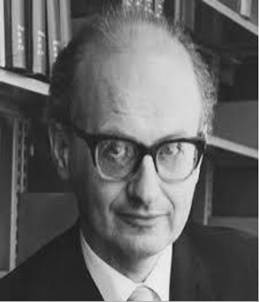
Even science as a whole can be regarded as a huge research programme with Popper 'supreme heuristic rule: 'devise conjectures which have more empirical content than their predecessors'. Such methodological rules may be formulated, as Popper pointed out, as metaphysical principles. For instance, the universal anticonventionalist rule against exception-barring may be stated as the metaphysical principle: 'Nature does not allow exceptions.' This is why Watkins called such rules 'influential metaphysics'.
What I have primarily in mind is not science as a whole, but rather particular research-programmes, such as the one known as 'Cartesian metaphysics'. Cartesian metaphysics, that is, the mechanistic theory of the universe-according to which the universe is a huge clockwork with push as the only cause of motionfunctions as a powerful heuristic principle: excluding, on the negative side, all scientific theories- 489
like the 'essentialist' version of Newton's theory of action at a distance-which are inconsistent with it (negative heuristic) and implying, on the positive side, a 'metaphysical' research-programme to look behind all phenomena (and theories) for explanations based on clockwork mechanisms (positive heuristic).
(a) Negative heuristic.
All scientific research-programmes may be characterised by their 'hard core'. The negative heuristic of the programme forbids us to direct the modus tollens at this 'hard core': it bids us to articulate or even invent with great ingenuity touchstone theories, 'auxiliary hypotheses', which build up a protective belt around this core, and redirect the modus tollens on to these. It is this protective belt of auxiliary hypotheses which has to bear the brunt of tests and get adjusted and readjusted, or even completely replaced in the defence of the thus hardened core. A research-programme is successful if in the process it leads to a progressive problemshift; unsuccessful if it leads to a degenerating problem-shift.
Let us take an example. Newton's gravitational theory was possibly the most successful researchprogramme ever. When it was first produced, it was submerged in an ocean of counterexamples, 'anomalies', and opposed by the observational theories supporting these anomalies. But Newtonians turned, with brilliant tenacity and ingenuity, one counter-instance after another into corroborating instances. In the process they themselves produced new counter-examples which they again resolved. They 'turned each new difficulty into a new victory of their programme.'
I used to give in my lectures the following imaginary example of Newtonian growth. Let us take Newton's mechanics and the law of gravitation (the hard core C of the programme); and the initial conditions in some planetary system and several observational theories (the protective belt Bo). Let us imagine that a planet p slightly disobeys the theory N,, made up from C and B,. Would the Newtonian consider that this refutes C? No. He will suggest changing the hypotheses, say, about the initial conditions and will suggest that there must be a hitherto unknown, very small planet, p', perturbing the orbit of p. He would propose an auxiliary theory of p' describing its orbit, mass, etc. Then he will test the proposed orbit of p', replacing B, by B2. He would try to plan bigger telescopes to make this conjectural orbit of p' discernible, testable. But if it seems that the conjectured planet is not in the reach even of the biggest optical telescopes, he may try some quite new instrument (like a radiotelescope) in order to enable us to 'observe it', that is, to ask-however indirectly-Nature about it. The new observational theory may itself be poorly articulated, but for the time being they will not care. If the new instrument locates the planet where C & B2 predicted, the result will be hailed as a victory for the research-programme (arrived at by sacrificing B1) and, incidentally, also for the new observational theory. If the planet is not found, would the Newtonian consider that this refutes C? No. Would he consider that this refutes his theory about the disturbing small planet? No. He will suggest, say, that a cloud of cosmic dust must hide the planet from us: B2 which recorded no such cloud, was in this respect false. He will calculate the location and properties of this cloud (thereby introducing B3) and send a satellite to test it. If the satellite's instruments (possibly with the help of yet another weakly-tested 'observational theory') record the existence of the conjectured cloud, the result will be hailed as a big victory for the research-programme (arrived at by modifying, or if you wish, sacrificing B2) and, incidentally, also for the new observational theory. If the satellite records no such cloud, would the Newtonian consider that this refutes C? No. He might still stick to his imaginary small planet, to his imaginary cloud, and suggest, say, that the cloud is there, but the observational theory on which the satellite's experimental techniques were based, were false. B3 too will be modified and some B4 proposed..and possibly corroborated! In this contrived case the successive versions of the researchprogramme constitute a consistently progressive theoretical shift: each step represented an increase in empirical content. This is paired with an intermittently progressive empirical shift: not every step produced immediately a new fact. But who would doubt that we described an outstanding success in science? Thus we shall call a shift progressive if it is consistently progressive in empirical content and at least intermittently progressive in corroboration. The term 'intermittently' gives sufficient scope for dogmatic adherence to a programme within the bounds of rationality.
(b) Positive heuristic. We should note, however, that even a most rapidly and consistently progressing research-programme can digest its counter-examples only piecemeal. But it should not be thought that yet unexplained anomalies-'puzzles', as Kuhn might call them-are taken in random order, and the protective belt built up in an eclectic fashion, without any preconceived order. The order is usually decided in the theoretician's cabinet, independently of the known anomalies. This order of research, research policy, is predetermined-more or less-by the positive heuristic of the researchprogramme. While the negative heuristic specifies the 'hard core' of the programme, the positive heuristic consists of a partially articulated set of suggestions or hints on how to develop the 'refutable variants' of the researchprogramme, how to modify, sophisticate, the protective belt. The 'core' of a research-programme is 'irrefutable' by the methodological decision of its protagonists: but the 'protective belt' of auxiliary hypotheses can be modified, 'refuted'.
The positive heuristic of the programme saves the scientist from becoming confused by the ocean of anomalies. The positive heuristic sets out a programme which lists a chain of ever more complicated models simulating reality: the scientist's attention is riveted on building his model following instructions which are laid down in the positive part of his programme. He ignores the actual counter-examples, the available 'data'. Newton first worked out his programme for a planetary system with a fixed point-like sun and one single point-like planet. It was in this model that he derived his inverse square law for Kepler's ellipsis. But this model was forbidden by Newton's own third law of dynamics, therefore the model had to be replaced by one in which bothsun and planet revolved round theircommon centre of gravity. This change was not motivated by any observation (the data did not then suggest here an 'anomaly') but by a theoretical difficulty. Then he worked out the programme for more planets as if there were only heliocentric but no interplanetary forces. Then he worked out the case where the sun and planets were not masspoints but mass-balls. This change again did not need the observation of an anomaly; rather, infinite density was forbidden by an (inarticulated) touchstone theory, therefore planets had to be extended. This change had considerable mathematical difficulties and held up Newton's work-and delayed the publication of the Principia by more than a decade. Having solved this 'puzzle', he started work on spinning balls and their wobbles. Then he admitted interplanetary forces and started work on perturbations. At this point he started to look more anxiously at the facts. Many of them were beautifully explained (qualitatively) by this model, many were not. It was then that he started to work on bulging planets, rather than round planets, etc.
Newton despised people who, like Hooke, stumbled on a first naive model but did not have the tenacity and ability to develop it into a research-programme, and who thought that a first version, a mere aside, constituted already a 'discovery'. He held up publication until his programme had achieved a remarkable progressive shift.
But most, if not all, Newtonian 'puzzles', leading to a series of new variants superseding each other were forseeable at the time of Newton's first naive model and no doubt Newton and his colleagues did foresee them: Newton must have been fully aware ofthe blatant falsity of his first variants. Nothing shows the existence of a positive heuristic of a research-programme better than this fact: this is why one speaks of 'models' in research-programm A 'model' is a set of initial conditions (possibly together with some of the observational theories) which one knows is bound to be replaced during the further development of the programme, and one even knows, more or less, exactly how. This shows once more how irrelevant refutations of any specific variant are in a research programme: their existence is fully expected, the positive heuristic is there as the strategy both to predict (produce) and to digest them. (Not that suprises are excluded; indeed, they are bound to occur. This may first lead to a need for a more creative development of the positive heuristic; and later may, with the help of a rival programme, overthrow the research-programme altogether.)
One may formulate the 'positive heuristic' of a researchprogramme as a 'metaphysical' principle. For instance one may formulate Newton's programme like this: 'the planets are essentially gravitating spinning-tops of roughly spherical shape.' This idea was never rigidly maintained: the planets are not just gravitational, they have also electro-magnetic, etc., characteristics which even influence their motion. It is better therefore to separate the 'hard core' from the more flexible metaphysical principles expressing the positive heuristic.
Our considerations show that the positive heuristic forges ahead with almost complete disregard to the 'refutations': it may seem that it is the verifications rather than the refutations which provide the contact points with reality. Although one must point out that any verification of the n+ 1-th version of the programme is a refutation of the n-th version, we cannot deny that some defeats of the subsequent versions are always foreseen: it is the verifications which keep the programme going, recalcitrant instances notwithstanding.
We may appraise research-programmes, even after their 'elimination', for their heuristic power: how many new facts they produced, how great was 'their capacity to explain their refutations in the course of their growth'. The dialectic of positive and negative heuristic can be seen very clearly in the case of Prout's research-programme. Prout, in a paper published anonymously in 1815, claimed that the atomic weights of all pure chemical elements are whole numbers. He knew very well that anomalies abounded: but he proposed that these are due to the fact that chemical substances as they ordinarily occurred were impure. The protagonists of Prout's theory therefore embarked on a research-programme to separate pure elements. Such a programme would have been meritorious even if Prout's idea had really been completely 'without foundation', as Stas concluded in 1860. Prout's theory defeated the theories previously applied in purification of chemical substances one after the other. Stas, like many others, became tired of the research programme and gave it up, since the successes were still far from adding up to a final victory. But others were not discouraged. Marignac immediately retorted that 'although [-he is satisfied that-] the experiments of Monsieur Stas are perfectly exact, [there is no proof] that the differences observed between his results and those required by Prout's law cannot be explained by the imperfect character of experimental methods. And as Crookes put it in 1886: 'Not a few chemists of admitted eminence consider that we have here [in Prout's theory] an expression of the truth, masked by some residual or collateral phenomena which we have not yet succeeded in eliminating'. That is, there must be some further false hidden assumption in the touchstone theories on which 'experimental techniques' for chemical purification were based and with the help of which atomic weights were calculated: some present 'atomic weights merely represent a mean value'. Indeed, Crookes went on to put this idea in a scientific (contentincreasing) form: he proposed concrete new theories of 'fractionation' to serve as a 'sorting Demon'. But, alas, his new observational theories turned out to be as utterly false as they were bold and they were thus eliminated from the (rationally reconstructed) history of science. As it turned out a generation later, there was a very simple hidden assumption which failed the researchers: that two pure elements must be separable by chemical methods. The idea, that two different pure elements may behave identically in all chemical reactions but can be separated by physical methods, required a change-a 'stretching'-of the concept of 'pure element' which constituted a change-a concept-stretching expansion-of the programme itself. This revolutionary, highly creative shift was taken only by Rutherford's school. But the creative step was in fact only a sideresult of progress in a distant research programme; Proutians did not have the courage and imagination to try for instance to build strong centrifugal machines to separate elements.
Let us, however, stress that in the methodology of researchprogrammes here proposed there was never any reason to eliminate Prout's programme: indeed, the programme produced a beautiful progressive shift, even if, in between, there were considerabl, hitches.
It is incredible how much the progress of science was slowed down by justificationism and by naive falsificationism. (The opposition to atomic theory in the nineteenth century was fostered by both.) An elaboration of this particular influence of bad methodology on science would institute a rewarding researchprogramme for the historian of science.
(c) A new look at crucial experiments.
Popper, as we have seen, did not explain some important aspects of continuity in the growth of science. But did we not go in our 'anti-falsificationist' approach so far to the other extreme that now we are bound to say that even the celebrated"crucial experiments' have no force to overthrow a researchprogramme?
The answer is very easy. In the progress of science there is a proliferation of competing researchprogrammes. The first 'naive' models of competing programmes deal usually with different aspects of the domain (e.g. the first model of Newton's semicorpuscular optics described light-refraction, the first model of Huyghens' wave optics light interference). As the rival researchprogrammes expand, they gradually encroach on each other's territory and the n-th version of the first will be blatantly, dramatically inconsistent with the m-th version of the second. The first is defeated in this battle, the second wins, But the war is not over: any research-programme is allowed a few such defeats. All it needs for a comeback is to produce an n + l-th content-increasing version and a verification of some of its novel content.
If such a comeback, after sustained effort, is not forthcoming, the war is lost and the experiment proved, with hindsight, 'crucial'. But the resistance may last for a long time, for the defeated programme may hold out with ingenious content-increasing innovations unrewarded with empirical success. It is very difficult to defeat a research-programme supported by talented, imaginative scientists. Alternatively, stubborn protagonists of the defeated programme may offer ad hoc explanations of the experiments or a shrewd ad hoc 'reduction' of the victorious programme to the defeated one. But such efforts we should reject as unscientific.
This position explains why crucial experiments are seen to be crucial only decades later, as in the case of Kepler's ellipses which were admitted as crucial evidence for Newton and against Descartes only about 100 years after Newton's claim. Y oung claimed that his double-slit experiment in 1802 was a crucial experiment between the corpuscular and the wave programmes of optics; but his claim was only acknowledged much later, after Fresnel carried on the wave programme much further progressively and the Newtonians could not match it. Frequently, an anomaly, which has been known for decades if not for centuries, gets its title of crucial experiment after a long period of development of rival programmes. Examples abound: the MichelsonMorley experiment was seen to defeat Maxwell only after a long stretch of degeneration in Maxwell's and a long stretch of progress in Einstein's programme. Michelson's refutation of the Balmer series was ignored for a generation until Bohr's triumphant research-programme backed it up. Brownian motion was there for nearly a century in the middle of the battlefield before it was seen to defeat the phenomenological research-programme and turn the war in favour of the atomists.
(d) A note on 'metaphysical research-programmes'.
An idea of a research-programme which is akin to my concept of 'scientific research-programme' was put forward by Popper, Agassi and Watkins in the 1950s, But none of them exploded naive falsificationism and therefore they associated 'tenacity' with syntactical irrefutability, that is, in their terminology, with 'metaphysical' statements like 'all-some' statements and purely existential statements. If a theory, like Newton's theory of gravitation, seemed-in their misconceived mono-theoretical modelsyntactically refutable, that is 'empirical', they could not accept it as methodologically irrefutable, that is, 'non-empirical' or 'metaphysical'. Therefore they conceived the hard core of researchprogrammes as necessarily 'metaphysical' in its 'logical form'. Agassi concentrated his attention on vague 'metaphysical frameworks' forming an influential 'background' to scientific theories. These frameworks, he stressed, provide the main guide for directing the scientists' attention to certain problems rather than to others; he summarised his ideas in his excellent [1964]. Watkins was more interested in the methodological role of syntactically irrefutable statements which occur within a syntactically refutable theory; his 11958] is a crystal-clear exposition of his thesis. Popper himself stressed the heuristic importance of 'influential metaphysics' already in his [1934], and was regarded by some members of the Vienna Circle as a champion of dangerous metaphysics. When his interest in the role of metaphysics was rekindled by the dialectic of his own development and also by the stimulus of Watkins and Agassi, he wrote a most interesting 'Metaphysical Epilogue' to his Postscript: After Twenty Yearsin galleys since 1957. But the writings of Popper, Watkins and Agassi on this subject all contain a certain conflation of syntactical and methodological irrefutability. Watkins elaborated beautifully the role of the metaphysical parts of a scientific theory, but it does not seem to have occurred to him that a scientific theory may have a metaphysical part which, although syntactically refutable, is methodologically irrefutable, and thus it may provide a core as hard as some syntactically irrefutable statements. The reason for this oversight, I think, was primarily due to two specific weaknesses in Popperian analysis: (1) the conflation of 'theory' and 'researchprogramme' (I have shown that the application of 'scientificness' or 'empiricalness' to theories, instead of to 'research-programmes', was a category mistake) and (2) the relegation of background theories into the limbo of 'universally accepted experimental techniques' and their exclusion from the critical deductive model of the theory under test...”
Imre Lakatos (1922-1974) - a Hungarian philosopher of mathematics and science, known for his thesis of the fallibility of mathematics and its 'methodology ofproofs and refutations' in its pre- axiomatic stages of development, and also for introducing the concept of the 'research programme' in his methodology of scientific research programmes.
Feyerabend, P. (2010). Against Method, Fourth Edition edition. Verso.
11. “Such 'irrational' methods of support are needed because of the 'uneven development' (Marx, Lenin) of different parts of science. Copernican ism and other essential ingredients of modem science survived only because reason was frequently overruled in their past.
A prevalent tendency in philosophical discussions is to approach problems of knowledge sub specie aeternitatis, as it were. Statements are compared with each other without regard to their history and without considering that they might belong to different historical strata. For example, one asks: given background knowledge, initial conditions, basic principles, accepted considerably. Some say that it is possible to determine degrees of confirmation and that the hypothesis can be evaluated with their help. Others reject any logic of confirmation and judge hypotheses by their content, and by the falsifications that have actually occurred. But almost everyone takes it for granted that precise observations, clear principles and well-confirmed theories are already decisive;
observations - what conclusions can we draw about a newly suggested hypothesis? The answers vary
that they can and must be used here and now to either eliminate the suggested hypothesis, or to make it acceptable, or perhaps even to prove it.
Such a procedure makes sense only if we can assume that the elements of our knowledge - the theories, the observations, the principles of our arguments - are timeless entities which share the same degree of perfection, are all equally accessible, and are related to each other in a way that is independent of the events that produced them. This is, of course, an extremely common assumption. It is taken for granted by most logicians; it underlies the familiar distinction between a context of discovery and a context of justification; and it is often expressed by saying that science deals with propositions and not with statements or sentences. However, the procedure overlooks that science is a complex and heterogeneous historical process which contains vague and incoherent anticipations of future ideologies side by side with highly sophisticated theoretical systems and ancient and petrified forms of thought. Some of its elements are available in the form of neatly written statements while others are submerged and become known only by contrast, by comparison with new and unusual views. (This is the way in which the inverted tower argument helped Galileo to discover the natural interpretations hostile to Copernicus. And this is also the way in which Einstein discovered certain deep-lying assumptions of classical mechanics, such as the assumption of the existence of infinitely fast signals. For general considerations, cf. the last paragraph of Chapter 5.) Many of the conflicts and contradictions which occur in science are due to this heterogeneity of the material, to this 'unevenness' of the historical development, as a Marxist would say, and they have no immediate theoretical significance. They have much in common with the problems which arise when a power station is needed right next to a Gothic cathedral. Occasionally, such features are taken into account; for example, when it is asserted that physical laws (statements) and biological laws (statements) belong to different conceptual domains and cannot be directly compared. But in most cases, and especially in the case observation vs theory, our methodologies project the various elements of science and the different historical strata they occupy on to one and the same plane, and proceed at once to render comparative judgements. This is like arranging a fight between an infant and a grown man, and announcing triumphantly, what is obvious anyway, that the man is going to win (the history of science is full of inane criticisms of this kind and so is the history of psychoanalysis and of Marxism). In our examination of new hypotheses we must obviously take the historical situation into account. Let us see how this is going to affect our judgement!
The geocentric hypothesis and Aristotle's theory of knowledge and perception are well adapted to each other. Perception supports the theory of locomotion that entails the unmoved earth and it is in tum a special case of a comprehensive view of motion that includes locomotion, increase and decrease, qualitative alteration, generation and corruption. This comprehensive view defines motion as the transition of a form from an agent to a patient which terminates when the patient possesses 494
exactly the same form that characterized the agent at the beginning of the interaction. Perception, accordingly, is a process in which the form of the object perceived enters the percipient as precisely the same form that characterized the object so that the percipient, in a sense, assumes the properties of the object.
A theory of perception of this kind (which one might regard as a sophisticated version of naive realism) does not permit any major discrepancy between observations and the things observed. 'That there should be things in the world which are inaccessible to man not only now, and for the time being, but in principle, and because of his natural endowment, and which would therefore never be seen by him - this was quite inconceivable for later antiquity as well as for the Middle Ages.' Nor does the theory encourage the use of instruments, for they interfere with the processes in the medium. These processes carry a true picture only as long as they are left undisturbed. Disturbances create forms which are no longer identical with the shape of the objects perceived - they create illusions. Such illusions can be readily demonstrated by examining the images produced by curved mirrors, or by crude lenses (and remember that the lenses used by Galileo were far from the level of perfection achieved today): they are distorted, the lens-images have coloured fringes, they may appear at a place different from the place of the object and so on. Astronomy, physics, psychology, epistemology - all these disciplines collaborate with the Aristotelian philosophy to create a system that is coherent, rational and in agreement with the results of observation as can be seen from an examination of Aristotelian philosophy in the form in which it was developed by some mediaeval philosophers. Such an analysis shows the inherent power of the Aristotelian system.
The role of observation in Aristotle is quite interesting. Aristotle is an empiricist. His injunctions against an overly-theoretical approach are as militant as those of the 'scientific' empiricists of the 17th and 18th centuries. But while the latter take both the truth and the content of empiricism for granted, Aristotle explains the nature of experience and why it is important. Experience is what a normal observer (an observer whose senses are in good order and who is not drunk or sleepy, etc.) perceives under normal circumstances (broad daylight; no interference with the medium) and describes in an idiom that fits the facts and can be understood by all. Experience is important for knowledge because, given normal circumstances, the perceptions of the observer contain identically the same forms that reside in the object. Nor are these explanations ad hoc. They are a direct consequence of Aristotle's general theory of motion, taken in conjunction with the physiological idea that sensations obey the same physical laws as does the rest of the universe. And they are confirmed by the evidence that confirms either of these two views (the existence of distorted lens-images being part of the evidence). We understand today a little better why a theory of motion and perception which is now regarded as false could be so successful (evolutionary explanation of the adaptation of organisms; movement in media). The fact remains that no decisive empirical argument could be raised against it (though it was not free from difficulties).
This harmony between human perception and the Aristotelian cosmology is regarded as illusory by the supporters of the motion of the earth. In the view of the Copemicans there exist large-scale processes which involve vast cosmic masses and yet leave no trace in our experience. The existent observations therefore count no longer as tests of the new basic laws that are being proposed. They are not directly attached to these laws, and they may be entirely disconnected. Today, after the success of modem science led to the belief that the relation between man and the universe is not as simple as is assumed by naive realism, we can say that this was a correct guess, that the observer is indeed separated from the laws of the world by the special physical conditions of his observation platform, the moving earth (gravitational effects; law of inertia; Coriolis forces; influence of the atmosphere upon optical observations; aberration; stellar parallax; and so on.. ), by the idiosyncrasies of his basic instrument of observation, the human eye (irradiation; after-images; mutual inhibition of adjacent retinal elements; and so on.. ) as well as by older views which have invaded the observation language and made it speak the language of naive realism (natural interpretations). Observations may contain a contribution from the thing observed, but this contribution merges with other effects (some of which we have just mentioned), and it may be completely obliterated by them. Just consider the image of a fixed star as viewed through a telescope. This image is displaced by the effects of refraction, aberration and, possibly, of gravitation. It contains the spectrum of the star not as it is now, but as it was some time ago (in the case of extra-galactic supernovae the difference may be millions of years), 495
and distorted by Doppler effect, intervening galactic matter, etc. Moreover, the extension and the internal structure of the image is entirely determined by the telescope and the eyes of the observer: it is the telescope that decides how large the diffraction disks are going to be, and it is the human eye that decides how much of the structure of these disks is going to be seen. It needs considerable skill and much theory to isolate the contribution of the original cause, the star, and to use it for a test, but this means that non-Aristotelian cosmologies can be tested only after we have separated observations and laws with the help of auxiliary sciences describing the complex processes that occur between the eye and the object, and the even more complex processes between the cornea and the brain. We must subdivide what we perceive to find a core that mirrors the stimulus and nothing else. In the case of Copernicus we need a new meteorology (in the good old sense of the word, as dealing with things below the moon), a new science of physiological optics that deals with the subjective (mind) and the objective (light, medium, lenses, structure of the eye) aspects of vision as well as a new dynamics stating the manner in which the motion of the earth might influence the physical processes at its surface. Observations become relevant only after the processes described by these new subjects have been inserted between the world and the eye. The language in which we express our observations may have to be revised as well so that the new cosmology receives a fair chance and is not endangered by an unnoticed collaboration of sensations and older ideas. In sum: what is needed for a test of Copernicus is an entirely new world-view containing a new view of man and of his capacities of knowing.
It is obvious that such a new world-view will take a long time appearing, and that we may never succeed to formulate it in its entirety. It is extremely unlikely that the idea of the motion of the earth will at once be followed by the arrival, in full formal splendour, of all the sciences that are now said to constitute the body ofclassical physics'. Or, to be a little more realistic, such a sequence of events is not only extremely unlikely, it is impossible in principle, given the nature of humans and the complexities of the world they inhabit. Today Copernicus, tomorrow Helmholtz - this is but a Utopian dream. Yet it is only after these sciences have arrived that a test can be said to make sense.
This need to wait, and to ignore large masses of critical observations and measurements, is hardly ever discussed in our methodologies. Disregarding the possibility that a new physics or a new astronomy might have to be judged by a new theory of knowledge and might require entirely new tests, empirically inclined scientists at once confront it with the status quo and announce triumphandy that 'it is not in agreement with facts and received principles'. They are of course right, and even trivially so, but not in the sense intended by them. For at an early stage of development the contradiction only indicates that the old and the new are different and out of phase. lt does not show which view is the better one. A judgement of this kind presupposes that the competitors confront each other on equal terms. How shall we proceed in order to bring about such a fair comparison?
The first step is clear: we must retain the new cosmology until it has been supplemented by the necessary auxiliary sciences. We must retain it in the face of plain and unambiguous refuting facts. We may, of course, try to explain our action by saying that the critical observations are either not relevant or that they are illusory, but we cannot support such an explanation by a single objective reason. Whatever explanation we give is nothing but a verbal gesture, a geode invitation to participate in the development of the new philosophy. Nor can we reasonably remove the received theory of perception which says that the observations are relevant, gives reasons for this assertion, and is confirmed by independent evidence. Thus the new view is arbitrarily separated from data that supported its predecessor and is made more 'metaphysical': a new period in the history of science commences with a backward movement that returns us to an earlier stage where theories were more vague and had smaller empirical content. This backward movement is not just an accident; it has a definite function; it is essential if we want to overtake the status quo, for it gives us the time and the freedom that are needed for developing the main view in detail, and for finding the necessary auxiliary sciences.
This backward movement is indeed essential - but how can we persuade people to follow our lead? How can we lure them away from a well-defined, sophisticated and empirically successful system and make them transfer their allegiance to an unfinished and absurd hypothesis? To a hypothesis, moreover, that is contradicted by one observation after another if we only take the trouble to compare it with what is plainly shown to be the case by our senses? How can we convince them 496
that the success of the status quo is only apparent and is bound to be shown as such in 500 years or more, when there is not a single argument on our side (and remember that the illustrations I used two paragraphs earlier derive their force from the successes of classical physics and were not available to the Copernicans). It is clear that allegiance to the new ideas will have to be brought about by means other than arguments. It will have to be brought about by irrational means such as propaganda, emotion, ad hoc hypotheses, and appeal to prejudices of all kinds. We need these 'irrational means' in order to uphold what is nothing but a blind faith until we have found the auxiliary sciences, the facts, the arguments that tum the faith into sound 'knowledge'.
It is in this context that the rise of a new secular class with a new outlook and considerable contempt for the science of the schools, its methods, its results, even for its language, becomes so important. The barbaric Latin spoken by the scholars, the intellectual squalor of academic science, its other-worldliness which is soon interpreted as uselessness, its connection with the Church - all these elements are now lumped together with the Aristotelian cosmology and the contempt one feels for them is transferred to every single Aristotelian argument. This guilt-by-association does not make the arguments less rational, or less conclusive, but it reduces their influence on the minds of those who are willing to follow Copernicus. For Copernicus now stands for progress in other areas as well, he is a symbol for the ideals of a new class that looks back to the classical times of Plato and Cicero and forward to a free and pluralistic society. The association of astronomical ideas and historical and class tendencies does not produce new arguments either. But it engenders a firm commitment to the heliocentric view - and this is all that is needed at this stage, as we have seen.
We have also seen how masterfully Galileo exploits the situation and how he amplifies it by tricks, jokes, and non-sequiturs of his own. We are here dealing with a situation that must be analysed and understood if we want to adopt a more reasonable attitude towards the issue between 'reason' and 'irrationality'. Reason grants that the ideas which we introduce in order to expand and to improve our knowledge may arise in a very disorderly way and that the origin of a particular point of view may depend on class prejudice, passion, personal idiosyncrasies, questions of style, and even on error, pure and simple. But it also demands that in judging such ideas we follow certain well-defined rules: our evaluation of ideas must not be invaded by irrational elements. Now, what our historical examples seem to show is this: there are situations when our most liberal judgements and our most liberal rules would have eliminated a point of view which we regard today as essential for science, and would not have permitted it to prevail - and such situations occur quite frequently. The ideas survived and they now are said to be in agreement with reason. They survived because prejudice, passion, conceit, errors, sheer pigheadedness, in short because all the elements that characterize the context of discovery, opposed the dictates of reason and because these irrational elements were pennitted to have their way. To express it differently: Copernicanism and other 'rational' views exist today only because reason was overruled at some time in their past. (The opposite is also true: witchcraft and other 'irrational' views have ceased to be influential only because reason was overruled at some time in their past.)
Now, assuming that Copernicanism is a Good Thing, we must also admit that its survival is a Good Thing. And, considering the conditions of its survival, we must further admit that it was a Good Thing that reason was overruled in the 16th, 17th and even the 18th centuries. Moreover, the cosmologists of the 16th and 17th centuries did not have the knowledge we have today, they did not know that Copernicanism was capable of giving rise to a scientific system that is acceptable from the point of view of 'scientific method'. They did not know which of the many views that existed at their time would lead to future reason when defended in an 'irrational' way. Being without such guidance they had to make a guess and in making this guess they could only follow their inclinations, as we have seen. Hence it is advisable to let one's inclinations go against reason in any circumstances, for it makes life less constrained and science may profit from it It is clear that this argument, that advises us not to let reason overrule our inclinations and occasionally to suspend reason altogether, does not depend on the historical material which I have presented. If my account of Galileo is historically correct, then the argument stands as formulated. If it turns out to be a fairy-tale, then this fairy-tale tells us that a conflict between reason and the preconditions of progress is possible, it indicates how it might arise, and it forces us to conclude that our chances to progress may be obstructed by our desire to be rational. And note that progress is here defined as a rationalistic lover of science would define it, i.e. as entailing that Copernicus is better than Aristotle and Einstein better than Newton. Of course, there is no need to accept this definition, which is certainly quite narrow. I use it only to show that an idea of reason accepted by the majority of rationalists may prevent progress as defined by the very same majority. I now resume the discussion of some details of the transition from Aristotle to Copernicus.
The first step on the way to a new cosmology, I have said, is a step back: apparently relevant evidence is pushed aside, new data are brought in by ad hoc connections, the empirical content of science is drastically reduced. Now the cosmology that happens to be at the centre of attention and whose adoption causes us to carry out the changes just described differs from other views in one respect only: it has features which at the time in question seem attractive to some people. But there is hardly any idea that is totally without merit and that might not also become the starting point of concentrated effort. No invention is ever made in isolation, and no idea is, therefore, completely without (abstract or empirical) support. Now if partial support and partial plausibility suffice to start a new trend - and I have suggested that they do - if starting a new trend means taking a step back from the evidence, if any idea can become plausible and can receive partial support, then the step back is in fact a step forward, and away from the tyranny of tightly-knit, highly corroborated, and gracelessly presented theoretical systems. 'Another different error', writes Bacon on precisely this point, 'is the... peremptory reduction of knowledge into arts and methods, from which time the sciences are seldom improved; for as young men rarely grow in stature after their shape and limbs are fully formed, so knowledge, whilst it lies in aphorisms and observations, remains in a growing state; but when once fashioned into methods, though it may be further polished, illustrated and fitted for use, is no longer increased in bulk and substance.'
The similarity with the arts which has often been asserted arises at exactly this point. Once it has been realized that a close empirical fit is no virtue and that it must be relaxed in times of change, then style, elegance of expression, simplicity of presentation, tension of plot and narrative, and seductiveness of content become important features of our knowledge. They give life to what is said and help us to overcome the resistance of the observational material. They create and maintain interest in a theory that has been partly removed from the observational plane and would be inferior to its rivals when judged by the customary standards. It is in this context that much of Galileo's work should be seen. This work has often been likened to propaganda - and propaganda it certainly is. But propaganda of this kind is not a marginal affair that surrounds allegedly more substantial means of defence, and that should perhaps be avoided by the 'professionally honest scientist'. In the circumstances we are considering now, propaganda is of the essence. It is of the essence because interest must be created at a time when the usual methodological prescriptions have no point of attack; and because this interest must be maintained, perhaps for centuries, until new reasons arrive. It is also clear that such reasons, i.e. the appropriate auxiliary sciences, need not at once tum up in full formal splendour. They may at first be quite inarticulate, and may even conflict with the existing evidence. Agreement, or partial agreement, with the cosmology is all that is needed in the beginning. The agreement shows that they are at least relevant and that they may some day produce full-fledged positive evidence. Thus the idea that the telescope shows the world as it really is leads to many difficulties. But the support it lends to, and receives from, Copernicus is a hint that we might be moving in the right direction.
We have here an extremely interesting relation between a general view and the particular hypotheses which constitute its evidence. It is often assumed that general views do not mean much unless the relevant evidence can be fully specified. Carnap, for example, asserts that 'there is no independent interpretation for [the language in terms of which a certain theory or world-view is formulated]. The system T [the axioms of the theory and the rules of derivation] is itself an uninterpreted postulate system. [Its] terms obtain only an indirect and incomplete interpretation by the fact that some of them are connected by correspondence rules with observational terms.' 'There is no independent interpretation,' says Carnap and yet an idea such as the idea of the motion of the earth, which was inconsistent with the contemporary evidence, which was upheld by declaring this evidence to be irrelevant and which was therefore cut from the most important facts of contemporary astronomy, managed to become a nucleus, a crystallization point for the aggregation of other inadequate views which gradually increased in articulation and finally fused into a new cosmology including new kinds of evidence. There is no better account of this process than the description which John Stuart Mill has left us of the vicissitudes of his education. Referring to the explanations which his father gave him on logical matters he writes: 'The explanations did not make the matter at all clear to me at the time; but they were not therefore useless; they remained as a nucleus for my observations and reflections to crystallize upon... In exactly the same manner the Copernican view, though devoid of cognitive content from the point of view of a strict empiricism or else refuted, was needed in the construction of the supplementary sciences even before it became testable with their help and even before it, in turn, provided them with supporting evidence of the most forceful kind.
There is a further element in this tapestry of moves, influences, beliefs which is rather interesting and which received attention only recently - the role of patronage. Today most researchers gain a reputation, a salary and a pension by being associated with a university and/or a research laboratory. This involves certain conditions such as an ability to work in teams, a willingness to subordinate one's ideas to those of a team leader, a harmony between one's ways of doing science and those of the rest of the profession, a certain style, a way of presenting the evidence - and so on. Not everyone fits conditions such as these; able people remain unemployed because they fail to satisfy some of them. Conversely the reputation of a university or a research laboratory rises with the reputation of its members. In Galileo's time patronage played a similar role. There were certain ways of gaining a patron and of keeping him. The patron in tum rose in estimation only if he succeeded to attract and to keep individuals of outstanding achievement. According to Westfall, the Church permitted the publication of Galileo's Dialogue in the full knowledge of the controversial matters contained in it '[n]ot least because a Pope [Urban VIII] who gloried in his reputation as a Maecenas, was unwilling to place it in jeopardy by saying no to the light of his times', and Galileo fell because he violated his side of the rules of patronage.
Considering all these elements, the 'Rise of the Copernican World-View' becomes a complicated matter indeed. Accepted methodological rules are put aside because of social requirements (patrons need to be persuaded by means more effective than argument), instruments are used to redefine experience instead of being tested by it, local results are extrapolated into space despite reasons to the contrary, analogies abound - and yet all this turns out, in retrospect, to have been the correct way of circumventing the restrictions implied by the human condition. This is the material that should be used to get better insight into the complex process of knowledge acquisition and improvement.
To sum up the content of the last five chapters: When the 'Pythagorean idea' of the motion of the earth was revived by Copernicus it met with difficulties which exceeded the difficulties encountered by contemporary Ptolemaic astronomy. Strictly speaking, one had to regard it as refuted. Galileo, who was convinced of the truth of the Copernican view and who did not share the quite common, though by no means universal, beliefin a stable experience, looked for new kinds of fact which might support Copernicus and still be acceptable to all. Such facts he obtained in two different ways. First, by the invention of his telescope, which changed the sensory core of everyday experience and replaced it by puzzling and unexplained phenomena; and by his principle of relativity and his dynamics, which changed its conceptual components. Neither the telescopic phenomena nor the new ideas of motion were acceptable to common sense (or to the Aristotelians). Besides, the associated theories could be easily shown to be false. Yet these false theories, these unacceptable phenomena, were transformed by Galileo and converted into strong support of Copernicus. The whole rich reservoir of the everyday experience and of the intuition of his readers is utilized in the argument, but the facts which they are invited to recall are arranged in a new way, approximations are made, known effects are omitted, different conceptual lines are drawn, so that a new kind of experience arises, manufactured almost out of thin air. This new experience is then solidified by insinuating that the reader has been familiar with it all the time. It is solidified and soon accepted as gospel truth, despite the fact that its conceptual components are vastly more speculative than are the conceptual components of common sense. Following positivistic usage we may therefore say that Galileo's science rests on an illustrated metaphysics. The distortion permits Galileo to advance, but it prevents almost everyone else from making his effort the basis of a critical philosophy (for a long time emphasis was put either on his mathematics, or on his alleged experiments, or on his frequent appeal to the 'truth', and his propagandistic moves were altogether neglected). I suggest that what Galileo did was to let refuted theories support each other, that he built in this way a new world-view which was only loosely (if at all!) connected with the preceding cosmology (everyday experience included), that he established fake connections with the perceptual elements of this cosmology which are only now being replaced by genuine theories (physiological optics, theory of continua), and that whenever possible he replaced old facts by a new type of experience which he simply invented for the purpose of supporting Copernicus. Remember, incidentally, that Galileo's procedure drastically reduces the content of dynamics: Aristotelian dynamics was a general theory of change comprising locomotion, qualitative change, generation and corruption. Galileo's dynamics and its successors deal with locomotion only, other kinds of motion being pushed aside with the promissory note (due to Democritus) that locomotion will eventually be capable of comprehending all motion. Thus, a comprehensive empirical theory of motion is replaced by a much narrower theory plus a metaphysics of motion, iust as an 'empirical' experience is replaced by an experience that contains speculative elements. This, I suggest, was the actual procedure followed by Galileo. Proceeding in this way he exhibited a style, a sense of humour, an elasticity and elegance, and an awareness of the valuable weaknesses of human thinking, which has never been equalled in the history of science. Here is an almost inexhaustible source of material for methodological speculation and, much more importantly, for the recovery of those features of knowledge which not only inform, but which also delight us”.
Paul Karl Feyerabend (1924 -1994) was an Austrian-born philosopher of science. Feyerabend became famous for his purportedly anarchistic view of science and his rejection of the existence of universal methodological rules.
Control questions
1. What is the difference between scientific and pseudo-scientific knowledge?
2. What is demarcation problem?
3. Geocentric vs heliocentric system.
4. Explain the paradigm shift.
5. What are scientific revolutions and scientific research programs?
6. Explain epistemological anarchism.
7. How do we call the problem of saying what is scientific and what is not?
8. What theory magnifies the role of decisions, or free selection from amongst equally possible alternatives?
9. What is the difference between explicit and tacit knowledge?
10. Who proposed an evolutionary model of conceptual change, in contrast to Kuhn's revolutionary model?
11. In what book the anarchistic theory of knowledge was proposed?
12. Who are the main representatives of the historical school of philosophy of science?
13. Who is the author of “The Open Society and its Enemies”?
14. What is tacit dimension?
15. Who introduced the concept of paradigm shift? What is paradigm shift?
Theme 4. Scientific knowledge as an object of philosophical analysis. The problem of truth
Glanzberg, M., “Truth”, The Stanford Encyclopedia of Philosophy (Winter 2016 Edition), Edward N. Zalta (ed.), URL = https://plato.stanford.edu/archives/win2016/entries/truth/.
“Truth is one of the central subjects in philosophy. It is also one of the largest. Truth has been

a topic of discussion in its own right for thousands of years. Moreover, a huge variety of issues in philosophy relate to truth, either by relying on theses about truth, or implying theses about truth.
It would be impossible to survey all there is to say about truth in any coherent way. Instead, this essay will concentrate on the main themes in the study of truth in the contemporary philosophical literature. It will attempt to survey the key problems and theories of current interest, and show how they relate to one-another. A number of other entries investigate many of these topics in greater depth. Generally, discussion of the principal arguments is left to them. The goal of this essay is only to provide an overview of the current Theories. Many of the papers mentioned in this essay can be found in the anthologies edited by Blackburn and Simmons (1999) and Lynch
(2001b). There are also a number of book-length surveys of the topics discussed here, including Burgess and Burgess (2011), Kirkham (1992), and Kunne (2003).
The problem of truth is in a way easy to state: what truths are, and what (if anything) makes them true. But this simple statement masks a great deal of controversy. Whether there is a metaphysical problem of truth at all, and if there is, what kind of theory might address it, are all standing issues in the theory of truth. We will see a number of distinct ways of answering these questions.
1. The neo-classical theories of truth
Much of the contemporary literature on truth takes as its starting point some ideas which were prominent in the early part of the 20th century. There were a number of views of truth under discussion at that time, the most significant for the contemporary literature being the correspondence, coherence, and pragmatist theories of truth.
These theories all attempt to directly answer the nature question: what is the nature of truth? They take this question at face value: there are truths, and the question to be answered concerns their nature. In answering this question, each theory makes the notion of truth part of a more thoroughgoing metaphysics or epistemology. Explaining the nature of truth becomes an application of some metaphysical system, and truth inherits significant metaphysical presuppositions along the way.
The goal of this section is to characterize the ideas of the correspondence, coherence and pragmatist theories which animate the contemporary debate. In some cases, the received forms of these theories depart from the views that were actually defended in the early 20th century. We thus dub them the ‘neo-classical theories'. Where appropriate, we pause to indicate how the neo-classical theories emerge from their ‘classical' roots in the early 20th century.
1.1. The correspondence theory
Perhaps the most important of the neo-classical theories for the contemporary literature is the correspondence theory. Ideas that sound strikingly like a correspondence theory are no doubt very old. They might well be found in Aristotle or Aquinas. When we turn to the late 19th and early 20th centuries where we pick up the story of the neo-classical theories of truth, it is clear that ideas about correspondence were central to the discussions of the time. In spite of their importance, however, it is strikingly difficult to find an accurate citation in the early 20th century for the received neo-classical view. Furthermore, the way the correspondence theory actually emerged will provide some valuable reference points for the contemporary debate. For these reasons, we dwell on the origins of the 501
correspondence theory in the late 19th and early 20th centuries at greater length than those of the other neo-classical views, before turning to its contemporary neo-classical form.
1.1.1. The origins of the correspondence theory
The basic idea of the correspondence theory is that what we believe or say is true if it corresponds to the way things actually are - to the facts. This idea can be seen in various forms throughout the history of philosophy. Its modern history starts with the beginnings of analytic philosophy at the turn of the 20th century, particularly in the work of G. E. Moore and Bertrand Russell.
Let us pick up the thread of this story in the years between 1898 and about 1910. These years are marked by Moore and Russell's rejection of idealism. Yet at this point, they do not hold a correspondence theory of truth. Indeed Moore (1899) sees the correspondence theory as a source of idealism, and rejects it. Russell follows Moore in this regard. (For discussion of Moore's early critique of idealism, where he rejects the correspondence theory of truth, see Baldwin (1991). Hylton (1990) provides an extensive discussion of Russell in the context of British idealism.)
In this period, Moore and Russell hold a version of the identity theory of truth. They say comparatively little about it, but it is stated briefly in Moore (1899; 1902) and Russell (1904). According to the identity theory, a true proposition is identical to a fact. Specifically, in Moore and Russell's hands, the theory begins with propositions, understood as the objects of beliefs and other propositional attitudes. Propositions are what are believed, and give the contents of beliefs. They are also, according to this theory, the primary bearers of truth. When a proposition is true, it is identical to a fact, and a belief in that proposition is correct. (Related ideas about the identity theory and idealism are discussed by McDowell (1994) and further developed by Hornsby (2001).)
The identity theory Moore and Russell espoused takes truth to be a property of propositions. Furthermore, taking up an idea familiar to readers of Moore, the property of truth is a simple unanalyzable property. Facts are understood as simply those propositions which are true. There are true propositions and false ones, and facts just are true propositions. There is thus no “difference between truth and the reality to which it is supposed to correspond” (Moore, 1902, p. 21). (For further discussion of the identity theory of truth, see Baldwin (1991), Candlish (1999), Cartwright (1987), Dodd (2000), and the entry on the identity theory of truth.)
Moore and Russell came to reject the identity theory of truth in favor of a correspondence theory, sometime around 1910 (as we see in Moore, 1953, which reports lectures he gave in 19101911, and Russell, 1910b). They do so because they came to reject the existence of propositions. Why? Among reasons, they came to doubt that there could be any such things as false propositions, and then concluded that there are no such things as propositions at all.
Why did Moore and Russell find false propositions problematic? A full answer to this question is a point of scholarship that would take us too far afield. (Moore himself lamented that he could not “put the objection in a clear and convincing way” (1953, p. 263), but see Cartwright (1987) and David (2001) for careful and clear exploration of the arguments.) But very roughly, the identification of facts with true propositions left them unable to see what a false proposition could be other than something which is just like a fact, though false. If such things existed, we would have fact-like things in the world, which Moore and Russell now see as enough to make false propositions count as true. Hence, they cannot exist, and so there are no false propositions. As Russell (1956, p. 223) later says, propositions seem to be at best “curious shadowy things” in addition to facts.
As Cartwright (1987) reminds us, it is useful to think of this argument in the context of Russell's slightly earlier views about propositions. As we see clearly in Russell (1903), for instance, he takes propositions to have constituents. But they are not mere collections of constituents, but a ‘unity’ which brings the constituents together. (We thus confront the ‘problem of the unity of the proposition’.) But what, we might ask, would be the ‘unity’ of a proposition that Samuel Ramey sings - with constituents Ramey and singing - except Ramey bearing the property of singing? If that is what the unity consists in, then we seem to have nothing other than the fact that Ramey sings. But then we could not have genuine false propositions without having false facts.
As Cartwright also reminds us, there is some reason to doubt the cogency of this sort of argument. But let us put the assessment of the arguments aside, and continue the story. From the rejection of propositions a correspondence theory emerges. The primary bearers of truth are no longer propositions, but beliefs themselves. In a slogan:
A belief is true if and only if it corresponds to a fact.
Views like this are held by Moore (1953) and Russell (1910b; 1912). Of course, to understand such a theory, we need to understand the crucial relation of correspondence, as well as the notion of a fact to which a belief corresponds. We now turn to these questions. In doing so, we will leave the history, and present a somewhat more modern reconstruction of a correspondence theory.
1.1.2 The neo-classical correspondence theory
The correspondence theory of truth is at its core an ontological thesis: a belief is true if there exists an appropriate entity - a fact - to which it corresponds. If there is no such entity, the belief is false.
Facts, for the neo-classical correspondence theory, are entities in their own right. Facts are generally taken to be composed of particulars and properties and relations or universals, at least. The neo-classical correspondence theory thus only makes sense within the setting of a metaphysics that includes such facts. Hence, it is no accident that as Moore and Russell turn away from the identity theory of truth, the metaphysics of facts takes on a much more significant role in their views. This perhaps becomes most vivid in the later Russell (1956, p. 182), where the existence of facts is the “first truism.” (The influence of Wittgenstein's ideas to appear in the Tractatus (1922) on Russell in this period was strong, and indeed, the Tractatus remains one of the important sources for the neoclassical correspondence theory. For more recent extensive discussions of facts, see Armstrong (1997) and Neale (2001).)
Consider, for example, the belief that Ramey sings. Let us grant that this belief is true. In what does its truth consist, according to the correspondence theory? It consists in there being a fact in the world, built from the individual Ramey, and the property of singing. Let us denote this. This fact exists. In contrast, the world (we presume) contains no fact. The belief that Ramey sings stands in the relation of correspondence to the fact, and so the belief is true.
What is the relation of correspondence? One of the standing objections to the classical correspondence theory is that a fully adequate explanation of correspondence proves elusive. But for a simple belief, like that Ramey sings, we can observe that the structure of the fact matches the subject-predicate form of the that-clause which reports the belief, and may well match the structure of the belief itself.
So far, we have very much the kind of view that Moore and Russell would have found congenial. But the modern form of the correspondence theory seeks to round out the explanation of correspondence by appeal to propositions. Indeed, it is common to base a correspondence theory of truth upon the notion of a structured proposition. Propositions are again cast as the contents of beliefs and assertions, and propositions have structure which at least roughly corresponds to the structure of sentences. At least, for simple beliefs like that Ramey sings, the proposition has the same subject predicate structure as the sentence. (Proponents of structured propositions, such as Kaplan (1989), often look to Russell (1903) for inspiration, and find unconvincing Russell's reasons for rejecting them.)
With facts and structured propositions in hand, an attempt may be made to explain the relation of correspondence. Correspondence holds between a proposition and a fact when the proposition and fact have the same structure, and the same constituents at each structural position. When they correspond, the proposition and fact thus mirror each-other. In our simple example, we might have: proposition that Ramey sings
I I
fact
Propositions, though structured like facts, can be true or false. In a false case, like the proposition that Ramey dances, we would find no fact at the bottom of the corresponding diagram. Beliefs are true or false depending on whether the propositions which are believed are.
We have sketched this view for simple propositions like the proposition that Ramey sings. How to extend it to more complex cases, like general propositions or negative propositions, is an issue we will not delve into here. It requires deciding whether there are complex facts, such as general facts or negative facts, or whether there is a more complex relation of correspondence between complex propositions and simple facts. (The issue of whether there are such complex facts marks a break between Russell (1956) and Wittgenstein (1922) and the earlier views which Moore (1953) and Russell (1912) sketch.)
According to the correspondence theory as sketched here, what is key to truth is a relation between propositions and the world, which obtains when the world contains a fact that is structurally similar to the proposition. Though this is not the theory Moore and Russell held, it weaves together ideas of theirs with a more modern take on (structured) propositions. We will thus dub it the neoclassical correspondence theory. This theory offers us a paradigm example of a correspondence theory of truth.
The leading idea of the correspondence theory is familiar. It is a form of the older idea that true beliefs show the right kind of esemblance to what is believed. In contrast to earlier empiricist theories, the thesis is not that one's ideas per se resemble what they are about. Rather, the propositions which give the contents of one's true beliefs mirror reality, in virtue of entering into correspondence relations to the right pieces of it.
In this theory, it is the way the world provides us with appropriately structured entities that explains truth. Our metaphysics thus explains the nature of truth, by providing the entities needed to enter into correspondence relations.
For more on the correspondence theory, see David (1994) and the entry on the correspondence theory of truth.
1.1. The coherence theory
Though initially the correspondence theory was seen by its developers as a competitor to the identity theory of truth, it was also understood as opposed to the coherence theory of truth.
We will be much briefer with the historical origins of the coherence theory than we were with the correspondence theory. Like the correspondence theory, versions of the coherence theory can be seen throughout the history of philosophy. (See, for instance, Walker (1989) for a discussion of its early modern lineage.) Like the correspondence theory, it was important in the early 20th century British origins of analytic philosophy. Particularly, the coherence theory of truth is associated with the British idealists to whom Moore and Russell were reacting.
Many idealists at that time did indeed hold coherence theories. Let us take as an example Joachim (1906). (This is the theory that Russell (1910a) attacks.) Joachim says that:
Truth in its essential nature is that systematic coherence which is the character of a significant whole (p. 76).
We will not attempt a full exposition of Joachim's view, which would take us well beyond the discussion of truth into the details of British idealism. But a few remarks about his theory will help to give substance to the quoted passage.
Perhaps most importantly, Joachim talks of ‘truth’ in the singular. This is not merely a turn of phrase, but a reflection of his monistic idealism. Joachim insists that what is true is the “whole complete truth” (p. 90). Individual judgments or beliefs are certainly not the whole complete truth. Such judgments are, according to Joachim, only true to a degree. One aspect of this doctrine is a kind of holism about content, which holds that any individual belief or judgment gets its content only in virtue of being part of a system of judgments. But even these systems are only true to a degree, measuring the extent to which they express the content of the single ‘whole complete truth’. Any real judgment we might make will only be partially true.
To flesh out Joachim's theory, we would have to explain what a significant whole is. We will not attempt that, as it leads us to some of the more formidable aspects of his view, e.g., that it is a “process of self-fulfillment” (p. 77). But it is clear that Joachim takes ‘systematic coherence’ to be stronger than consistency. In keeping with his holism about content, he rejects the idea that coherence is a relation between independently identified contents, and so finds it necessary to appeal to ‘significant wholes’.
As with the correspondence theory, it will be useful to recast the coherence theory in a more modern form, which will abstract away from some of the difficult features of British idealism. As with the correspondence theory, it can be put in a slogan:
A belief is true if and only if it is part of a coherent system of beliefs.
To further the contrast with the neo-classical correspondence theory, we may add that a proposition is true if it is the content of a belief in the system, or entailed by a belief in the system. We may assume, with Joachim, that the condition of coherence will be stronger than consistency. With the idealists generally, we might suppose that features of the believing subject will come into play.
This theory is offered as an analysis of the nature of truth, and not simply a test or criterion for truth. Put as such, it is clearly not Joachim's theory (it lacks his monism, and he rejects propositions), but it is a standard take on coherence in the contemporary literature. (It is the way the coherence theory is given in Walker (1989), for instance. See also Young (2001) for a recent defense of a coherence theory.) Let us take this as our neo-classical version of the coherence theory. The contrast with the correspondence theory of truth is clear. Far from being a matter of whether the world provides a suitable object to mirror a proposition, truth is a matter of how beliefs are related to each-other.
The coherence theory of truth enjoys two sorts of motivations. One is primarily epistemological. Most coherence theorists also hold a coherence theory of knowledge; more specifically, a coherence theory of justification. According to this theory, to be justified is to be part of a coherent system of beliefs. An argument for this is often based on the claim that only another belief could stand in a justification relation to a belief, allowing nothing but properties of systems of belief, including coherence, to be conditions for justification. Combining this with the thesis that a fully justified belief is true forms an argument for the coherence theory of truth. (An argument along these lines is found in Blanshard (1939), who holds a form of the coherence theory closely related to Joachim's.)
The steps in this argument may be questioned by a number of contemporary epistemological views. But the coherence theory also goes hand-in-hand with its own metaphysics as well. The coherence theory is typically associated with idealism. As we have already discussed, forms of it were held by British idealists such as Joachim, and later by Blanshard (in America). An idealist should see the last step in the justification argument as quite natural. More generally, an idealist will see little (if any) room between a system of beliefs and the world it is about, leaving the coherence theory of truth as an extremely natural option.
It is possible to be an idealist without adopting a coherence theory. (For instance, many scholars read Bradley as holding a version of the identity theory of truth. See Baldwin (1991) for some discussion.) However, it is hard to see much of a way to hold the coherence theory of truth without maintaining some form of idealism. If there is nothing to truth beyond what is to be found in an appropriate system of beliefs, then it would seem one's beliefs constitute the world in a way that amounts to idealism. (Walker (1989) argues that every coherence theorist must be an idealist, but not vice-versa.)
The neo-classical correspondence theory seeks to capture the intuition that truth is a content- to-world relation. It captures this in the most straightforward way, by asking for an object in the world to pair up with a true proposition. The neo-classical coherence theory, in contrast, insists that truth is not a content-to-world relation at all; rather, it is a content-to-content, or belief-to-belief, relation. The coherence theory requires some metaphysics which can make the world somehow reflect this, and idealism appears to be it. (A distant descendant of the neo-classical coherence theory that does not require idealism will be discussed in section 6.5 below.)
For more on the coherence theory, see the entry on the coherence theory of truth.
1.1. Pragmatist theories
A different perspective on truth was offered by the American pragmatists. As with the neoclassical correspondence and coherence theories, the pragmatist theories go with some typical slogans. For example, Peirce is usually understood as holding the view that:
Truth is the end of inquiry.
(See, for instance Hartshorne et al., 1931-58, §3.432.) Both Peirce and James are associated with the slogan that:
Truth is satisfactory to believe.
James (e.g., 1907) understands this principle as telling us what practical value truth has. True beliefs are guaranteed not to conflict with subsequent experience. Likewise, Peirce's slogan tells us that true beliefs will remain settled at the end of prolonged inquiry. Peirce's slogan is perhaps most typically associated with pragmatist views of truth, so we might take it to be our canonical neoclassical theory. However, the contemporary literature does not seem to have firmly settled upon a received ‘neo-classical’ pragmatist theory.
In her reconstruction (upon which we have relied heavily), Haack (1976) notes that the pragmatists' views on truth also make room for the idea that truth involves a kind of correspondence, insofar as the scientific method of inquiry is answerable to some independent world. Peirce, for instance, does not reject a correspondence theory outright; rather, he complains that it provides merely a ‘nominal’ or ‘transcendental’ definition of truth (e.g Hartshorne et al., 1931-58, §5.553, §5.572), which is cut off from practical matters of experience, belief, and doubt (§5.416). (See Misak (2004) for an extended discussion.)
This marks an important difference between the pragmatist theories and the coherence theory we just considered. Even so, pragmatist theories also have an affinity with coherence theories, insofar as we expect the end of inquiry to be a coherent system of beliefs. As Haack also notes, James maintains an important verificationist idea: truth is what is verifiable. We will see this idea re-appear in section 4.
James' views are discussed further in the entry on William James. Peirce's views are discussed further in the entry on Charles Sanders Peirce.
2. Tarski's theory of truth
Modern forms of the classical theories survive. Many of these modern theories, notably correspondence theories, draw on ideas developed by Tarski.
In this regard, it is important to bear in mind that his seminal work on truth (1935) is very much of a piece with other works in mathematical logic, such as his (1931), and as much as anything this work lays the ground-work for the modern subject of model theory - a branch of mathematical logic, not the metaphysics of truth. In this respect, Tarski's work provides a set of highly useful tools that may be employed in a wide range of philosophical proj ects. (See Patterson (2012) for more on Tarski's work in its historical context.)
Tarski's work has a number of components, which we will consider in turn.
2.1. Sentences as truth-bearers
In the classical debate on truth at the beginning of the 20th century we considered in section 1, the issue of truth-bearers was of great significance. For instance, Moore and Russell's turn to the correspondence theory was driven by their views on whether there are propositions to be the bearers of truth. Many theories we reviewed took beliefs to be the bearers of truth.
In contrast, Tarski and much of the subsequent work on truth takes sentences to be the primary bearers of truth. This is not an entirely novel development: Russell (1956) also takes truth to apply to sentence (which he calls ‘propositions’ in that text). But whereas much of the classical debate takes the issue of the primary bearers of truth to be a substantial and important metaphysical one, Tarski is quite casual about it. His primary reason for taking sentences as truth-bearers is convenience, and he explicitly distances himself from any commitment about the philosophically contentious issues surrounding other candidate truth-bearers (e.g., Tarski, 1944). (Russell (1956) makes a similar suggestion that sentences are the appropriate truth-bearers “for the purposes of logic” (p. 184), though he still takes the classical metaphysical issues to be important.)
We will return to the issue of the primary bearers of truth in section 6.1. For the moment, it will be useful to simply follow Tarski's lead. But it should be stressed that for this discussion, sentences are fully interpreted sentences, having meanings. We will also assume that the sentences in question 506
do not change their content across occasions of use, i.e., that they display no context-dependence. We are taking sentences to be what Quine (1960) calls ‘eternal sentences’.
In some places (e.g., Tarski, 1944), Tarski refers to his view as the ‘semantic conception of truth’. It is not entirely clear just what Tarski had in mind by this, but it is clear enough that Tarski's theory defines truth for sentences in terms of concepts like reference and satisfaction, which are intimately related to the basic semantic functions of names and predicates (according to many approaches to semantics).
2.2. Convention T
Let us suppose we have a fixed language L whose sentences are fully interpreted. The basic question Tarski poses is what an adequate theory of truth for L would be. Tarski's answer is embodied in what he calls Convention T:
An adequate theory of truth for L must imply, for each sentence p of L
1 p 1 is true if and only if p.
(We have simplified Tarski's presentation somewhat.) This is an adequacy condition for theories, not a theory itself. Given the assumption that L is fully interpreted, we may assume that each sentence p in fact has a truth value. In light of this, Convention T guarantees that the truth predicate given by the theory will be extensionally correct, i.e., have as its extension all and only the true sentences of L.
Convention T draws our attention to the biconditionals of the form
1 1 p 1 is true if and only if p 1,
which are usually called the Tarski biconditionals for a language L.
2.3 Recursive definition of truth
Tarski does not merely propose a condition of adequacy for theories of truth, he also shows how to meet it. One of his insights is that if the language L displays the right structure, then truth for L can be defined recursively. For instance, let us suppose that L is a simple formal language, containing two atomic sentences ‘snow is white’ and ‘grass is green’, and the sentential connectives V and -.
In spite of its simplicity, L contains infinitely many distinct sentences. But truth can be defined for all of them by recursion.
1. Base clauses:
1. ‘Snow is white’ is true if and only if snow is white.
2. ‘Grass is green’ is true if and only if grass is green.
2. Recursion clauses. For any sentences p and y of L:
1. 1 p V y 1 is true if and only if 1 p 1 is true or 1 y 1 is true.
2. 1 -p 1 is true if and only if it is not the case that 1 p 1 is true.
This theory satisfies Convention T.
2.4. Reference and satisfaction
This may look trivial, but in defining an extensionally correct truth predicate for an infinite language with four clauses, we have made a modest application of a very powerful technique.
Tarski's techniques go further, however. They do not stop with atomic sentences. Tarski notes that truth for each atomic sentence can be defined in terms of two closely related notions: reference and satisfaction. Let us consider a language L', just like L except that instead of simply having two atomic sentences, L' breaks atomic sentences into terms and predicates. L' contains terms ‘snow’ and ‘grass’ (let us engage in the idealization that these are simply singular terms), and predicates ‘is white’ and ‘is green’. So L' is like L, but also contains the sentences ‘Snow is green’ and ‘Grass is white’.)
We can define truth for atomic sentences of L' in the following way.
1.
1.
2.
3.
4.
2.
Base clauses:
‘Snow’ refers to snow.
‘Grass' refers to grass.
a satisfies ‘is white’ if and only if a is white. a satisfies ‘is green’ if and only if a is green.
For any atomic sentence f t is P
1 : f t is P 1 is true if and only if the referent of f t 1 satisfies Ipl.
One of Tarski's key insights is that the apparatus of satisfaction allows for a recursive definition of truth for sentences with quantifiers, though we will not examine that here. We could repeat the recursion clauses for L to produce a full theory of truth for L'.
Let us say that a Tarskian theory of truth is a recursive theory, built up in ways similar to the theory of truth for L'. Tarski goes on to demonstrate some key applications of such a theory of truth. A Tarskian theory of truth for a language L can be used to show that theories in L are consistent. This was especially important to Tarski, who was concerned the Liar paradox would make theories in languages containing a truth predicate inconsistent.
For more, see the entries on axiomatic theories of truth, the Liar paradox, and Tarski's truth definitions.
3. Correspondence revisited
The correspondence theory of truth expresses the very natural idea that truth is a content-to- world or word-to-world relation: what we say or think is true or false in virtue of the way the world turns out to be. We suggested that, against a background like the metaphysics of facts, it does so in a straightforward way. But the idea of correspondence is certainly not specific to this framework. Indeed, it is controversial whether a correspondence theory should rely on any particular metaphysics at all. The basic idea of correspondence, as Tarski (1944) and others have suggested, is captured in the slogan from Aristotle's Metaphysics r 7.27, “to say of what is that it is, or of what is not that it is not, is true” (Ross, 1928). ‘What is’, it is natural enough to say, is a fact, but this natural turn of phrase may well not require a full-blown metaphysics of facts.
Yet without the metaphysics of facts, the notion of correspondence as discussed in section 1.1 loses substance. This has led to two distinct strands in contemporary thinking about the correspondence theory. One strand seeks to recast the correspondence theory in a way that does not rely on any particular ontology. Another seeks to find an appropriate ontology for correspondence, either in terms of facts or other entities. We will consider each in turn.
3.1. Correspondence without facts
Tarski himself sometimes suggested that his theory was a kind of correspondence theory of truth. Whether his own theory is a correspondence theory, and even whether it provides any substantial philosophical account of truth at all, is a matter of controversy. (One rather drastic negative assessment from Putnam (1985-86, p. 333) is that “As a philosophical account of truth, Tarski's theory fails as badly as it is possible for an account to fail.”) But a number of philosophers (e.g., Davidson, 1969; Field, 1972) have seen Tarski's theory as providing at least the core of a correspondence theory of truth which dispenses with the metaphysics of facts.
Tarski's theory shows how truth for a sentence is determined by certain properties of its constituents; in particular, by properties of reference and satisfaction (as well as by the logical constants). As it is normally understood, reference is the preeminent word-to-world relation. Satisfaction is naturally understood as a word-to-world relation as well, which relates a predicate to the things in the world that bear it. The Tarskian recursive definition shows how truth is determined by reference and satisfaction, and so is in effect determined by the things in the world we refer to and the properties they bear. This, one might propose, is all the correspondence we need. It is not correspondence of sentences or propositions to facts; rather, it is correspondence of our expressions to objects and the properties they bear, and then ways of working out the truth of claims in terms of this.
This is certainly not the neo-classical idea of correspondence. In not positing facts, it does not posit any single object to which a true proposition or sentence might correspond. Rather, it shows how truth might be worked out from basic word-to-world relations. However, a number of authors have noted that Tarski's theory cannot by itself provide us with such an account of truth. As we will discuss more fully in section 4.2, Tarski's apparatus is in fact compatible with theories of truth that are certainly not correspondence theories.
Field (1972), in an influential discussion and diagnosis of what is lacking in Tarski's account, in effect points out that whether we really have something worthy of the name ‘correspondence’ depends on our having notions of reference and satisfaction which genuinely establish word-to-world relations. (Field does not use the term ‘correspondence’, but does talk about e.g., the “connection between words and things” (p. 373).) By itself, Field notes, Tarski's theory does not offer an account of reference and satisfaction at all. Rather, it offers a number of disquotation clauses, such as:
1. ‘Snow’ refers to snow.
2. a satisfies ‘is white’ if and only if a is white.
These clauses have an air of triviality (though whether they are to be understood as trivial principles or statements of non-trivial semantic facts has been a matter of some debate). With Field, we might propose to supplement clauses like these with an account of reference and satisfaction. Such a theory should tell us what makes it the case that the word ‘snow’ refer to snow. (In 1972, Field was envisaging a physicalist account, along the lines of the causal theory of reference.) This should inter alia guarantee that truth is really determined by word-to-world relations, so in conjunction with the Tarskian recursive definition, it could provide a correspondence theory of truth.
Such a theory clearly does not rely on a metaphysics of facts. Indeed, it is in many ways metaphysically neutral, as it does not take a stand on the nature of particulars, or of the properties or universals that underwrite facts about satisfaction. However, it may not be entirely devoid of metaphysical implications, as we will discuss further in section 4.1.
3.2. Representation and Correspondence
Much of the subsequent discussion of Field-style approaches to correspondence has focused on the role of representation in these views. Field's own (1972) discussion relies on a causal relation between terms and their referents, and a similar relation for satisfaction. These are instances of representation relations. According to representational views, meaningful items, like perhaps thoughts or sentences or their constituents, have their contents in virtue of standing in the right relation to the things they represent. On many views, including Field's, a name stands in such a relation to its bearer, and the relation is a causal one.
The project of developing a naturalist account of the representation relation has been an important one in the philosophy of mind and language. (See the entry on mental representation.) But, it has implications for the theory of truth. Representational views of content lead naturally to correspondence theories of truth. To make this vivid, suppose you hold that sentences or beliefs stand in a representation relation to some objects. It is natural to suppose that for true beliefs or sentences, those objects would be facts. We then have a correspondence theory, with the correspondence relation explicated as a representation relation: a truth bearer is true if it represents a fact.
As we have discussed, many contemporary views reject facts, but one can hold a representational view of content without them. One interpretation of Field's theory is just that. The relations of reference and satisfaction are representation relations, and truth for sentences is determined compositionally in terms of those representation relations, and the nature of the objects they represent. If we have such relations, we have the building blocks for a correspondence theory without facts. Field (1972) anticipated a naturalist reduction of the representation via a causal theory, but any view that accepts representation relations for truth bearers or their constituents can provide a similar theory of truth. (See Jackson (2006) and Lynch (2009) for further discussion.)
Representational views of content provide a natural way to approach the correspondence theory of truth, and likewise, anti-representational views provide a natural way to avoid the correspondence theory of truth. This is most clear in the work of Davidson, as we will discuss more in section 6.5.
3.3. Facts again
There have been a number of correspondence theories that do make use of facts. Some are notably different from the neo-classical theory sketched in section 1.1. For instance, Austin (1950) proposes a view in which each statement (understood roughly as an utterance event) corresponds to both a fact or situation, and a type of situation. It is true if the former is of the latter type. This theory, which has been developed by situation theory (e.g., Barwise and Perry, 1986), rejects the idea that correspondence is a kind of mirroring between a fact and a proposition. Rather, correspondence relations to Austin are entirely conventional. (See Vision (2004) for an extended defense of an Austinian correspondence theory.) As an ordinary language philosopher, Austin grounds his notion of fact more in linguistic usage than in an articulated metaphysics, but he defends his use of fact-talk in Austin (1961b).
In a somewhat more Tarskian spirit, formal theories of facts or states of affairs have also been developed. For instance, Taylor (1976) provides a recursive definition of a collection of ‘states of affairs' for a given language. Taylor's states of affairs seem to reflect the notion of fact at work in the neo-classical theory, though as an exercise in logic, they are officially n-tuples of objects and intensions.
There are more metaphysically robust notions of fact in the current literature. For instance, Armstrong (1997) defends a metaphysics in which facts (under the name ‘states of affairs') are metaphysically fundamental. The view has much in common with the neo-classical one. Like the neoclassical view, Armstrong endorses a version of the correspondence theory. States of affairs are truthmakers for propositions, though Armstrong argues that there may be many such truthmakers for a given proposition, and vice versa. (Armstrong also envisages a naturalistic account of propositions as classes of equivalent belief-tokens.)
Armstrong's primary argument is what he calls the ‘truthmaker argument'. It begins by advancing a truthmaker principle, which holds that for any given truth, there must be a truthmaker - a “something in the world which makes it the case, that serves as an ontological ground, for this truth” (p. 115). It is then argued that facts are the appropriate truthmakers.
In contrast to the approach to correspondence discussed in section 3.1, which offered correspondence with minimal ontological implications, this view returns to the ontological basis of correspondence that was characteristic of the neo-classical theory.
For more on facts, see the entry on facts.
3.4 Truthmakers
The truthmaker principle is often put as the schema:
If cp, then there is an x such that necessarily, if x exists, then cp.
(Fox (1987) proposed putting the principle this way, rather than explicitly in terms of truth.)
The truthmaker principle expresses the ontological aspect of the neo-classical correspondence theory. Not merely must truth obtain in virtue of word-to-world relations, but there must be a thing that makes each truth true.
The neo-classical correspondence theory, and Armstrong, cast facts as the appropriate truthmakers. However, it is a non-trivial step from the truthmaker principle to the existence of facts. There are a number of proposals in the literature for how other sorts of objects could be truthmakers; for instance, tropes (called ‘moments', in Mulligan et al., 1984). Parsons (1999) argues that the truthmaker principle (presented in a somewhat different form) is compatible with there being only concrete particulars.
As we saw in discussing the neo-classical correspondence theory, truthmaker theories, and fact theories in particular, raise a number of issues. One which has been discussed at length, for instance, is whether there are negative facts. Negative facts would be the truthmakers for negated sentences.
510
Russell (1956) notoriously expresses ambivalence about whether there are negative facts. Armstrong (1997) rejects them, while Beall (2000) defends them. (For more discussion of truthmakers, see the papers in Beebee and Dodd (2005).)
4. Realism and anti-realism
The neo-classical theories we surveyed in section 1 made the theory of truth an application of their background metaphysics (and in some cases epistemology). In section 2 and especially in section 3, we returned to the issue of what sorts of ontological commitments might go with the theory of truth. There we saw a range of options, from relatively ontologically non-committal theories, to theories requiring highly specific ontologies.
There is another way in which truth relates to metaphysics. Many ideas about realism and antirealism are closely related to ideas about truth. Indeed, many approaches to questions about realism and anti-realism simply make them questions about truth.
4.1. Realism and truth
In discussing the approach to correspondence of section 3.1, we noted that it has few ontological requirements. It relies on there being objects of reference, and something about the world which makes for determinate satisfaction relations; but beyond that, it is ontologically neutral. But as we mentioned there, this is not to say that it has no metaphysical implications. A correspondence theory of truth, of any kind, is often taken to embody a form of realism.
The key features of realism, as we will take it, are that:
1. The world exists objectively, independently of the ways we think about it or describe it.
2. Our thoughts and claims are about that world.
(Wright (1992) offers a nice statement of this way of thinking about realism.) These theses imply that our claims are objectively true or false, depending on how the world they are about is. The world that we represent in our thoughts or language is an objective world. (Realism may be restricted to some subject-matter, or range of discourse, but for simplicity, we will talk about only its global form.)
It is often argued that these theses require some form of the correspondence theory of truth. (Putnam (1978, p. 18) notes, “Whatever else realists say, they typically say that they believe in a ‘correspondence theory of truth'.”) At least, they are supported by the kind of correspondence theory without facts discussed in section 3.1, such as Field's proposal. Such a theory will provide an account of objective relations of reference and satisfaction, and show how these determine the truth or falsehood of what we say about the world. Field's own approach (1972) to this problem seeks a physicalist explanation of reference. But realism is a more general idea than physicalism. Any theory that provides objective relations of reference and satisfaction, and builds up a theory of truth from them, would give a form of realism. (Making the objectivity of reference the key to realism is characteristic of work of Putnam, e.g., 1978.)
Another important mark of realism expressed in terms of truth is the property of bivalence. As Dummett has stressed (e.g., 1959; 1976; 1983; 1991), a realist should see there being a fact of the matter one way or the other about whether any given claim is correct. Hence, one important mark of realism is that it goes together with the principle of bivalence: every truth-bearer (sentence or proposition) is true or false. In much of his work, Dummett has made this the characteristic mark of realism, and often identifies realism about some subj ect-matter with accepting bivalence for discourse about that subject-matter. At the very least, it captures a great deal of what is more loosely put in the statement of realism above.
Both the approaches to realism, through reference and through bivalence, make truth the primary vehicle for an account of realism. A theory of truth which substantiates bivalence, or builds truth from a determinate reference relation, does most of the work of giving a realistic metaphysics. It might even simply be a realistic metaphysics.
We have thus turned on its head the relation of truth to metaphysics we saw in our discussion of the neo-classical correspondence theory in section 1.1. There, a correspondence theory of truth was built upon a substantial metaphysics. Here, we have seen how articulating a theory that captures the idea of correspondence can be crucial to providing a realist metaphysics. (For another perspective on realism and truth, see Alston (1996). Devitt (1984) offers an opposing view to the kind we have sketched here, which rejects any characterization of realism in terms of truth or other semantic concepts.)
In light of our discussion in section 1.1.1, we should pause to note that the connection between realism and the correspondence theory of truth is not absolute. When Moore and Russell held the identity theory of truth, they were most certainly realists. The right kind of metaphysics of propositions can support a realist view, as can a metaphysics of facts. The modern form of realism we have been discussing here seeks to avoid basing itself on such particular ontological commitments, and so prefers to rely on the kind of correspondence-without-facts approach discussed in section 3.1. This is not to say that realism will be devoid of ontological commitments, but the commitments will flow from whichever specific claims about some subject-matter are taken to be true.
For more on realism and truth, see Fumerton (2002) and the entry on realism.
4.2. Anti-realism and truth
It should come as no surprise that the relation between truth and metaphysics seen by modern realists can also be exploited by anti-realists. Many modern anti-realists see the theory of truth as the key to formulating and defending their views. With Dummett (e.g., 1959; 1976; 1991), we might expect the characteristic mark of anti-realism to be the rejection of bivalence.
Indeed, many contemporary forms of anti-realism may be formulated as theories of truth, and they do typically deny bivalence. Anti-realism comes in many forms, but let us take as an example a (somewhat crude) form of verificationism. Such a theory holds that a claim is correct just insofar as it is in principle verifiable, i.e., there is a verification procedure we could in principle carry out which would yield the answer that the claim in question was verified.
So understood, verificationism is a theory of truth. The claim is not that verification is the most important epistemic notion, but that truth just is verifiability. As with the kind of realism we considered in section 4.1, this view expresses its metaphysical commitments in its explanation of the nature of truth. Truth is not, to this view, a fully objective matter, independent of us or our thoughts. Instead, truth is constrained by our abilities to verify, and is thus constrained by our epistemic situation. Truth is to a significant degree an epistemic matter, which is typical of many anti-realist positions.
As Dummett says, the verificationist notion of truth does not appear to support bivalence. Any statement that reaches beyond what we can in principle verify or refute (verify its negation) will be a counter-example to bivalence. Take, for instance, the claim that there is some substance, say uranium, present in some region of the universe too distant to be inspected by us within the expected lifespan of the universe. Insofar as this really would be in principle unverifiable, we have no reason to maintain it is true or false according to the verificationist theory of truth.
Verificationism of this sort is one of a family of anti-realist views. Another example is the view that identifies truth with warranted assertibility. Assertibility, as well as verifiability, has been important in Dummett's work. (See also works of McDowell, e.g., 1976 and Wright, e.g., 1976; 1982; 1992.)
Anti-realism of the Dummettian sort is not a descendant of the coherence theory of truth per se. But in some ways, as Dummett himself has noted, it might be construed as a descendant - perhaps very distant - of idealism. If idealism is the most drastic form of rejection of the independence of mind and world, Dummettian anti-realism is a more modest form, which sees epistemology imprinted in the world, rather than the wholesale embedding of world into mind. At the same time, the idea of truth as warranted assertibility or verifiability reiterates a theme from the pragmatist views of truth we surveyed in section 1.3.
Anti-realist theories of truth, like the realist ones we discussed in section 4.1, can generally make use of the Tarskian apparatus. Convention T, in particular, does not discriminate between realist 512
and anti-realist notions of truth. Likewise, the base clauses of a Tarskian recursive theory are given as disquotation principles, which are neutral between realist and anti-realist understandings of notions like reference. As we saw with the correspondence theory, giving a full account of the nature of truth will generally require more than the Tarskian apparatus itself. How an anti-realist is to explain the basic concepts that go into a Tarskian theory is a delicate matter. As Dummett and Wright have investigated in great detail, it appears that the background logic in which the theory is developed will have to be non-classical.
For more on anti-realism and truth, see the papers in Greenough and Lynch (2006) and the entry on realism.
4.3. Anti-realism and pragmatism
Many commentators see a close connection between Dummett's anti-realism and the pragmatists' views of truth, in that both put great weight on ideas of verifiability or assertibility. Dummett himself stressed parallels between anti-realism and intuitionism in the philosophy of mathematics.
Another view on truth which returns to pragmatist themes is the ‘internal realism' of Putnam (1981). There Putnam glosses truth as what would be justified under ideal epistemic conditions. With the pragmatists, Putnam sees the ideal conditions as something which can be approximated, echoing the idea of truth as the end of inquiry.
Putnam is cautious about calling his view anti-realism, preferring the label ‘internal realism'. But he is clear that he sees his view as opposed to realism (‘metaphysical realism', as he calls it).
Davidson's views on truth have also been associated with pragmatism, notably by Rorty (1986). Davidson has distanced himself from this interpretation (e.g., 1990), but he does highlight
connections between truth and belief and meaning. Insofar as these are human attitudes or relate to human actions, Davidson grants there is some affinity between his views and those of some pragmatists (especially, he says, Dewey).
4.4. Truth pluralism
Another view that has grown out of the literature on realism and anti-realism, and has become increasingly important in the current literature, is that of pluralism about truth. This view, developed in work of Lynch (e.g. 2001b; 2009) and Wright (e.g. 1992; 1999), proposes that there are multiple ways for truth bearers to be true. Wright, in particular, suggests that in certain domains of discourse what we say is true in virtue of a correspondence-like relation, while in others it is its true in virtue of a kind of assertibility relation that is closer in spirit to the anti-realist views we have just discussed.
Such a proposal might suggest there are multiple concepts of truth, or that the term ‘true' is itself ambiguous. However, whether or not a pluralist view is committed to such claims has been disputed. In particular, Lynch (2001b; 2009) develops a version of pluralism which takes truth to be a functional role concept. The functional role of truth is characterized by a range of principles that articulate such features of truth as its objectivity, its role in inquiry, and related ideas we have encountered in considering various theories of truth. (A related point about platitudes governing the concept of truth is made by Wright (1992).) But according to Lynch, these display the functional role of truth. Furthermore, Lynch claims that on analogy with analytic functionalism, these principles can be seen as deriving from our pre-theoretic or ‘folk' ideas about truth.
Like all functional role concepts, truth must be realized, and according to Lynch it may be realized in different ways in different settings. Such multiple realizability has been one of the hallmarks of functional role concepts discussed in the philosophy of mind. For instance, Lynch suggests that for ordinary claims about material objects, truth might be realized by a correspondence property (which he links to representational views), while for moral claims truth might be manifest by an assertibility property along more anti-realist lines.
For more on pluralism about truth, see the entry on pluralist theories of truth.
5. Deflationism
We began in section 1 with the neo-classical theories, which explained the nature of truth within wider metaphysical systems. We then considered some alternatives in sections 2 and 3, some of which had more modest ontological implications. But we still saw in section 4 that substantial theories of truth tend to imply metaphysical theses, or even embody metaphysical positions.
One long-standing trend in the discussion of truth is to insist that truth really does not carry metaphysical significance at all. It does not, as it has no significance on its own. A number of different ideas have been advanced along these lines, under the general heading of deflationism.
5.1. The redundancy theory
Deflationist ideas appear quite early on, including a well-known argument against correspondence in Frege (1918-19). However, many deflationists take their cue from an idea of Ramsey (1927), often called the equivalence thesis:
1 1 9 1 is true 1 has the same meaning as 9.
(Ramsey himself takes truth-bearers to be propositions rather than sentences. Glanzberg (2003b) questions whether Ramsey's account of propositions really makes him a deflationist.)
This can be taken as the core of a theory of truth, often called the redundancy theory. The redundancy theory holds that there is no property of truth at all, and appearances of the expression ‘true’ in our sentences are redundant, having no effect on what we express.
The equivalence thesis can also be understood in terms of speech acts rather than meaning:
To assert that 1 9 1 is true is just to assert that 9.
This view was advanced by Strawson (1949; 1950), though Strawson also argues that there are other important aspects of speech acts involving ‘true’ beyond what is asserted. For instance, they may be acts of confirming or granting what someone else said. (Strawson would also object to my making sentences the bearers of truth.)
In either its speech act or meaning form, the redundancy theory argues there is no property of truth. It is commonly noted that the equivalence thesis itself is not enough to sustain the redundancy theory. It merely holds that when truth occurs in the outermost position in a sentence, and the full sentence to which truth is predicated is quoted, then truth is eliminable. What happens in other environments is left to be seen. Modern developments of the redundancy theory include Grover et al. (1975).
5.2. Minimalist theories
The equivalence principle looks familiar: it has something like the form of the Tarski biconditionalsdiscussed in section 2.2. However, it is a stronger principle, which identifies the two sides of the biconditional - either their meanings or the speech acts performed with them. The Tarski biconditionals themselves are simply material biconditionals.
A number of deflationary theories look to the Tarski biconditionals rather than the full equivalence principle. Their key idea is that even if we do not insist on redundancy, we may still hold the following theses:
1. For a given language L and every 9 in L, the biconditionals 1 1 9 1 is true if and only if 9 1hold by definition (or analytically, or trivially, or by stipulation..
2. This is all there is to say about the concept of truth.
We will refer to views which adopt these as minimalist. Officially, this is the name of the view of Horwich (1990), but we will apply it somewhat more widely. (Horwich's view differs in some specific respects from what is presented here, such as predicating truth of propositions, but we believe it is close enough to what is sketched here to justify the name.)
The second thesis, that the Tarski biconditionals are all there is to say about truth, captures something similar to the redundancy theory's view. It comes near to saying that truth is not a property at all; to the extent that truth is a property, there is no more to it than the disquotational pattern of the Tarski biconditionals. As Horwich puts it, there is no substantial underlying metaphysics to truth. And as Soames (1984) stresses, certainly nothing that could ground as far-reaching a view as realism or anti-realism.
5.3. Other aspects of deflationism
If there is no property of truth, or no substantial property of truth, what role does our term ‘true’ play? Deflationists typically note that the truth predicate provides us with a convenient device of disquotation. Such a device allows us to make some useful claims which we could not formulate otherwise, such as the blind ascription ‘The next thing that Bill says will be true’. (For more on blind ascriptions and their relation to deflationism, see Azzouni, 2001.) A predicate obeying the Tarski biconditionals can also be used to express what would otherwise be (potentially) infinite conjunctions or disjunctions, such as the notorious statement of Papal infallibility put ‘Everything the Pope says is true’. (Suggestions like this are found in Leeds, 1978 and Quine, 1970.)
Recognizing these uses for a truth predicate, we might simply think of it as introduced into a language by stipulation. The Tarski biconditionals themselves might be stipulated, as the minimalists envisage. One could also construe the clauses of a recursive Tarskian theory as stipulated. (There are some significant logical differences between these two options. See Halbach (1999) and Ketland (1999) for discussion.) Other deflationists, such as Beall (2005) or Field (1994), might prefer to focus here on rules of inference or rules of use, rather than the Tarski biconditionals themselves.
There are also important connections between deflationist ideas about truth and certain ideas about meaning. These are fundamental to the deflationism of Field (1986; 1994), which will be discussed in section 6.3. For an insightful critique of deflationism, see Gupta (1993).
For more on deflationism, see the entry on the deflationary theory of truth.
6. Truth and language
One of the important themes in the literature on truth is its connection to meaning, or more generally, to language. This has proved an important application of ideas about truth, and an important issue in the study of truth itself. This section will consider a number of issues relating truth and language.
6.1. Truth-bearers
There have been many debates in the literature over what the primary bearers of truth are. Candidates typically include beliefs, propositions, sentences, and utterances. We have already seen in section 1 that the classical debates on truth took this issue very seriously, and what sort of theory of truth was viable was often seen to depend on what the bearers of truth are.
In spite of the number of options under discussion, and the significance that has sometimes been placed on the choice, there is an important similarity between candidate truth-bearers. Consider the role of truth-bearers in the correspondence theory, for instance. We have seen versions of it which take beliefs, propositions, or interpreted sentences to be the primary bearers of truth. But all of them rely upon the idea that their truth-bearers are meaningful, and are thereby able to say something about what the world is like. (We might say that they are able to represent the world, but that is to use ‘represent’ in a wider sense than we saw in section 3.2. No assumptions about just what stands in relations to what objects are required to see truth-bearers as meaningful.) It is in virtue of being meaningful that truth-bearers are able to enter into correspondence relations. Truth-bearers are things which meaningfully make claims about what the world is like, and are true or false depending on whether the facts in the world are as described.
Exactly the same point can be made for the anti-realist theories of truth we saw in section 4.2, though with different accounts of how truth-bearers are meaningful, and what the world contributes. Though it is somewhat more delicate, something similar can be said for coherence theories, which usually take beliefs, or whole systems of beliefs, as the primary truth-bearers. Though a coherence theory will hardly talk of beliefs representing the facts, it is crucial to the coherence theory that beliefs are contentful beliefs of agents, and that they can enter into coherence relations. Noting the complications in interpreting the genuine classical coherence theories, it appears fair to note that this requires truth-bearers to be meaningful, however the background metaphysics (presumably idealism) understands meaning.
Though Tarski works with sentences, the same can be said of his theory. The sentences to which Tarski's theory applies are fully interpreted, and so also are meaningful. They characterize the world as being some way or another, and this in turn determines whether they are true or false. Indeed, Tarski needs there to be a fact of the matter about whether each sentence is true or false (abstracting away from context dependence), to ensure that the Tarski biconditionals do their job of fixing the extension of ‘is true'. (But note that just what this fact of the matter consists in is left open by the Tarskian apparatus.)
We thus find the usual candidate truth-bearers linked in a tight circle: interpreted sentences, the propositions they express, the belief speakers might hold towards them, and the acts of assertion they might perform with them are all connected by providing something meaningful. This makes them reasonable bearers of truth. For this reason, it seems, contemporary debates on truth have been much less concerned with the issue of truth-bearers than were the classical ones. Some issues remain, of course. Different metaphysical assumptions may place primary weight on some particular node in the circle, and some metaphysical views still challenge the existence of some of the nodes. Perhaps more importantly, different views on the nature of meaning itself might cast doubt on the coherence of some of the nodes. Notoriously for instance, Quineans (e.g., Quine, 1960) deny the existence of intensional entities, including propositions. Even so, it increasingly appears doubtful that attention to truth per se will bias us towards one particular primary bearer of truth.
6.2. Truth and truth conditions
There is a related, but somewhat different point, which is important to understanding the theories we have canvassed.
The neo-classical theories of truth start with truth-bearers which are already understood to be meaningful, and explain how they get their truth values. But along the way, they often do something more. Take the neo-classical correspondence theory, for instance. This theory, in effect, starts with a view of how propositions are meaningful. They are so in virtue of having constituents in the world, which are brought together in the right way. There are many complications about the nature of meaning, but at a minimum, this tells us what the truth conditions associated with a proposition are. The theory then explains how such truth conditions can lead to the truth value true, by the right fact existing.
Many theories of truth are like the neo-classical correspondence theory in being as much theories of how truth-bearers are meaningful as of how their truth values are fixed. Again, abstracting from some complications about meaning, this makes them theories both of truth conditions and truth values. The Tarskian theory of truth can be construed this way too. This can be seen both in the way the Tarski biconditionals are understood, and how a recursive theory of truth is understood. As we explained Convention T in section 2.2, the primary role of a Tarski biconditional of the form 1 1 p lis true if and only if p 1 is to fix whether p is in the extension of ‘is true' or not. But it can also be seen as stating the truth conditions of p. Both rely on the fact that the unquoted occurrence of p is an occurrence of an interpreted sentence, which has a truth value, but also provides its truth conditions upon occasions of use.
Likewise, the base clauses of the recursive definition of truth, those for reference and satisfaction, are taken to state the relevant semantic properties of constituents of an interpreted sentence. In discussing Tarski's theory of truth in section 2, we focused on how these determine the truth value of a sentence. But they also show us the truth conditions of a sentence are determined by these semantic properties. For instance, for a simple sentence like ‘Snow is white', the theory tells us that the sentence is true if the referent of ‘ Snow' satisfies ‘white'. This can be understood as telling us that the truth conditions of ‘ Snow is white' are those conditions in which the referent of ‘Snow' satisfies the predicate ‘is white'.
As we saw in sections 3 and 4, the Tarskian apparatus is often seen as needing some kind of supplementation to provide a full theory of truth. A full theory of truth conditions will likewise rest on how the Tarskian apparatus is put to use. In particular, just what kinds of conditions those in which the referent of ‘snow' satisfies the predicate ‘is white' are will depend on whether we opt for realist or antirealist theories. The realist option will simply look for the conditions under which the stuff snow bears the property of whiteness; the anti-realist option will look to the conditions under which it can be verified, or asserted with warrant, that snow is white.
There is a broad family of theories of truth which are theories of truth conditions as well as truth values. This family includes the correspondence theory in all its forms - classical and modern. Yet this family is much wider than the correspondence theory, and wider than realist theories of truth more generally. Indeed, virtually all the theories of truth that make contributions to the realism/anti-realism debate are theories of truth conditions. In a slogan, for many approaches to truth, a theory of truth is a theory of truth conditions.
6.3. Truth conditions and deflationism
Any theory that provides a substantial account of truth conditions can offer a simple account of truth values: a truth-bearer provides truth conditions, and it is true if and only if the actual way things are is among them. Because of this, any such theory will imply a strong, but very particular, biconditional, close in form to the Tarski biconditionals. It can be made most vivid if we think of propositions as sets of truth conditions. Letp be a proposition, i.e., a set of truth conditions, and let a be the ‘actual world', the condition that actually obtains. Then we can almost trivially see:
p is true if and only if a G p.
This is presumably necessary. But it is important to observe that it is in one respect crucially different from the genuine Tarski biconditionals. It makes no use of a non-quoted sentence, or in fact any sentence at all. It does not have the disquotational character of the Tarski biconditionals.
Though this may look like a principle that deflationists should applaud, it is not. Rather, it shows that deflationists cannot really hold a truth-conditional view of content at all. If they do, then they inter alia have a non-deflationary theory of truth, simply by linking truth value to truth conditions through the above biconditional. It is typical of thoroughgoing deflationist theories to present a non-truth-conditional theory of the contents of sentences: a non-truth-conditional account of what makes truth-bearers meaningful. We take it this is what is offered, for instance, by the use theory of propositions in Horwich (1990). It is certainly one of the leading ideas of Field (1986; 1994), which explore how a conceptual role account of content would ground a deflationist view of truth. Once one has a non-truth-conditional account of content, it is then possible to add a deflationist truth predicate, and use this to give purely deflationist statements of truth conditions. But the starting point must be a non-truth-conditional view of what makes truth-bearers meaningful.
Both deflationists and anti-realists start with something other than correspondence truth conditions. But whereas an anti-realist will propose a different theory of truth conditions, a deflationists will start with an account of content which is not a theory of truth conditions at all. The deflationist will then propose that the truth predicate, given by the Tarski biconditionals, is an additional device, not for understanding content, but for disquotation. It is a useful device, as we discussed in section 5.3, but it has nothing to do with content. To a deflationist, the meaningfulness of truth-bearers has nothing to do with truth.
6.4. Truth and the theory of meaning
It has been an influential idea, since the seminal work of Davidson (e.g., 1967), to see a Tarskian theory of truth as a theory of meaning. At least, as we have seen, a Tarskian theory can be seen as showing how the truth conditions of a sentence are determined by the semantic properties of its parts. More generally, as we see in much of the work of Davidson and of Dummett (e.g., 1959; 1976; 1983; 1991), giving a theory of truth conditions can be understood as a crucial part of giving a theory of meaning. Thus, any theory of truth that falls into the broad category of those which are theories of truth conditions can be seen as part of a theory of meaning. (For more discussion of these issues, see Higginbotham (1986; 1989) and the exchange between Higginbotham (1992) and Soames (1992).)
A number of commentators on Tarski (e.g., Etchemendy, 1988; Soames, 1984) have observed that the Tarskian apparatus needs to be understood in a particular way to make it suitable for giving a theory of meaning. Tarski's work is often taken to show how to define a truth predicate. If it is so used, then whether or not a sentence is true becomes, in essence, a truth of mathematics. Presumably what truth conditions sentences of a natural language have is a contingent matter, so a truth predicate defined in this way cannot be used to give a theory of meaning for them. But the Tarskian apparatus need not be used just to explicitly define truth. The recursive characterization of truth can be used to state the semantic properties of sentences and their constituents, as a theory of meaning should. In such an application, truth is not taken to be explicitly defined, but rather the truth conditions of sentences are taken to be described. (See Heck, 1997 for more discussion.)
6.5. The coherence theory and meaning
Inspired by Quine (e.g., 1960), Davidson himself is well known for taking a different approach to using a theory of truth as a theory of meaning than is implicit in Field (1972). Whereas a Field-inspired representational approach is based on a causal account of reference, Davidson (e.g., 1973) proposes a process of radical interpretation in which an interpreter builds a Tarskian theory to interpret a speaker as holding beliefs which are consistent, coherent, and largely true.
This led Davidson (e.g. 1986) to argue that most of our beliefs are true - a conclusion that squares well with the coherence theory of truth. This is a weaker claim than the neo-classical coherence theory would make. It does not insist that all the members of any coherent set of beliefs are true, or that truth simply consists in being a member of such a coherent set. But all the same, the conclusion that most of our beliefs are true, because their contents are to be understood through a process of radical interpretation which will make them a coherent and rational system, has a clear affinity with the neo-classical coherence theory.
In Davidson (1986), he thought his view of truth had enough affinity with the neo-classical coherence theory to warrant being called a coherence theory of truth, while at the same time he saw the role of Tarskian apparatus as warranting the claim that his view was also compatible with a kind of correspondence theory of truth.
In later work, however, Davidson reconsidered this position. In fact, already in Davidson (1977) he had expressed doubt about any understanding of the role of Tarski's theory in radical interpretation that involves the kind of representational apparatus relied on by Field (1972), as we discussed in sections 3.1 and 3.2. In the “Afterthoughts” to Davidson (1986), he also concluded that his view departs too far from the neo-classical coherence theory to be named one. What is important is rather the role of radical interpretation in the theory of content, and its leading to the idea that belief is veridical. These are indeed points connected to coherence, but not to the coherence theory of truth per se. They also comprise a strong form of anti-representationalism. Thus, though he does not advance a coherence theory of truth, he does advance a theory that stands in opposition to the representational variants of the correspondence theory we discussed in section 3.2.
For more on Davidson, see Glanzberg (2013) and the entry on Donald Davidson.
6.6. Truth and assertion
The relation between truth and meaning is not the only place where truth and language relate closely. Another is the idea, also much-stressed in the writings of Dummett (e.g., 1959), of the relation between truth and assertion. Again, it fits into a platitude:
Truth is the aim of assertion.
A person making an assertion, the platitude holds, aims to say something true.
It is easy to cast this platitude in a way that appears false. Surely, many speakers do not aim to say something true. Any speaker who lies does not. Any speaker whose aim is to flatter, or to deceive, aims at something other than truth.
The motivation for the truth-assertion platitude is rather different. It looks at assertion as a practice, in which certain rules are constitutive. As is often noted, the natural parallel here is with games, like chess or baseball, which are defined by certain rules. The platitude holds that it is constitutive of the practice of making assertions that assertions aim at truth. An assertion by its nature presents what it is saying as true, and any assertion which fails to be true is ipso facto liable to criticism, whether or not the person making the assertion themself wished to have said something true or to have lied.
Dummett's original discussion of this idea was partially a criticism of deflationism (in particular, of views of Strawson, 1950). The idea that we fully explain the concept of truth by way of the Tarski biconditionals is challenged by the claim that the truth-assertion platitude is fundamental to truth. As Dummett there put it, what is left out by the Tarski biconditionals, and captured by the truth-assertion platitude, is the point of the concept of truth, or what the concept is used for. (For further discussion, see Glanzberg, 2003a and Wright, 1992.)
Whether or not assertion has such constitutive rules is, of course, controversial. But among those who accept that it does, the place of truth in the constitutive rules is itself controversial. The leading alternative, defended by Williamson (1996), is that knowledge, not truth, is fundamental to the constitutive rules of assertion. Williamson defends an account of assertion based on the rule that one must assert only what one knows.
For more on truth and assertion, see the papers in Brown and Cappelen (2011) and the entry on assertion”.